

Application of Biodegradable Pesticides in India
259
MANUFACTURE
)---_~FORMULATION >-_ _ _ ~
SPRAYING
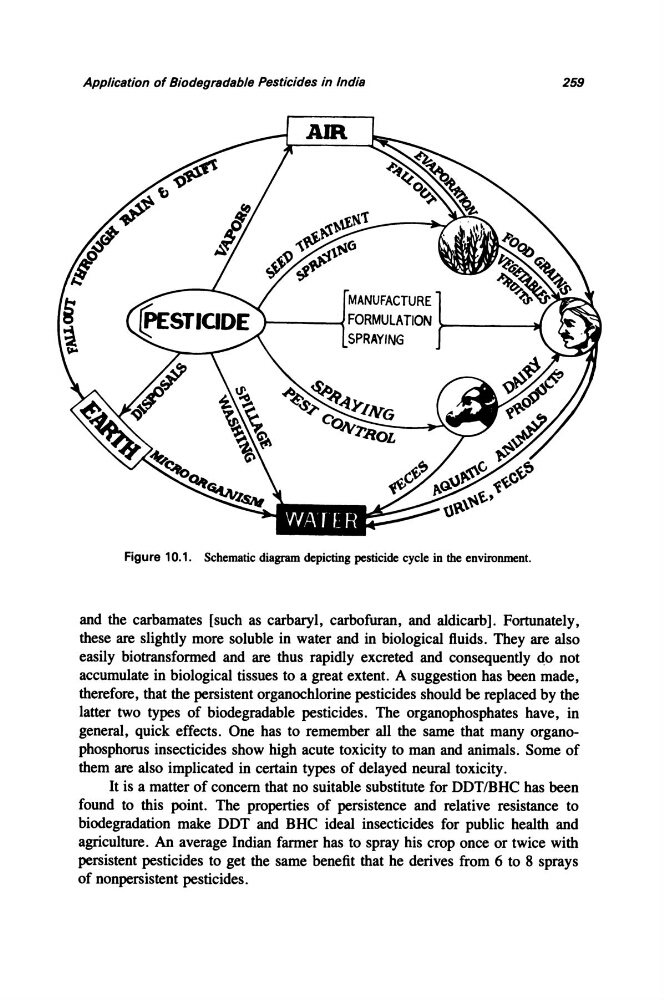
Figure 10.1. Schematic diagram depicting pesticide cycle in the environment.
and the carbamates [such as carbaryl, carbofuran, and aldicarb]. Fortunately,
these are slightly more soluble in water and in biological fluids. They are also
easily biotransformed and are thus rapidly excreted and consequently do not
accumulate in biological tissues to a great extent. A suggestion has been made,
therefore, that the persistent organochlorine pesticides should be replaced by the
latter two types of biodegradable pesticides. The organophosphates have, in
general, quick effects. One has to remember all the same that many organophosphorus insecticides show high acute toxicity to man and animals. Some of
them are also implicated in certain types of delayed neural toxicity.
It is a matter of concern that no suitable substitute for DDT/BHC has been
found to this point. The properties of persistence and relative resistance to
biodegradation make DDT and BHC ideal insecticides for public health and
agriculture. An average Indian farmer has to spray his crop once or twice with
persistent pesticides to get the same benefit that he derives from 6 to 8 sprays
of nonpersistent pesticides.
259
MANUFACTURE
)---_~FORMULATION >-_ _ _ ~
SPRAYING
Figure 10.1. Schematic diagram depicting pesticide cycle in the environment.
and the carbamates [such as carbaryl, carbofuran, and aldicarb]. Fortunately,
these are slightly more soluble in water and in biological fluids. They are also
easily biotransformed and are thus rapidly excreted and consequently do not
accumulate in biological tissues to a great extent. A suggestion has been made,
therefore, that the persistent organochlorine pesticides should be replaced by the
latter two types of biodegradable pesticides. The organophosphates have, in
general, quick effects. One has to remember all the same that many organophosphorus insecticides show high acute toxicity to man and animals. Some of
them are also implicated in certain types of delayed neural toxicity.
It is a matter of concern that no suitable substitute for DDT/BHC has been
found to this point. The properties of persistence and relative resistance to
biodegradation make DDT and BHC ideal insecticides for public health and
agriculture. An average Indian farmer has to spray his crop once or twice with
persistent pesticides to get the same benefit that he derives from 6 to 8 sprays
of nonpersistent pesticides.