

198
Gene R. DeFoliart
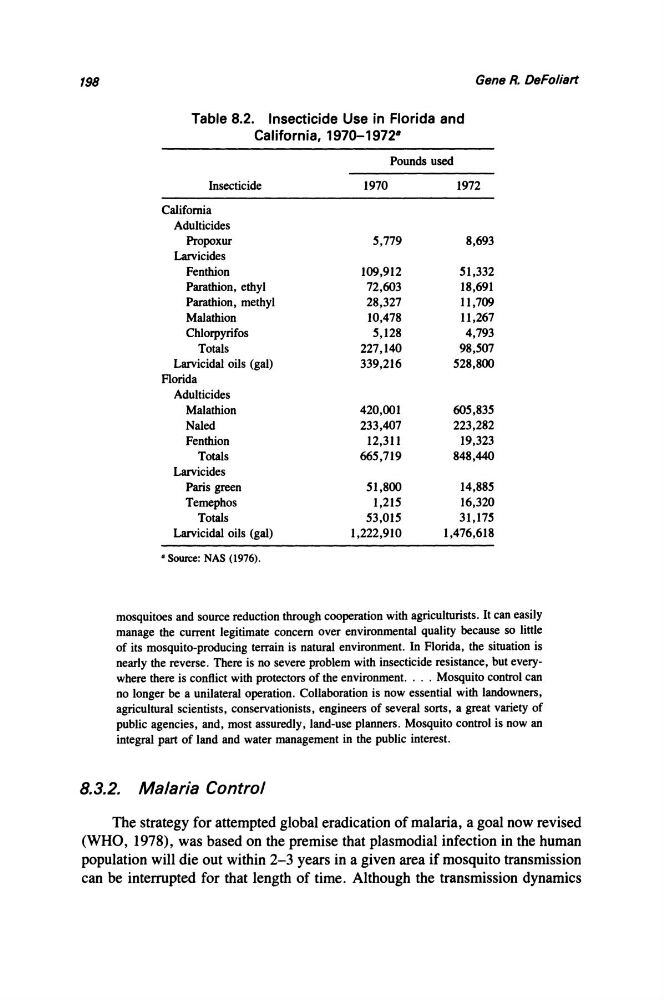
Table 8.2. Insecticide Use in Florida and
California, 1970-1972"
Pounds used
Insecticide
1970
1972
California
Adulticides
Propoxur
5,779
8,693
Larvicides
Fenthion
109,912
51,332
Parathion, ethyl
72,603
18,691
Parathion, methyl
28,327
11,709
Malathion
10,478
11,267
Chlorpyrifos
5,128
4,793
Totals
227,140
98,507
Larvicidal oils (gal)
339,216
528,800
Rorida
Adulticides
Malathion
420,001
605,835
Naled
233,407
223,282
Fenthion
12,311
19,323
Totals
665,719
848,440
Larvicides
Paris green
51,800
14,885
Temephos
1,215
16,320
Totals
53,015
31,175
Larvicidal oils (gal)
1,222,910
1,476,618
• Source: NAS (1976).
mosquitoes and source reduction through cooperation with agriculturists. It can easily
manage the current legitimate concern over environmental quality because so little
of its mosquito-producing terrain is natural environment. In Florida, the situation is
nearly the reverse. There is no severe problem with insecticide resistance, but everywhere there is conflict with protectors of the environment .... Mosquito control can
no longer be a unilateral operation. Collaboration is now essential with landowners,
agricultural scientists, conservationists, engineers of several sorts, a great variety of
public agencies, and, most assuredly, land-use planners. Mosquito control is now an
integral part of land and water management in the public interest.
8.3.2. Malaria Control
The strategy for attempted global eradication of malaria, a goal now revised
(WHO, 1978), was based on the premise that plasmodial infection in the human
population will die out within 2-3 years in a given area if mosquito transmission
can be interrupted for that length of time. Although the transmission dynamics
Gene R. DeFoliart
Table 8.2. Insecticide Use in Florida and
California, 1970-1972"
Pounds used
Insecticide
1970
1972
California
Adulticides
Propoxur
5,779
8,693
Larvicides
Fenthion
109,912
51,332
Parathion, ethyl
72,603
18,691
Parathion, methyl
28,327
11,709
Malathion
10,478
11,267
Chlorpyrifos
5,128
4,793
Totals
227,140
98,507
Larvicidal oils (gal)
339,216
528,800
Rorida
Adulticides
Malathion
420,001
605,835
Naled
233,407
223,282
Fenthion
12,311
19,323
Totals
665,719
848,440
Larvicides
Paris green
51,800
14,885
Temephos
1,215
16,320
Totals
53,015
31,175
Larvicidal oils (gal)
1,222,910
1,476,618
• Source: NAS (1976).
mosquitoes and source reduction through cooperation with agriculturists. It can easily
manage the current legitimate concern over environmental quality because so little
of its mosquito-producing terrain is natural environment. In Florida, the situation is
nearly the reverse. There is no severe problem with insecticide resistance, but everywhere there is conflict with protectors of the environment .... Mosquito control can
no longer be a unilateral operation. Collaboration is now essential with landowners,
agricultural scientists, conservationists, engineers of several sorts, a great variety of
public agencies, and, most assuredly, land-use planners. Mosquito control is now an
integral part of land and water management in the public interest.
8.3.2. Malaria Control
The strategy for attempted global eradication of malaria, a goal now revised
(WHO, 1978), was based on the premise that plasmodial infection in the human
population will die out within 2-3 years in a given area if mosquito transmission
can be interrupted for that length of time. Although the transmission dynamics