

Persistence and Biodegradation of Herbicides
121
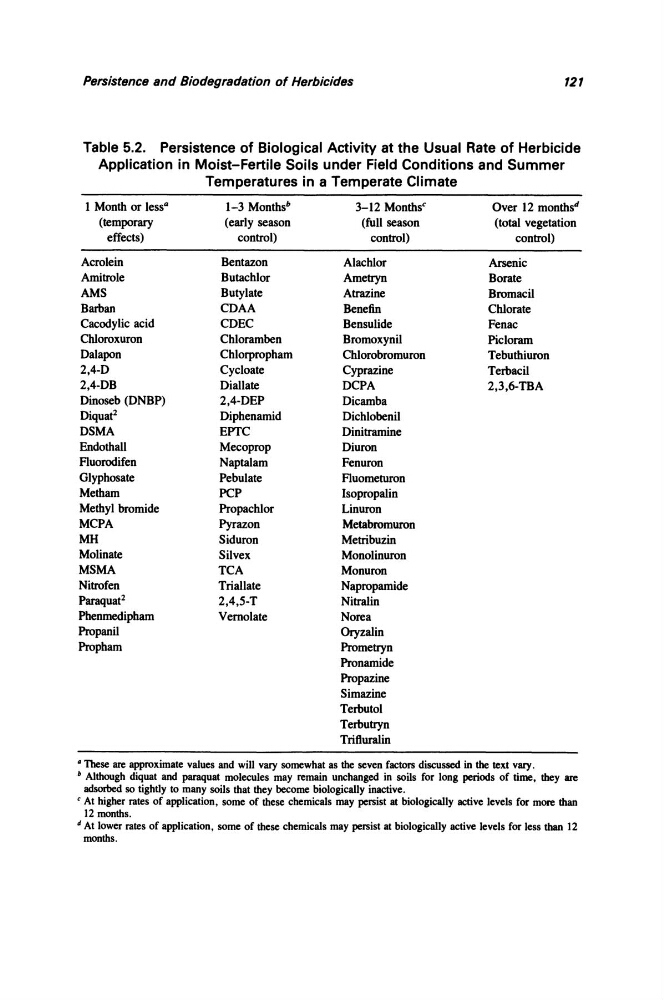
Table 5.2. Persistence of Biological Activity at the Usual Rate of Herbicide
Application in Moist-Fertile Soils under Field Conditions and Summer
Temperatures in a Temperate Climate
I Month or less·
1-3 Months b
3-12 Months'
Over 12 months d
(temporary
(early season
(full season
(total vegetation
effects)
control)
control)
control)
Acrolein
Bentazon
Alachlor
Arsenic
Amitrole
Butachlor
Ametryn
Borate
AMS
Butylate
Atrazine
Bromacil
Barban
CDAA
Benefin
Chlorate
Cacodylic acid
CDEC
Bensulide
Fenac
Chloroxuron
Chloramben
Bromoxynil
Picloram
Dalapon
Chlorpropham
Chlorobromuron
Tebuthiuron
2,4-D
Cycloate
Cyprazine
Terbacil
2,4·DB
Diallate
DCPA
2,3,6-TBA
Dinoseb (DNBP)
2,4-DEP
Dicamba
Diquat 2
Diphenamid
Dichlobenil
DSMA
EPTC
Dinitramine
Endothall
Mecoprop
Diuron
Fluorodifen
Naptalam
Fenuron
Glyphosate
Pebulate
Fluometuron
Metham
pcp
Isopropalin
Methyl bromide
Propachlor
Linuron
MCPA
Pyrazon
Metabromuron
MH
Siduron
Metribuzin
Molinate
Silvex
Monolinuron
MSMA
TCA
Monuron
Nitrofen
Triallate
Napropamide
Paraquat2
2,4,5-T
Nitralin
Phenmedipham
Vemolate
Norea
Propanil
Oryzalin
Propham
Prometryn
Pronamide
Propazine
Simazine
Terbutol
Terbutryn
Trifturalin
• These are approximate values and will vary somewhat as the seven factors discussed in the text vary.
• Although diquat and paraquat molecUles may remain unchanged in soils for long periods of time, they are
adsorlJed so tightly to many soils that they become biologically inactive.
, At higher rates of application, some of these chemicals may persist at biologically active levels for more than
12 months.
d At lower rates of application, some of these chemicals may persist at biologically active levels for less than 12
months.
121
Table 5.2. Persistence of Biological Activity at the Usual Rate of Herbicide
Application in Moist-Fertile Soils under Field Conditions and Summer
Temperatures in a Temperate Climate
I Month or less·
1-3 Months b
3-12 Months'
Over 12 months d
(temporary
(early season
(full season
(total vegetation
effects)
control)
control)
control)
Acrolein
Bentazon
Alachlor
Arsenic
Amitrole
Butachlor
Ametryn
Borate
AMS
Butylate
Atrazine
Bromacil
Barban
CDAA
Benefin
Chlorate
Cacodylic acid
CDEC
Bensulide
Fenac
Chloroxuron
Chloramben
Bromoxynil
Picloram
Dalapon
Chlorpropham
Chlorobromuron
Tebuthiuron
2,4-D
Cycloate
Cyprazine
Terbacil
2,4·DB
Diallate
DCPA
2,3,6-TBA
Dinoseb (DNBP)
2,4-DEP
Dicamba
Diquat 2
Diphenamid
Dichlobenil
DSMA
EPTC
Dinitramine
Endothall
Mecoprop
Diuron
Fluorodifen
Naptalam
Fenuron
Glyphosate
Pebulate
Fluometuron
Metham
pcp
Isopropalin
Methyl bromide
Propachlor
Linuron
MCPA
Pyrazon
Metabromuron
MH
Siduron
Metribuzin
Molinate
Silvex
Monolinuron
MSMA
TCA
Monuron
Nitrofen
Triallate
Napropamide
Paraquat2
2,4,5-T
Nitralin
Phenmedipham
Vemolate
Norea
Propanil
Oryzalin
Propham
Prometryn
Pronamide
Propazine
Simazine
Terbutol
Terbutryn
Trifturalin
• These are approximate values and will vary somewhat as the seven factors discussed in the text vary.
• Although diquat and paraquat molecUles may remain unchanged in soils for long periods of time, they are
adsorlJed so tightly to many soils that they become biologically inactive.
, At higher rates of application, some of these chemicals may persist at biologically active levels for more than
12 months.
d At lower rates of application, some of these chemicals may persist at biologically active levels for less than 12
months.