

118
Floyd M. Ashton
undergo molecular changes in nature that result in a compound that is more
phytotoxic than the parent molecule, i.e., 2,4-DB ~ 2,4-D.
Essentially all herbicides used today are organic molecules that have been
synthesized by man. Regardless of the fact that they are presumably new to
nature, most of them undergo relatively rapid biodegradation in the environment.
The mechanisms by which they are biodegraded in nature are similar to that of
organic molecules which occur naturally in the environment.
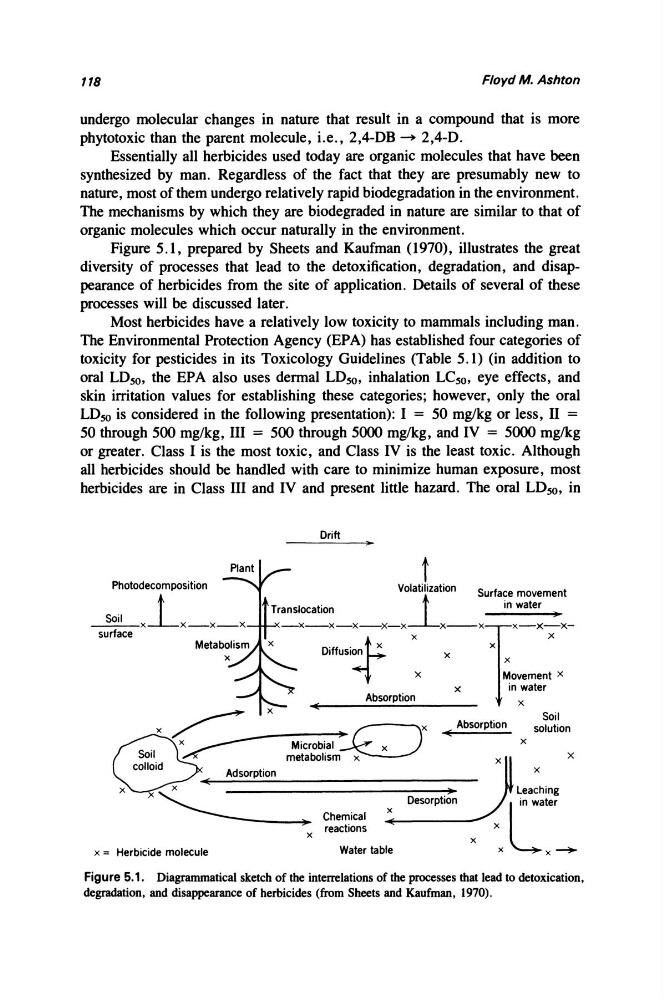
Figure 5.1, prepared by Sheets and Kaufman (1970), illustrates the great
diversity of processes that lead to the detoxification, degradation, and disappearance of herbicides from the site of application. Details of several of these
processes will be discussed later.
Most herbicides have a relatively low toxicity to mammals including man.
The Environmental Protection Agency (EPA) has established four categories of
toxicity for pesticides in its Toxicology Guidelines (Table 5.1) (in addition to
oral LDso, the EPA also uses dermal LDso, inhalation LCso, eye effects, and
skin irritation values for establishing these categories; however, only the oral
LDso is considered in the following presentation): I = 50 mg/kg or less, II =
50 through 500 mg/kg, III = 500 through 5000 mg/kg, and IV = 5000 mg/kg
or greater. Class I is the most toxic, and Class IV is the least toxic. Although
all herbicides should be handled with care to minimize human exposure, most
herbicides are in Class III and IV and present little hazard. The oral LDso, in
Photodecomposition
Soil
t
_.:..:....._x~x_x_x
surface
Drift
t
Volatilization
Surface movement
Translocation
t
In water
~
)
x -X-::fusi:n ~-x x XX-_X fX
x-x~x"i x
Movement x
x
In water
Absorption
x
Soil
.; Absorption
solution
x
x
(
Adsorption
x
x = Herbicide molecule
Chemical
reactions
x
x
Water table
)
Desorption
Leaching
, [m.
x
x -
x
Figure 5.1. Diagrammatical sketch of the interrelations of the processes that lead to detoxication,
degradation, and disappearance of herbicides (from Sheets and Kaufman, 1970).
Floyd M. Ashton
undergo molecular changes in nature that result in a compound that is more
phytotoxic than the parent molecule, i.e., 2,4-DB ~ 2,4-D.
Essentially all herbicides used today are organic molecules that have been
synthesized by man. Regardless of the fact that they are presumably new to
nature, most of them undergo relatively rapid biodegradation in the environment.
The mechanisms by which they are biodegraded in nature are similar to that of
organic molecules which occur naturally in the environment.
Figure 5.1, prepared by Sheets and Kaufman (1970), illustrates the great
diversity of processes that lead to the detoxification, degradation, and disappearance of herbicides from the site of application. Details of several of these
processes will be discussed later.
Most herbicides have a relatively low toxicity to mammals including man.
The Environmental Protection Agency (EPA) has established four categories of
toxicity for pesticides in its Toxicology Guidelines (Table 5.1) (in addition to
oral LDso, the EPA also uses dermal LDso, inhalation LCso, eye effects, and
skin irritation values for establishing these categories; however, only the oral
LDso is considered in the following presentation): I = 50 mg/kg or less, II =
50 through 500 mg/kg, III = 500 through 5000 mg/kg, and IV = 5000 mg/kg
or greater. Class I is the most toxic, and Class IV is the least toxic. Although
all herbicides should be handled with care to minimize human exposure, most
herbicides are in Class III and IV and present little hazard. The oral LDso, in
Photodecomposition
Soil
t
_.:..:....._x~x_x_x
surface
Drift
t
Volatilization
Surface movement
Translocation
t
In water
~
)
x -X-::fusi:n ~-x x XX-_X fX
x-x~x"i x
Movement x
x
In water
Absorption
x
Soil
.; Absorption
solution
x
x
(
Adsorption
x
x = Herbicide molecule
Chemical
reactions
x
x
Water table
)
Desorption
Leaching
, [m.
x
x -
x
Figure 5.1. Diagrammatical sketch of the interrelations of the processes that lead to detoxication,
degradation, and disappearance of herbicides (from Sheets and Kaufman, 1970).