

Modern Mercury Contamination from Historic Amalgamation Milling
I
)
I
43N
Antelope
Reservoir
10 kJomeIers
l.-----l
341
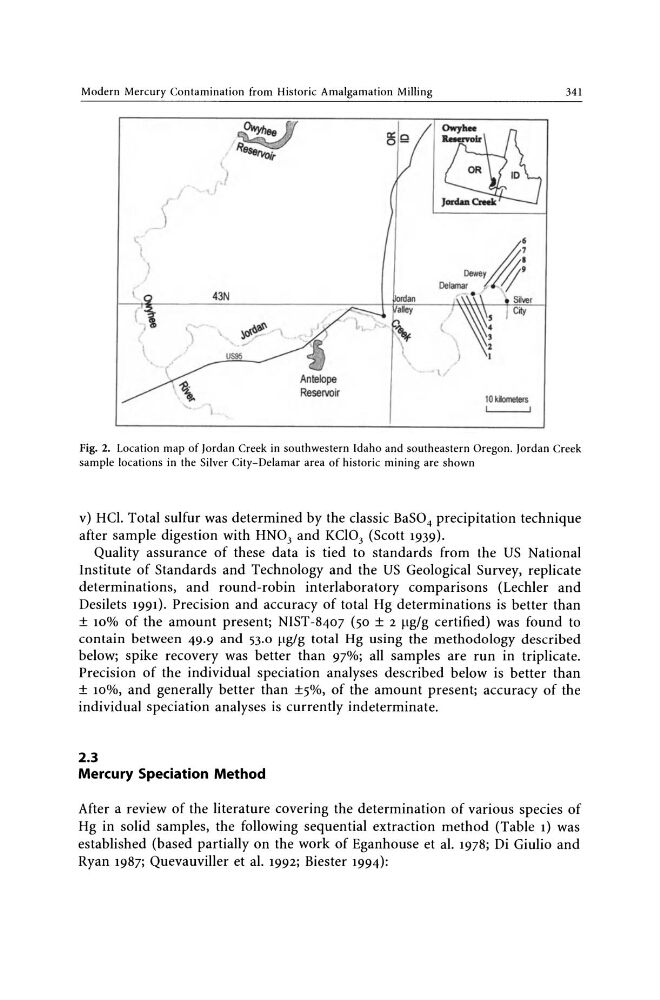
Fig. 2. Location map of Jordan Creek in southwestern Idaho and southeastern Oregon. Jordan Creek
sample locations in the Silver City-Delamar area of historic mining are shown
v) HCl. Total sulfur was determined by the classic BaS0 4 precipitation technique
after sample digestion with HN0 3 and KCl0 3 (Scott 1939).
Quality assurance of these data is tied to standards from the US National
Institute of Standards and Technology and the US Geological Survey, replicate
determinations, and round-robin interlaboratory comparisons (Lechler and
Desilets 1991). Precision and accuracy of total Hg determinations is better than
± 10% of the amount present; NIST -8407 (50 ± 2 ~lg/g certified) was found to
contain between 49.9 and 53.0 ~tg/g total Hg using the methodology described
below; spike recovery was better than 97%; all samples are run in triplicate.
Precision of the individual speciation analyses described below is better than
± 10%, and generally better than ±5%, of the amount present; accuracy of the
individual speciation analyses is currently indeterminate.
2.3
Mercury Speciation Method
After a review of the literature covering the determination of various species of
Hg in solid samples, the following sequential extraction method (Table 1) was
established (based partially on the work of Eganhouse et al. 1978; Di Giulio and
Ryan 1987; Quevauviller et al. 1992; Biester 1994):
I
)
I
43N
Antelope
Reservoir
10 kJomeIers
l.-----l
341
Fig. 2. Location map of Jordan Creek in southwestern Idaho and southeastern Oregon. Jordan Creek
sample locations in the Silver City-Delamar area of historic mining are shown
v) HCl. Total sulfur was determined by the classic BaS0 4 precipitation technique
after sample digestion with HN0 3 and KCl0 3 (Scott 1939).
Quality assurance of these data is tied to standards from the US National
Institute of Standards and Technology and the US Geological Survey, replicate
determinations, and round-robin interlaboratory comparisons (Lechler and
Desilets 1991). Precision and accuracy of total Hg determinations is better than
± 10% of the amount present; NIST -8407 (50 ± 2 ~lg/g certified) was found to
contain between 49.9 and 53.0 ~tg/g total Hg using the methodology described
below; spike recovery was better than 97%; all samples are run in triplicate.
Precision of the individual speciation analyses described below is better than
± 10%, and generally better than ±5%, of the amount present; accuracy of the
individual speciation analyses is currently indeterminate.
2.3
Mercury Speciation Method
After a review of the literature covering the determination of various species of
Hg in solid samples, the following sequential extraction method (Table 1) was
established (based partially on the work of Eganhouse et al. 1978; Di Giulio and
Ryan 1987; Quevauviller et al. 1992; Biester 1994):