

Vegetation on Contaminated Sites near an Hg Mine and Smelter
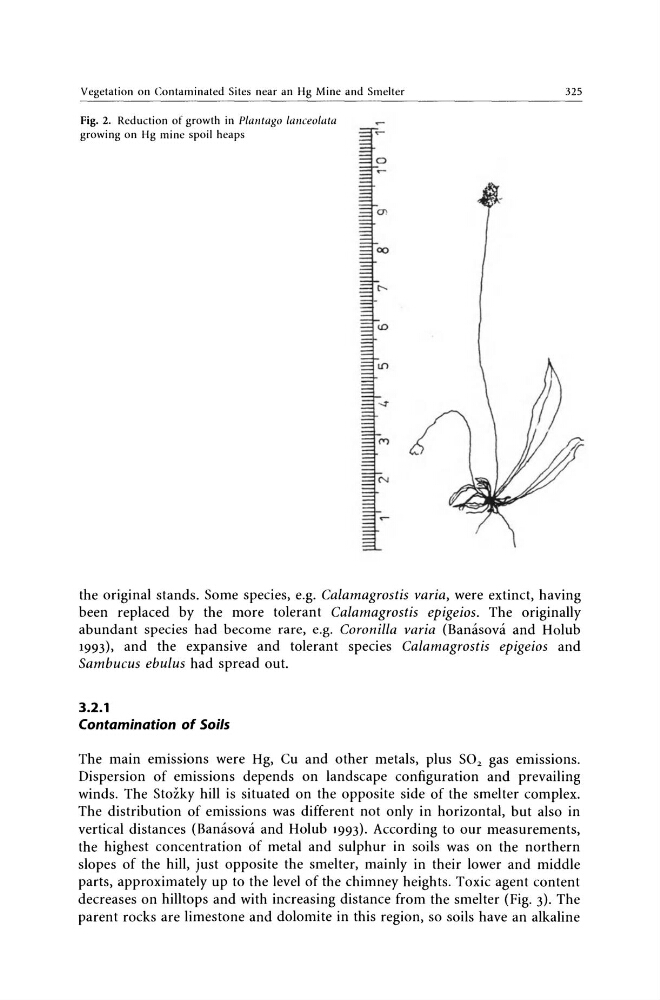
Fig. 2. Reduction of growth in Plalltago lallceolata
growing on Hg mine spoil heaps
325
the original stands. Some species, e.g. Calamagrostis varia, were extinct, having
been replaced by the more tolerant Calamagrostis epigeios. The originally
abundant species had become rare, e.g. Coronilla varia (Banasova and Holub
1993), and the expansive and tolerant species Calamagrostis epigeios and
Sambucus ebulus had spread out.
3.2.1
Contamination of Soils
The main emissions were Hg, Cu and other metals, plus S02 gas emISSIOns.
Dispersion of emissions depends on landscape configuration and prevailing
winds. The Stozky hill is situated on the opposite side of the smelter complex.
The distribution of emissions was different not only in horizontal, but also in
vertical distances (Banasova and Holub 1993). According to our measurements,
the highest concentration of metal and sulphur in soils was on the northern
slopes of the hill, just opposite the smelter, mainly in their lower and middle
parts, approximately up to the level of the chimney heights. Toxic agent content
decreases on hilltops and with increasing distance from the smelter (Fig. 3). The
parent rocks are limestone and dolomite in this region, so soils have an alkaline
Fig. 2. Reduction of growth in Plalltago lallceolata
growing on Hg mine spoil heaps
325
the original stands. Some species, e.g. Calamagrostis varia, were extinct, having
been replaced by the more tolerant Calamagrostis epigeios. The originally
abundant species had become rare, e.g. Coronilla varia (Banasova and Holub
1993), and the expansive and tolerant species Calamagrostis epigeios and
Sambucus ebulus had spread out.
3.2.1
Contamination of Soils
The main emissions were Hg, Cu and other metals, plus S02 gas emISSIOns.
Dispersion of emissions depends on landscape configuration and prevailing
winds. The Stozky hill is situated on the opposite side of the smelter complex.
The distribution of emissions was different not only in horizontal, but also in
vertical distances (Banasova and Holub 1993). According to our measurements,
the highest concentration of metal and sulphur in soils was on the northern
slopes of the hill, just opposite the smelter, mainly in their lower and middle
parts, approximately up to the level of the chimney heights. Toxic agent content
decreases on hilltops and with increasing distance from the smelter (Fig. 3). The
parent rocks are limestone and dolomite in this region, so soils have an alkaline