

232
E.P. Yanin and N.N. Moskalenko
background level). With 20% of the children, the maximum permissible level of
Pb concentration was exceeded, with 5% the level was critical. The Cd level was
by two to five times above the background level with 32% of the children. Seven
percent of the children had a critical level of Cd. These data show that
environmental pollution by Pb and Cd play the major role in the city. However,
the fact of Hg accumulation in the biosubstrates of people is remarkable in itself.
In particular, a specific distribution of childrens' diseases was noted while
analyzing distribution peculiarities of different childrens' diseases in Saransk
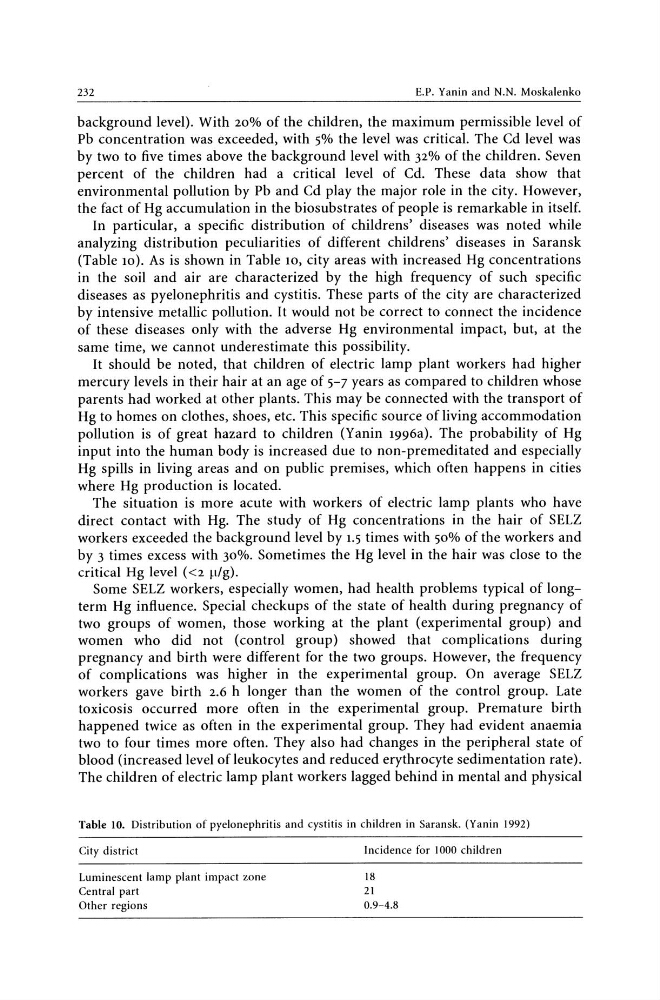
(Table 10). As is shown in Table 10, city areas with increased Hg concentrations
in the soil and air are characterized by the high frequency of such specific
diseases as pyelonephritis and cystitis. These parts of the city are characterized
by intensive metallic pollution. It would not be correct to connect the incidence
of these diseases only with the adverse Hg environmental impact, but, at the
same time, we cannot underestimate this possibility.
It should be noted, that children of electric lamp plant workers had higher
mercury levels in their hair at an age of 5-7 years as compared to children whose
parents had worked at other plants. This may be connected with the transport of
Hg to homes on clothes, shoes, etc. This specific source of living accommodation
pollution is of great hazard to children (Yanin 1996a). The probability of Hg
input into the human body is increased due to non-premeditated and especially
Hg spills in living areas and on public premises, which often happens in cities
where Hg production is located.
The situation is more acute with workers of electric lamp plants who have
direct contact with Hg. The study of Hg concentrations in the hair of SELl
workers exceeded the background level by 1.5 times with 50% of the workers and
by 3 times excess with 30%. Sometimes the Hg level in the hair was close to the
critical Hg level «2 ~l/g).
Some SELl workers, especially women, had health problems typical of longterm Hg influence. Special checkups of the state of health during pregnancy of
two groups of women, those working at the plant (experimental group) and
women who did not (control group) showed that complications during
pregnancy and birth were different for the two groups. However, the frequency
of complications was higher in the experimental group. On average SELl
workers gave birth 2.6 h longer than the women of the control group. Late
toxicosis occurred more often in the experimental group. Premature birth
happened twice as often in the experimental group. They had evident anaemia
two to four times more often. They also had changes in the peripheral state of
blood (increased level ofleukocytes and reduced erythrocyte sedimentation rate).
The children of electric lamp plant workers lagged behind in mental and physical
Table 10. Distribution of pyelonephritis and cystitis in children in Saransk. (Yanin 1992)
City district
Luminescent lamp plant impact zone
Central part
Other regions
Incidence for \000 children
18
21
0.9-4.8
E.P. Yanin and N.N. Moskalenko
background level). With 20% of the children, the maximum permissible level of
Pb concentration was exceeded, with 5% the level was critical. The Cd level was
by two to five times above the background level with 32% of the children. Seven
percent of the children had a critical level of Cd. These data show that
environmental pollution by Pb and Cd play the major role in the city. However,
the fact of Hg accumulation in the biosubstrates of people is remarkable in itself.
In particular, a specific distribution of childrens' diseases was noted while
analyzing distribution peculiarities of different childrens' diseases in Saransk
(Table 10). As is shown in Table 10, city areas with increased Hg concentrations
in the soil and air are characterized by the high frequency of such specific
diseases as pyelonephritis and cystitis. These parts of the city are characterized
by intensive metallic pollution. It would not be correct to connect the incidence
of these diseases only with the adverse Hg environmental impact, but, at the
same time, we cannot underestimate this possibility.
It should be noted, that children of electric lamp plant workers had higher
mercury levels in their hair at an age of 5-7 years as compared to children whose
parents had worked at other plants. This may be connected with the transport of
Hg to homes on clothes, shoes, etc. This specific source of living accommodation
pollution is of great hazard to children (Yanin 1996a). The probability of Hg
input into the human body is increased due to non-premeditated and especially
Hg spills in living areas and on public premises, which often happens in cities
where Hg production is located.
The situation is more acute with workers of electric lamp plants who have
direct contact with Hg. The study of Hg concentrations in the hair of SELl
workers exceeded the background level by 1.5 times with 50% of the workers and
by 3 times excess with 30%. Sometimes the Hg level in the hair was close to the
critical Hg level «2 ~l/g).
Some SELl workers, especially women, had health problems typical of longterm Hg influence. Special checkups of the state of health during pregnancy of
two groups of women, those working at the plant (experimental group) and
women who did not (control group) showed that complications during
pregnancy and birth were different for the two groups. However, the frequency
of complications was higher in the experimental group. On average SELl
workers gave birth 2.6 h longer than the women of the control group. Late
toxicosis occurred more often in the experimental group. Premature birth
happened twice as often in the experimental group. They had evident anaemia
two to four times more often. They also had changes in the peripheral state of
blood (increased level ofleukocytes and reduced erythrocyte sedimentation rate).
The children of electric lamp plant workers lagged behind in mental and physical
Table 10. Distribution of pyelonephritis and cystitis in children in Saransk. (Yanin 1992)
City district
Luminescent lamp plant impact zone
Central part
Other regions
Incidence for \000 children
18
21
0.9-4.8