

228
E.P. Yanin and N.N. Moskalenko
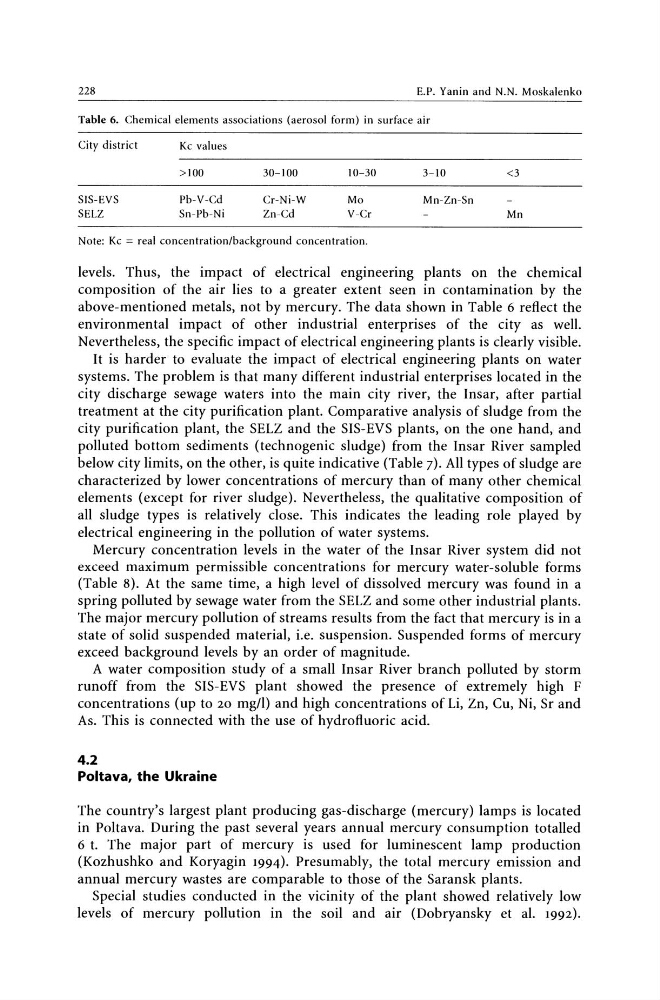
Table 6. Chemical elements associations (aerosol form) in surface air
City district
SIS-EVS
SELZ
Kc values
>100
pb-V-Cd
Sn-Pb-Ni
30-100
Cr-Ni-W
Zn-Cd
10-30
Mo
V-Cr
Note: Kc = real concentration/background concentration.
3-10
<3
Mn-Zn-Sn
Mn
levels. Thus, the impact of electrical engineering plants on the chemical
composition of the air lies to a greater extent seen in contamination by the
above-mentioned metals, not by mercury. The data shown in Table 6 reflect the
environmental impact of other industrial enterprises of the city as well.
Nevertheless, the specific impact of electrical engineering plants is clearly visible.
It is harder to evaluate the impact of electrical engineering plants on water
systems. The problem is that many different industrial enterprises located in the
city discharge sewage waters into the main city river, the Insar, after partial
treatment at the city purification plant. Comparative analysis of sludge from the
city purification plant, the SELZ and the SIS-EVS plants, on the one hand, and
polluted bottom sediments (technogenic sludge) from the Insar River sampled
below city limits, on the other, is quite indicative (Table 7). All types of sludge are
characterized by lower concentrations of mercury than of many other chemical
elements (except for river sludge). Nevertheless, the qualitative composition of
all sludge types is relatively close. This indicates the leading role played by
electrical engineering in the pollution of water systems.
Mercury concentration levels in the water of the Insar River system did not
exceed maximum permissible concentrations for mercury water-soluble forms
(Table 8). At the same time, a high level of dissolved mercury was found in a
spring polluted by sewage water from the SELZ and some other industrial plants.
The major mercury pollution of streams results from the fact that mercury is in a
state of solid suspended material, i.e. suspension. Suspended forms of mercury
exceed background levels by an order of magnitude.
A water composition study of a small Insar River branch polluted by storm
runoff from the SIS-EVS plant showed the presence of extremely high F
concentrations (up to 20 mg/l) and high concentrations of Li, Zn, Cu, Ni, Sr and
As. This is connected with the use of hydrofluoric acid.
4.2
Poltava, the Ukraine
The country's largest plant producing gas-discharge (mercury) lamps is located
in Poltava. During the past several years annual mercury consumption totalled
6 t. The major part of mercury is used for luminescent lamp production
(Kozhushko and Koryagin 1994). Presumably, the total mercury emission and
annual mercury wastes are comparable to those of the Saransk plants.
Special studies conducted in the vicinity of the plant showed relatively low
levels of mercury pollution in the soil and air (Dobryansky et al. 1992).
E.P. Yanin and N.N. Moskalenko
Table 6. Chemical elements associations (aerosol form) in surface air
City district
SIS-EVS
SELZ
Kc values
>100
pb-V-Cd
Sn-Pb-Ni
30-100
Cr-Ni-W
Zn-Cd
10-30
Mo
V-Cr
Note: Kc = real concentration/background concentration.
3-10
<3
Mn-Zn-Sn
Mn
levels. Thus, the impact of electrical engineering plants on the chemical
composition of the air lies to a greater extent seen in contamination by the
above-mentioned metals, not by mercury. The data shown in Table 6 reflect the
environmental impact of other industrial enterprises of the city as well.
Nevertheless, the specific impact of electrical engineering plants is clearly visible.
It is harder to evaluate the impact of electrical engineering plants on water
systems. The problem is that many different industrial enterprises located in the
city discharge sewage waters into the main city river, the Insar, after partial
treatment at the city purification plant. Comparative analysis of sludge from the
city purification plant, the SELZ and the SIS-EVS plants, on the one hand, and
polluted bottom sediments (technogenic sludge) from the Insar River sampled
below city limits, on the other, is quite indicative (Table 7). All types of sludge are
characterized by lower concentrations of mercury than of many other chemical
elements (except for river sludge). Nevertheless, the qualitative composition of
all sludge types is relatively close. This indicates the leading role played by
electrical engineering in the pollution of water systems.
Mercury concentration levels in the water of the Insar River system did not
exceed maximum permissible concentrations for mercury water-soluble forms
(Table 8). At the same time, a high level of dissolved mercury was found in a
spring polluted by sewage water from the SELZ and some other industrial plants.
The major mercury pollution of streams results from the fact that mercury is in a
state of solid suspended material, i.e. suspension. Suspended forms of mercury
exceed background levels by an order of magnitude.
A water composition study of a small Insar River branch polluted by storm
runoff from the SIS-EVS plant showed the presence of extremely high F
concentrations (up to 20 mg/l) and high concentrations of Li, Zn, Cu, Ni, Sr and
As. This is connected with the use of hydrofluoric acid.
4.2
Poltava, the Ukraine
The country's largest plant producing gas-discharge (mercury) lamps is located
in Poltava. During the past several years annual mercury consumption totalled
6 t. The major part of mercury is used for luminescent lamp production
(Kozhushko and Koryagin 1994). Presumably, the total mercury emission and
annual mercury wastes are comparable to those of the Saransk plants.
Special studies conducted in the vicinity of the plant showed relatively low
levels of mercury pollution in the soil and air (Dobryansky et al. 1992).