

6
R. Ebinghaus et al.
the major species is Hg(o). The relative distribution between elemental mercury
vapor and gaseous or particulate Hg(lI) varies from country to country, however.
The major portion of mercury emissions from combustion of fuels is in the
gaseous phase. In the combustion zone, mercury present in coal or other fossil
fuels evaporates in elemental form and then most likely a portion of it is oxidized
in the flue gases (Prestbo et al. 1995). Emitted mercury species into the
environment depend upon the nature of the source of emission. Mercury emitted
from high temperature processes such as coal combustion and pyrite roasters
will probably be converted to the elemental form, Hg( 0). However, in flue gases,
where the temperature drops, Hg(o) may be oxidized by Hel and O2 in presence
of soot or other surfaces (Hall et al. 1991; Prestbo et al. 1995). In modern
combustion plants equipped with flue gas cleaning facilities such as wet
scrubbers, the oxidized and particulate forms should be removed easily. Hence,
the primary emission will be Hg(o). Table 2 summarizes the speciation of
mercury emissions from flue gases and other industrial emissions.
2.1.2
Speciation of Natural Mercury Emission and Re-Emission
The mercury that evades from natural sources is generally entirely in the
elemental form (S.E. Lindberg et al. 1979, 1995, 1998). Natural sources are, for
example, the evasion from surface waters, from soils, from minerals, and from
vegetation located in terrestrial and wetland systems. Volcanism, erosion, and
exhalation from natural geothermal and other geological crevices also mainly
emit elemental mercury.
Global volcanic emissions were estimated from the Hg/S ratio and account for
approximately 20 to 90 t year-I, which is about 1-5% of the annual emissions
from human activities (Fitzgerald 1996).
Generally speaking, the distinction between natural and "quasinatural
reemissions" of mercury (that which was formerly deposited from the
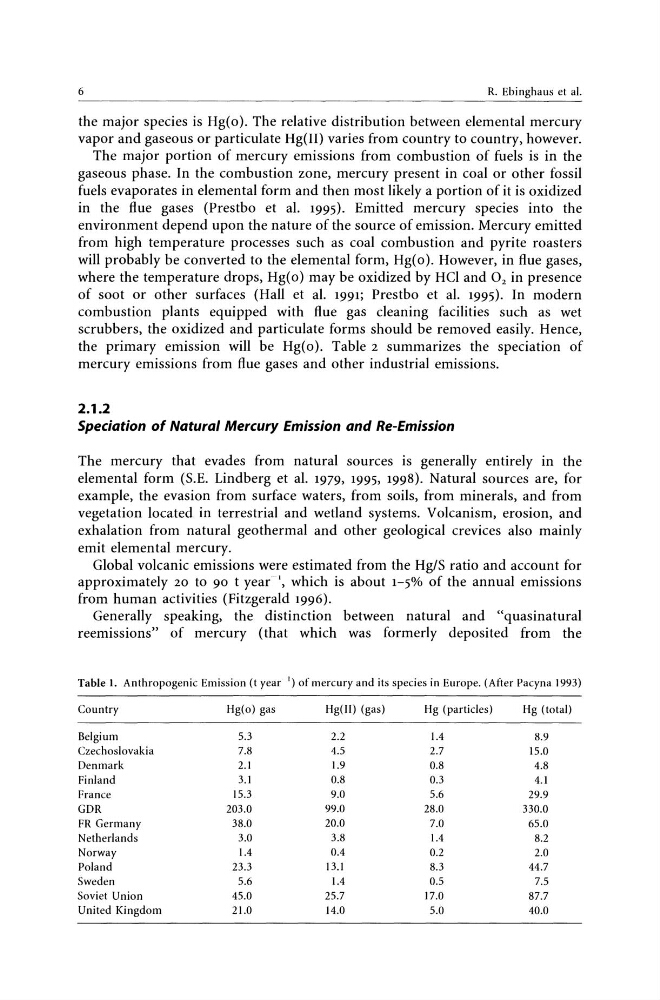
Table 1. Anthropogenic Emission (t year I) of mercury and its species in Europe. (After Pacyna 1993)
Country
Hg(o) gas
Hg(II) (gas)
Hg (particles)
Hg (total)
Belgium
5.3
2.2
1.4
8.9
Czechoslovakia
7.8
4.5
2.7
15.0
Denmark
2.1
1.9
0.8
4.8
Finland
3.1
0.8
0.3
4.1
France
15.3
9.0
5.6
29.9
GDR
203.0
99.0
28.0
330.0
FR Germany
38.0
20.0
7.0
65.0
Netherlands
3.0
3.8
1.4
8.2
Norway
1.4
0.4
0.2
2.0
Poland
23.3
13.1
8.3
44.7
Sweden
5.6
1.4
0.5
7.5
Soviet Union
45.0
25.7
17.0
87.7
United Kingdom
21.0
14.0
5.0
40.0
R. Ebinghaus et al.
the major species is Hg(o). The relative distribution between elemental mercury
vapor and gaseous or particulate Hg(lI) varies from country to country, however.
The major portion of mercury emissions from combustion of fuels is in the
gaseous phase. In the combustion zone, mercury present in coal or other fossil
fuels evaporates in elemental form and then most likely a portion of it is oxidized
in the flue gases (Prestbo et al. 1995). Emitted mercury species into the
environment depend upon the nature of the source of emission. Mercury emitted
from high temperature processes such as coal combustion and pyrite roasters
will probably be converted to the elemental form, Hg( 0). However, in flue gases,
where the temperature drops, Hg(o) may be oxidized by Hel and O2 in presence
of soot or other surfaces (Hall et al. 1991; Prestbo et al. 1995). In modern
combustion plants equipped with flue gas cleaning facilities such as wet
scrubbers, the oxidized and particulate forms should be removed easily. Hence,
the primary emission will be Hg(o). Table 2 summarizes the speciation of
mercury emissions from flue gases and other industrial emissions.
2.1.2
Speciation of Natural Mercury Emission and Re-Emission
The mercury that evades from natural sources is generally entirely in the
elemental form (S.E. Lindberg et al. 1979, 1995, 1998). Natural sources are, for
example, the evasion from surface waters, from soils, from minerals, and from
vegetation located in terrestrial and wetland systems. Volcanism, erosion, and
exhalation from natural geothermal and other geological crevices also mainly
emit elemental mercury.
Global volcanic emissions were estimated from the Hg/S ratio and account for
approximately 20 to 90 t year-I, which is about 1-5% of the annual emissions
from human activities (Fitzgerald 1996).
Generally speaking, the distinction between natural and "quasinatural
reemissions" of mercury (that which was formerly deposited from the
Table 1. Anthropogenic Emission (t year I) of mercury and its species in Europe. (After Pacyna 1993)
Country
Hg(o) gas
Hg(II) (gas)
Hg (particles)
Hg (total)
Belgium
5.3
2.2
1.4
8.9
Czechoslovakia
7.8
4.5
2.7
15.0
Denmark
2.1
1.9
0.8
4.8
Finland
3.1
0.8
0.3
4.1
France
15.3
9.0
5.6
29.9
GDR
203.0
99.0
28.0
330.0
FR Germany
38.0
20.0
7.0
65.0
Netherlands
3.0
3.8
1.4
8.2
Norway
1.4
0.4
0.2
2.0
Poland
23.3
13.1
8.3
44.7
Sweden
5.6
1.4
0.5
7.5
Soviet Union
45.0
25.7
17.0
87.7
United Kingdom
21.0
14.0
5.0
40.0