

Chemical Interactions between Mercurial Species and Surface Biomolecules
167
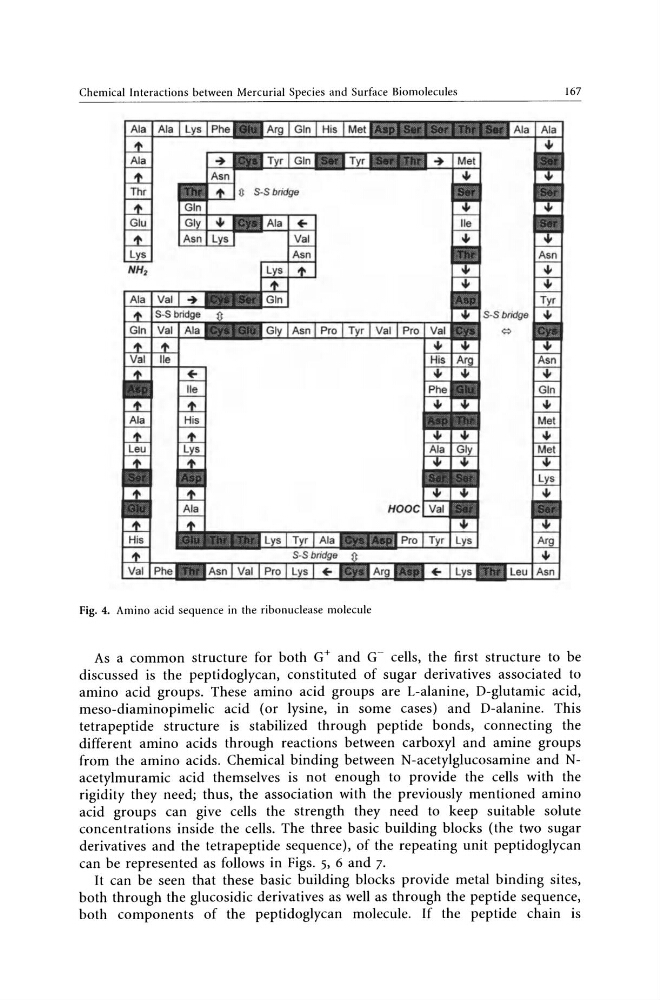
Fig. 4. Amino acid sequence in the ribonuclease molecule
As a common structure for both G+ and G- cells, the first structure to be
discussed is the peptidoglycan, constituted of sugar derivatives associated to
amino acid groups. These amino acid groups are L-alanine, D-glutamic acid,
meso-diaminopimelic acid (or lysine, in some cases) and D-alanine. This
tetrapeptide structure is stabilized through peptide bonds, connecting the
different amino acids through reactions between carboxyl and amine groups
from the amino acids. Chemical binding between N-acetylglucosamine and Nacetylmuramic acid themselves is not enough to provide the cells with the
rigidity they need; thus, the association with the previously mentioned amino
acid groups can give cells the strength they need to keep suitable solute
concentrations inside the cells. The three basic building blocks (the two sugar
derivatives and the tetrapeptide sequence), of the repeating unit peptidoglycan
can be represented as follows in Figs. 5, 6 and 7.
It can be seen that these basic building blocks provide metal binding sites,
both through the glucosidic derivatives as well as through the peptide sequence,
both components of the peptidoglycan molecule. If the peptide chain is
167
Fig. 4. Amino acid sequence in the ribonuclease molecule
As a common structure for both G+ and G- cells, the first structure to be
discussed is the peptidoglycan, constituted of sugar derivatives associated to
amino acid groups. These amino acid groups are L-alanine, D-glutamic acid,
meso-diaminopimelic acid (or lysine, in some cases) and D-alanine. This
tetrapeptide structure is stabilized through peptide bonds, connecting the
different amino acids through reactions between carboxyl and amine groups
from the amino acids. Chemical binding between N-acetylglucosamine and Nacetylmuramic acid themselves is not enough to provide the cells with the
rigidity they need; thus, the association with the previously mentioned amino
acid groups can give cells the strength they need to keep suitable solute
concentrations inside the cells. The three basic building blocks (the two sugar
derivatives and the tetrapeptide sequence), of the repeating unit peptidoglycan
can be represented as follows in Figs. 5, 6 and 7.
It can be seen that these basic building blocks provide metal binding sites,
both through the glucosidic derivatives as well as through the peptide sequence,
both components of the peptidoglycan molecule. If the peptide chain is