

Mercury Contamination of Minamata Bay
s
Yatsushlro Sea
o
2km
t :
1
==_.'
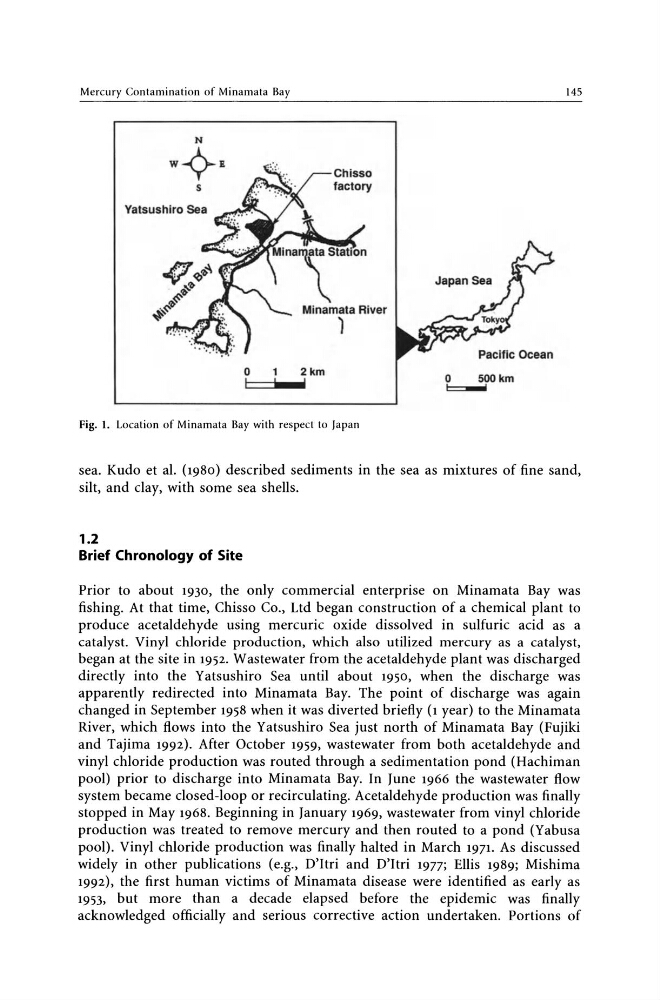
Fig. 1. Location of Minamata Bay with res pect to Japan
Japan Sea
Pacific Ocean
o SOOkm
I::::::::::..oj
145
sea. Kudo et al. (1980) described sediments in the sea as mixtures of fine sand,
silt, and clay, with some sea shells.
1.2
Brief Chronology of Site
Prior to about 1930, the only commercial enterprise on Minamata Bay was
fishing. At that time, Chisso Co., Ltd began construction of a chemical plant to
produce acetaldehyde using mercuric oxide dissolved in sulfuric acid as a
catalyst. Vinyl chloride production, which also utilized mercury as a catalyst,
began at the site in 1952. Wastewater from the acetaldehyde plant was discharged
directly into the Yatsushiro Sea until about 1950, when the discharge was
apparently redirected into Minamata Bay. The point of discharge was again
changed in September 1958 when it was diverted briefly (1 year) to the Minamata
River, which flows into the Yatsushiro Sea just north of Minamata Bay (Fujiki
and Tajima 1992). After October 1959, wastewater from both acetaldehyde and
vinyl chloride production was routed through a sedimentation pond (Hachiman
pool) prior to discharge into Minamata Bay. In June 1966 the wastewater flow
system became closed-loop or recirculating. Acetaldehyde production was finally
stopped in May 1968. Beginning in January 1969, wastewater from vinyl chloride
production was treated to remove mercury and then routed to a pond (Yabusa
pool). Vinyl chloride production was finally halted in March 1971. As discussed
widely in other publications (e.g., D'ltri and D'ltri 1977; Ellis 1989; Mishima
1992), the first human victims of Minamata disease were identified as early as
1953, but more than a decade elapsed before the epidemic was finally
acknowledged officially and serious corrective action undertaken. Portions of
s
Yatsushlro Sea
o
2km
t :
1
==_.'
Fig. 1. Location of Minamata Bay with res pect to Japan
Japan Sea
Pacific Ocean
o SOOkm
I::::::::::..oj
145
sea. Kudo et al. (1980) described sediments in the sea as mixtures of fine sand,
silt, and clay, with some sea shells.
1.2
Brief Chronology of Site
Prior to about 1930, the only commercial enterprise on Minamata Bay was
fishing. At that time, Chisso Co., Ltd began construction of a chemical plant to
produce acetaldehyde using mercuric oxide dissolved in sulfuric acid as a
catalyst. Vinyl chloride production, which also utilized mercury as a catalyst,
began at the site in 1952. Wastewater from the acetaldehyde plant was discharged
directly into the Yatsushiro Sea until about 1950, when the discharge was
apparently redirected into Minamata Bay. The point of discharge was again
changed in September 1958 when it was diverted briefly (1 year) to the Minamata
River, which flows into the Yatsushiro Sea just north of Minamata Bay (Fujiki
and Tajima 1992). After October 1959, wastewater from both acetaldehyde and
vinyl chloride production was routed through a sedimentation pond (Hachiman
pool) prior to discharge into Minamata Bay. In June 1966 the wastewater flow
system became closed-loop or recirculating. Acetaldehyde production was finally
stopped in May 1968. Beginning in January 1969, wastewater from vinyl chloride
production was treated to remove mercury and then routed to a pond (Yabusa
pool). Vinyl chloride production was finally halted in March 1971. As discussed
widely in other publications (e.g., D'ltri and D'ltri 1977; Ellis 1989; Mishima
1992), the first human victims of Minamata disease were identified as early as
1953, but more than a decade elapsed before the epidemic was finally
acknowledged officially and serious corrective action undertaken. Portions of