

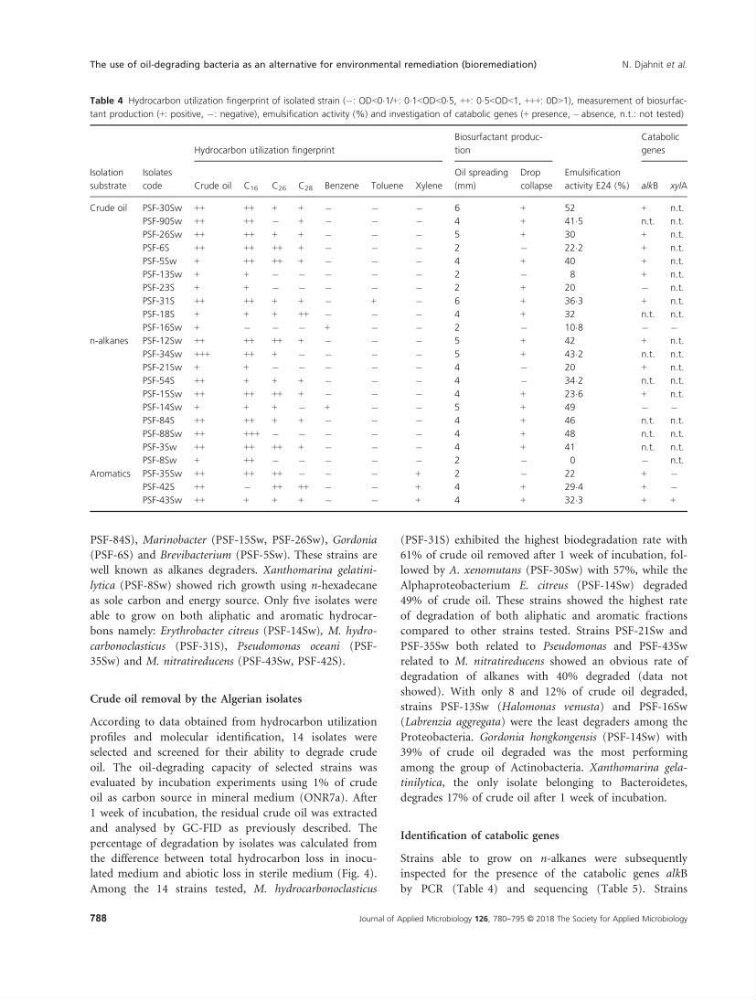
PSF-84S), Marinobacter (PSF-15Sw, PSF-26Sw), Gordonia
(PSF-6S) and Brevibacterium (PSF-5Sw). These strains are
well known as alkanes degraders. Xanthomarina gelatinilytica (PSF-8Sw) showed rich growth using n-hexadecane
as sole carbon and energy source. Only five isolates were
able to grow on both aliphatic and aromatic hydrocarbons namely: Erythrobacter citreus (PSF-14Sw), M. hydrocarbonoclasticus (PSF-31S), Pseudomonas oceani (PSF35Sw) and M. nitratireducens (PSF-43Sw, PSF-42S).
Crude oil removal by the Algerian isolates
According to data obtained from hydrocarbon utilization
profiles and molecular identification, 14 isolates were
selected and screened for their ability to degrade crude
oil. The oil-degrading capacity of selected strains was
evaluated by incubation experiments using 1% of crude
oil as carbon source in mineral medium (ONR7a). After
1 week of incubation, the residual crude oil was extracted
and analysed by GC-FID as previously described. The
percentage of degradation by isolates was calculated from
the difference between total hydrocarbon loss in inoculated medium and abiotic loss in sterile medium (Fig. 4).
Among the 14 strains tested, M. hydrocarbonoclasticus
(PSF-31S) exhibited the highest biodegradation rate with
61% of crude oil removed after 1 week of incubation, followed by A. xenomutans (PSF-30Sw) with 57%, while the
Alphaproteobacterium E. citreus (PSF-14Sw) degraded
49% of crude oil. These strains showed the highest rate
of degradation of both aliphatic and aromatic fractions
compared to other strains tested. Strains PSF-21Sw and
PSF-35Sw both related to Pseudomonas and PSF-43Sw
related to M. nitratireducens showed an obvious rate of
degradation of alkanes with 40% degraded (data not
showed). With only 8 and 12% of crude oil degraded,
strains PSF-13Sw (Halomonas venusta) and PSF-16Sw
(Labrenzia aggregata) were the least degraders among the
Proteobacteria. Gordonia hongkongensis (PSF-14Sw) with
39% of crude oil degraded was the most performing
among the group of Actinobacteria. Xanthomarina gelatinilytica, the only isolate belonging to Bacteroidetes,
degrades 17% of crude oil after 1 week of incubation.
Identification of catabolic genes
Strains able to grow on n-alkanes were subsequently
inspected for the presence of the catabolic genes alkB
by PCR (Table 4) and sequencing (Table 5). Strains
Table 4 Hydrocarbon utilization fingerprint of isolated strain (À: OD<0Á1/+: 0Á11), measurement of biosurfactant production (+: positive, À: negative), emulsification activity (%) and investigation of catabolic genes (+ presence, – absence, n.t.: not tested)
Isolation
substrate
Isolates
code
Hydrocarbon utilization fingerprint
Biosurfactant production
Emulsification
activity E24 (%)
Catabolic
genes
Crude oil C 16 C 26 C 28 Benzene Toluene Xylene
Oil spreading
(mm)
Drop
collapse
alkB xylA
Crude oil
PSF-30Sw ++
++
+
+
À
À
À
6
+
52
+
n.t.
PSF-90Sw ++
++
À
+
À
À
À
4
+
41Á5
n.t.
n.t.
PSF-26Sw ++
++
+
+
À
À
À
5
+
30
+
n.t.
PSF-6S
++
++
++
+
À
À
À
2
À
22Á2
+
n.t.
PSF-5Sw
+
+ +
+ +
+
À
À
À
4
+
40
+
n.t.
PSF-13Sw +
+
À
À
À
À
À
2
À
8
+
n.t.
PSF-23S
+
+
À
À
À
À
À
2
+
20
À
n.t.
PSF-31S
++
++
+
+
À
+
À
6
+
36Á3
+
n.t.
PSF-18S
+
+
+
+ +
À
À
À
4
+
32
n.t.
n.t.
PSF-16Sw +
À
À
À
+
À
À
2
À
10Á8
À
À
n-alkanes
PSF-12Sw ++
++
++
+
À
À
À
5
+
42
+
n.t.
PSF-34Sw +++
++
+
À
À
À
À
5
+
43Á2
n.t.
n.t.
PSF-21Sw +
+
À
À
À
À
À
4
À
20
+
n.t.
PSF-54S
++
+
+
+
À
À
À
4
À
34Á2
n.t.
n.t.
PSF-15Sw ++
++
++
+
À
À
À
4
+
23Á6
+
n.t.
PSF-14Sw +
+
+
À
+
À
À
5
+
49
À
À
PSF-84S
++
++
+
+
À
À
À
4
+
46
n.t.
n.t.
PSF-88Sw ++
+++ À
À
À
À
À
4
+
48
n.t.
n.t.
PSF-3Sw
++
++
++
+
À
À
À
4
+
41
n.t.
n.t.
PSF-8Sw
+
+ +
À
À
À
À
À
2
À
0
À
n.t.
Aromatics PSF-35Sw ++
++
++
À
À
À
+
2
À
22
+
À
PSF-42S
++
À
++
++
À
À
+
4
+
29Á4
+
À
PSF-43Sw ++
+
+
+
À
À
+
4
+
32Á3
+
+
Journal of Applied Microbiology 126, 780--795 © 2018 The Society for Applied Microbiology
788
The use of oil-degrading bacteria as an alternative for environmental remediation (bioremediation)
N. Djahnit et al.
(PSF-6S) and Brevibacterium (PSF-5Sw). These strains are
well known as alkanes degraders. Xanthomarina gelatinilytica (PSF-8Sw) showed rich growth using n-hexadecane
as sole carbon and energy source. Only five isolates were
able to grow on both aliphatic and aromatic hydrocarbons namely: Erythrobacter citreus (PSF-14Sw), M. hydrocarbonoclasticus (PSF-31S), Pseudomonas oceani (PSF35Sw) and M. nitratireducens (PSF-43Sw, PSF-42S).
Crude oil removal by the Algerian isolates
According to data obtained from hydrocarbon utilization
profiles and molecular identification, 14 isolates were
selected and screened for their ability to degrade crude
oil. The oil-degrading capacity of selected strains was
evaluated by incubation experiments using 1% of crude
oil as carbon source in mineral medium (ONR7a). After
1 week of incubation, the residual crude oil was extracted
and analysed by GC-FID as previously described. The
percentage of degradation by isolates was calculated from
the difference between total hydrocarbon loss in inoculated medium and abiotic loss in sterile medium (Fig. 4).
Among the 14 strains tested, M. hydrocarbonoclasticus
(PSF-31S) exhibited the highest biodegradation rate with
61% of crude oil removed after 1 week of incubation, followed by A. xenomutans (PSF-30Sw) with 57%, while the
Alphaproteobacterium E. citreus (PSF-14Sw) degraded
49% of crude oil. These strains showed the highest rate
of degradation of both aliphatic and aromatic fractions
compared to other strains tested. Strains PSF-21Sw and
PSF-35Sw both related to Pseudomonas and PSF-43Sw
related to M. nitratireducens showed an obvious rate of
degradation of alkanes with 40% degraded (data not
showed). With only 8 and 12% of crude oil degraded,
strains PSF-13Sw (Halomonas venusta) and PSF-16Sw
(Labrenzia aggregata) were the least degraders among the
Proteobacteria. Gordonia hongkongensis (PSF-14Sw) with
39% of crude oil degraded was the most performing
among the group of Actinobacteria. Xanthomarina gelatinilytica, the only isolate belonging to Bacteroidetes,
degrades 17% of crude oil after 1 week of incubation.
Identification of catabolic genes
Strains able to grow on n-alkanes were subsequently
inspected for the presence of the catabolic genes alkB
by PCR (Table 4) and sequencing (Table 5). Strains
Table 4 Hydrocarbon utilization fingerprint of isolated strain (À: OD<0Á1/+: 0Á1
Isolation
substrate
Isolates
code
Hydrocarbon utilization fingerprint
Biosurfactant production
Emulsification
activity E24 (%)
Catabolic
genes
Crude oil C 16 C 26 C 28 Benzene Toluene Xylene
Oil spreading
(mm)
Drop
collapse
alkB xylA
Crude oil
PSF-30Sw ++
++
+
+
À
À
À
6
+
52
+
n.t.
PSF-90Sw ++
++
À
+
À
À
À
4
+
41Á5
n.t.
n.t.
PSF-26Sw ++
++
+
+
À
À
À
5
+
30
+
n.t.
PSF-6S
++
++
++
+
À
À
À
2
À
22Á2
+
n.t.
PSF-5Sw
+
+ +
+ +
+
À
À
À
4
+
40
+
n.t.
PSF-13Sw +
+
À
À
À
À
À
2
À
8
+
n.t.
PSF-23S
+
+
À
À
À
À
À
2
+
20
À
n.t.
PSF-31S
++
++
+
+
À
+
À
6
+
36Á3
+
n.t.
PSF-18S
+
+
+
+ +
À
À
À
4
+
32
n.t.
n.t.
PSF-16Sw +
À
À
À
+
À
À
2
À
10Á8
À
À
n-alkanes
PSF-12Sw ++
++
++
+
À
À
À
5
+
42
+
n.t.
PSF-34Sw +++
++
+
À
À
À
À
5
+
43Á2
n.t.
n.t.
PSF-21Sw +
+
À
À
À
À
À
4
À
20
+
n.t.
PSF-54S
++
+
+
+
À
À
À
4
À
34Á2
n.t.
n.t.
PSF-15Sw ++
++
++
+
À
À
À
4
+
23Á6
+
n.t.
PSF-14Sw +
+
+
À
+
À
À
5
+
49
À
À
PSF-84S
++
++
+
+
À
À
À
4
+
46
n.t.
n.t.
PSF-88Sw ++
+++ À
À
À
À
À
4
+
48
n.t.
n.t.
PSF-3Sw
++
++
++
+
À
À
À
4
+
41
n.t.
n.t.
PSF-8Sw
+
+ +
À
À
À
À
À
2
À
0
À
n.t.
Aromatics PSF-35Sw ++
++
++
À
À
À
+
2
À
22
+
À
PSF-42S
++
À
++
++
À
À
+
4
+
29Á4
+
À
PSF-43Sw ++
+
+
+
À
À
+
4
+
32Á3
+
+
Journal of Applied Microbiology 126, 780--795 © 2018 The Society for Applied Microbiology
788
The use of oil-degrading bacteria as an alternative for environmental remediation (bioremediation)
N. Djahnit et al.