

384
J.L. Barnard, W.W. Eckenfelder, Jr., A.K. Upadhyaya and AJ. Englande
F / M
(lbs BOD APPLIED)
r/m
libs DEG.VSS-DAY/
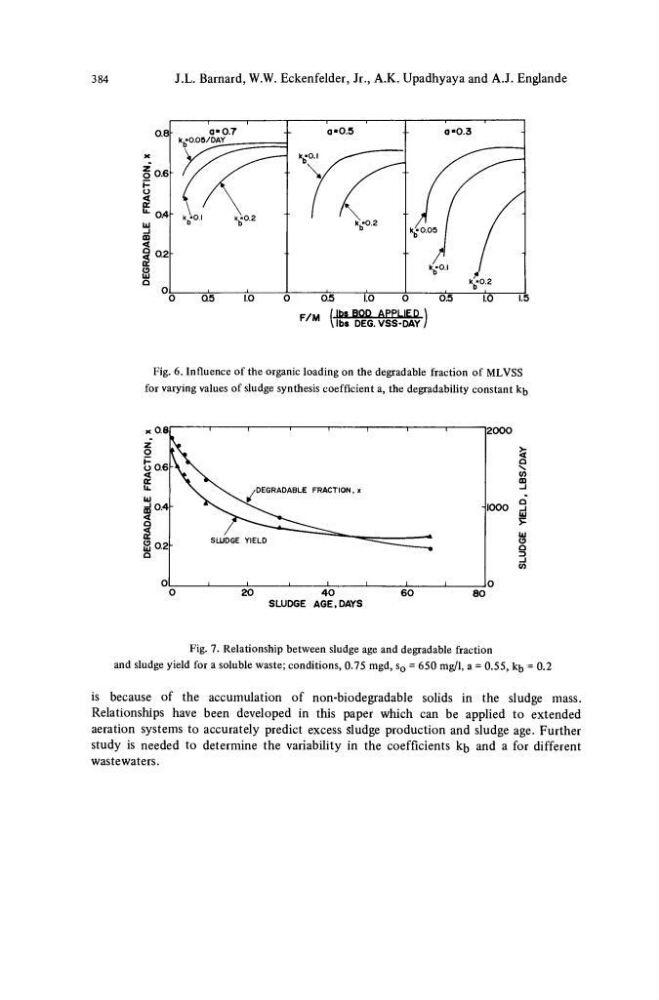
Fig. 6. Influence of the organic loading on the degradable fraction of MLVSS
for varying values of sludge synthesis coefficient a, the degradability constant k^
DEGRADABLE FRACTION, x
_l
I
L·
20
4 0
SLUDGE AGE.DAYS
12000
1000
Q
in
CD
hi
UJ
e>
Q
60
8 0
Fig. 7. Relationship between sludge age and degradable fraction
and sludge yield for a soluble waste; conditions, 0.75 mgd, s 0 = 650 mg/1, a = 0.55, kfc = 0.2
is because of the accumulation of non-biodegradable solids in the sludge mass.
Relationships have been developed in this paper which can be applied to extended
aeration systems to accurately predict excess sludge production and sludge age. Further
study is needed to determine the variability in the coefficients kfo and a for different
waste waters.
J.L. Barnard, W.W. Eckenfelder, Jr., A.K. Upadhyaya and AJ. Englande
F / M
(lbs BOD APPLIED)
r/m
libs DEG.VSS-DAY/
Fig. 6. Influence of the organic loading on the degradable fraction of MLVSS
for varying values of sludge synthesis coefficient a, the degradability constant k^
DEGRADABLE FRACTION, x
_l
I
L·
20
4 0
SLUDGE AGE.DAYS
12000
1000
Q
in
CD
hi
UJ
e>
Q
60
8 0
Fig. 7. Relationship between sludge age and degradable fraction
and sludge yield for a soluble waste; conditions, 0.75 mgd, s 0 = 650 mg/1, a = 0.55, kfc = 0.2
is because of the accumulation of non-biodegradable solids in the sludge mass.
Relationships have been developed in this paper which can be applied to extended
aeration systems to accurately predict excess sludge production and sludge age. Further
study is needed to determine the variability in the coefficients kfo and a for different
waste waters.