

1. Wet weather sanitary sewage
2. Sewer Deposits
3. Surface Runoff
(a) Site 1
(b) Site 2
(c) Weighted mean
(50% Site 1,50% Site 2)
4. Total of Items 1, 2 and 3 (c)
100
33
620
168
394
527
330
D.H. Waller
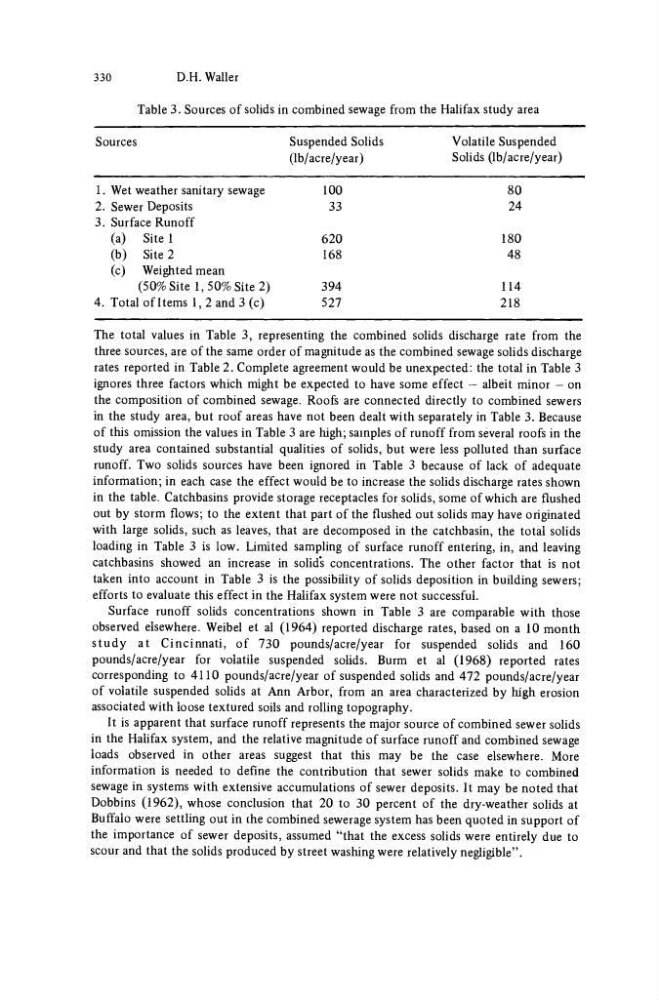
Table 3. Sources of solids in combined sewage from the Halifax study area
Sources
Suspended Solids
Volatile Suspended
(lb/acre/year)
Solids (lb/acre/year)
80
24
180
48
114
218
The total values in Table 3, representing the combined solids discharge rate from the
three sources, are of the same order of magnitude as the combined sewage solids discharge
rates reported in Table 2. Complete agreement would be unexpected: the total in Table 3
ignores three factors which might be expected to have some effect - albeit minor - on
the composition of combined sewage. Roofs are connected directly to combined sewers
in the study area, but roof areas have not been dealt with separately in Table 3. Because
of this omission the values in Table 3 are high; samples of runoff from several roofs in the
study area contained substantial qualities of solids, but were less polluted than surface
runoff. Two solids sources have been ignored in Table 3 because of lack of adequate
information; in each case the effect would be to increase the solids discharge rates shown
in the table. Catchbasins provide storage receptacles for solids, some of which are flushed
out by storm flows; to the extent that part of the flushed out solids may have originated
with large solids, such as leaves, that are decomposed in the catchbasin, the total solids
loading in Table 3 is low. Limited sampling of surface runoff entering, in, and leaving
catchbasins showed an increase in solids concentrations. The other factor that is not
taken into account in Table 3 is the possibility of solids deposition in building sewers;
efforts to evaluate this effect in the Halifax system were not successful.
Surface runoff solids concentrations shown in Table 3 are comparable with those
observed elsewhere. Weibel et al (1964) reported discharge rates, based on a 10 month
study at Cincinnati, of 730 pounds/acre/year for suspended solids and 160
pounds/acre/year for volatile suspended solids. Burm et al (1968) reported rates
corresponding to 4110 pounds/acre/year of suspended solids and 472 pounds/acre/year
of volatile suspended solids at Ann Arbor, from an area characterized by high erosion
associated with loose textured soils and rolling topography.
It is apparent that surface runoff represents the major source of combined sewer solids
in the Halifax system, and the relative magnitude of surface runoff and combined sewage
loads observed in other areas suggest that this may be the case elsewhere. More
information is needed to define the contribution that sewer solids make to combined
sewage in systems with extensive accumulations of sewer deposits. It may be noted that
Dobbins (1962), whose conclusion that 20 to 30 percent of the dry-weather solids at
Buffalo were settling out in ehe combined sewerage system has been quoted in support of
the importance of sewer deposits, assumed "that the excess solids were entirely due to
scour and that the solids produced by street washing were relatively negligible".
2. Sewer Deposits
3. Surface Runoff
(a) Site 1
(b) Site 2
(c) Weighted mean
(50% Site 1,50% Site 2)
4. Total of Items 1, 2 and 3 (c)
100
33
620
168
394
527
330
D.H. Waller
Table 3. Sources of solids in combined sewage from the Halifax study area
Sources
Suspended Solids
Volatile Suspended
(lb/acre/year)
Solids (lb/acre/year)
80
24
180
48
114
218
The total values in Table 3, representing the combined solids discharge rate from the
three sources, are of the same order of magnitude as the combined sewage solids discharge
rates reported in Table 2. Complete agreement would be unexpected: the total in Table 3
ignores three factors which might be expected to have some effect - albeit minor - on
the composition of combined sewage. Roofs are connected directly to combined sewers
in the study area, but roof areas have not been dealt with separately in Table 3. Because
of this omission the values in Table 3 are high; samples of runoff from several roofs in the
study area contained substantial qualities of solids, but were less polluted than surface
runoff. Two solids sources have been ignored in Table 3 because of lack of adequate
information; in each case the effect would be to increase the solids discharge rates shown
in the table. Catchbasins provide storage receptacles for solids, some of which are flushed
out by storm flows; to the extent that part of the flushed out solids may have originated
with large solids, such as leaves, that are decomposed in the catchbasin, the total solids
loading in Table 3 is low. Limited sampling of surface runoff entering, in, and leaving
catchbasins showed an increase in solids concentrations. The other factor that is not
taken into account in Table 3 is the possibility of solids deposition in building sewers;
efforts to evaluate this effect in the Halifax system were not successful.
Surface runoff solids concentrations shown in Table 3 are comparable with those
observed elsewhere. Weibel et al (1964) reported discharge rates, based on a 10 month
study at Cincinnati, of 730 pounds/acre/year for suspended solids and 160
pounds/acre/year for volatile suspended solids. Burm et al (1968) reported rates
corresponding to 4110 pounds/acre/year of suspended solids and 472 pounds/acre/year
of volatile suspended solids at Ann Arbor, from an area characterized by high erosion
associated with loose textured soils and rolling topography.
It is apparent that surface runoff represents the major source of combined sewer solids
in the Halifax system, and the relative magnitude of surface runoff and combined sewage
loads observed in other areas suggest that this may be the case elsewhere. More
information is needed to define the contribution that sewer solids make to combined
sewage in systems with extensive accumulations of sewer deposits. It may be noted that
Dobbins (1962), whose conclusion that 20 to 30 percent of the dry-weather solids at
Buffalo were settling out in ehe combined sewerage system has been quoted in support of
the importance of sewer deposits, assumed "that the excess solids were entirely due to
scour and that the solids produced by street washing were relatively negligible".