

Cost and Performance of Retention Basins
329
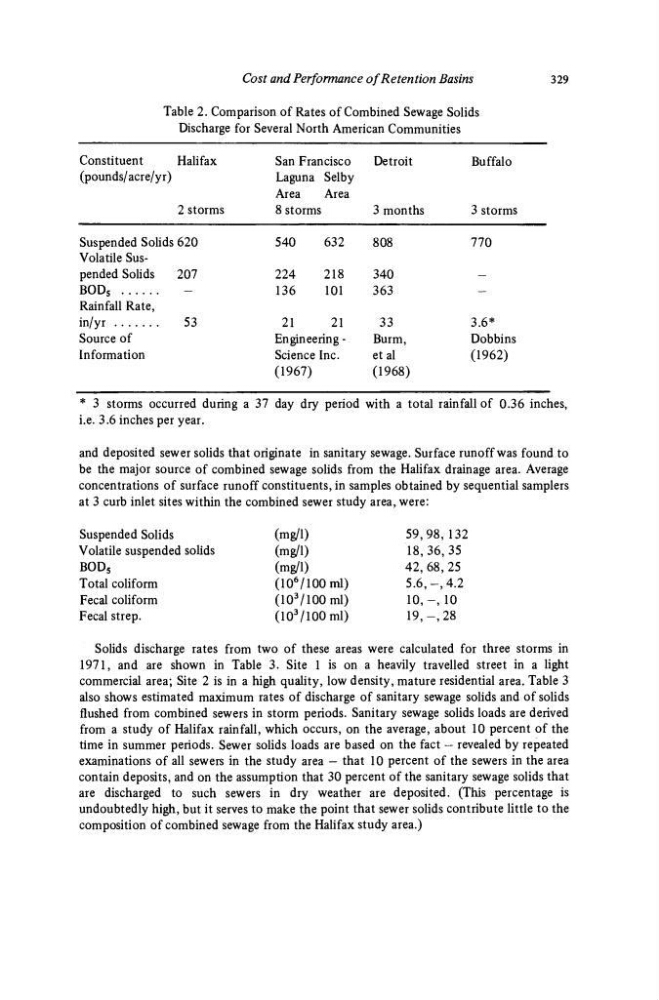
Table 2. Comparison of Rates of Combined Sewage Solids
Discharge for Several North American Communities
Constituent
(pounds/acre/yr)
Halifax
2 storms
Suspended Solids 620
Volatile Suspended Solids
BOD 5
Rainfall Rate,
in/yr
Source of
Information
207
—
53
San Francisco
Laguna Selby
Area
Area
8 storms
540
632
224
218
136
101
21
21
Engineering -
Science Inc.
(1967)
Detroit
3 months
808
340
363
33
Burm,
etal
(1968)
Buffalo
3 storms
770
-
—
3.6*
Dobbins
(1962)
* 3 storms occurred during a 37 day dry period with a total rainfall of 0.36 inches,
i.e. 3.6 inches per year.
and deposited sewer solids that originate in sanitary sewage. Surface runoff was found to
be the major source of combined sewage solids from the Halifax drainage area. Average
concentrations of surface runoff constituents, in samples obtained by sequential samplers
at 3 curb inlet sites within the combined sewer study area, were:
Suspended Solids
(mg/1)
59, 98, 132
Volatile suspended solids
(mg/1)
18,36,35
BOD s
(mg/1)
42,68,25
Total conform
(10
6 /100ml)
5.6,-,4.2
Fecal coliform
(10
3 /100 ml)
10, - , 10
Fecal strep.
(10
3 /100ml)
1 9 , - , 2 8
Solids discharge rates from two of these areas were calculated for three storms in
1971, and are shown in Table 3. Site 1 is on a heavily travelled street in a light
commercial area; Site 2 is in a high quality, low density, mature residential area. Table 3
also shows estimated maximum rates of discharge of sanitary sewage solids and of solids
flushed from combined sewers in storm periods. Sanitary sewage solids loads are derived
from a study of Halifax rainfall, which occurs, on the average, about 10 percent of the
time in summer periods. Sewer solids loads are based on the fact - revealed by repeated
examinations of all sewers in the study area — that 10 percent of the sewers in the area
contain deposits, and on the assumption that 30 percent of the sanitary sewage solids that
are discharged to such sewers in dry weather are deposited. (This percentage is
undoubtedly high, but it serves to make the point that sewer solids contribute little to the
composition of combined sewage from the Halifax study area.)
329
Table 2. Comparison of Rates of Combined Sewage Solids
Discharge for Several North American Communities
Constituent
(pounds/acre/yr)
Halifax
2 storms
Suspended Solids 620
Volatile Suspended Solids
BOD 5
Rainfall Rate,
in/yr
Source of
Information
207
—
53
San Francisco
Laguna Selby
Area
Area
8 storms
540
632
224
218
136
101
21
21
Engineering -
Science Inc.
(1967)
Detroit
3 months
808
340
363
33
Burm,
etal
(1968)
Buffalo
3 storms
770
-
—
3.6*
Dobbins
(1962)
* 3 storms occurred during a 37 day dry period with a total rainfall of 0.36 inches,
i.e. 3.6 inches per year.
and deposited sewer solids that originate in sanitary sewage. Surface runoff was found to
be the major source of combined sewage solids from the Halifax drainage area. Average
concentrations of surface runoff constituents, in samples obtained by sequential samplers
at 3 curb inlet sites within the combined sewer study area, were:
Suspended Solids
(mg/1)
59, 98, 132
Volatile suspended solids
(mg/1)
18,36,35
BOD s
(mg/1)
42,68,25
Total conform
(10
6 /100ml)
5.6,-,4.2
Fecal coliform
(10
3 /100 ml)
10, - , 10
Fecal strep.
(10
3 /100ml)
1 9 , - , 2 8
Solids discharge rates from two of these areas were calculated for three storms in
1971, and are shown in Table 3. Site 1 is on a heavily travelled street in a light
commercial area; Site 2 is in a high quality, low density, mature residential area. Table 3
also shows estimated maximum rates of discharge of sanitary sewage solids and of solids
flushed from combined sewers in storm periods. Sanitary sewage solids loads are derived
from a study of Halifax rainfall, which occurs, on the average, about 10 percent of the
time in summer periods. Sewer solids loads are based on the fact - revealed by repeated
examinations of all sewers in the study area — that 10 percent of the sewers in the area
contain deposits, and on the assumption that 30 percent of the sanitary sewage solids that
are discharged to such sewers in dry weather are deposited. (This percentage is
undoubtedly high, but it serves to make the point that sewer solids contribute little to the
composition of combined sewage from the Halifax study area.)