

(Xiphiasgladius) along with other tunas and billfishes (around 6%), 19% cephalopods, 1% hake
(Merlucciusmerluccius); 0.6% sardine (Sardinapilchardus), the remainder consisting of other
fishes (Soleidae, Mugilidae, Triglidae, Rajidae, Serranidae, etc.) and overlapping with the species targeted by the small-scale commercial sector.
Spearfishing catches
Spearfishing catches estimated increased from 620 tonnes in 2011 to 730 tonnes in 2015
(Table 2 and Fig 4). The composition of the spearfished catch depends on the demand,
but it essentially includes goldblotch groupers (Epinephelus costae, 70%), dusky grouper,
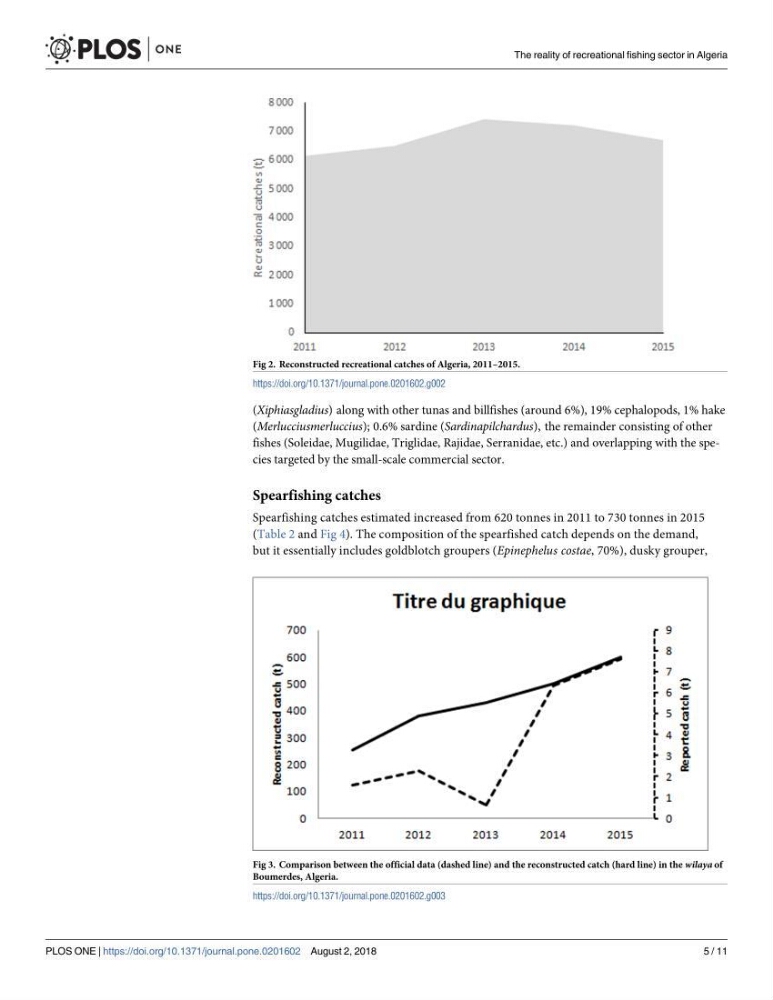
Fig 2. Reconstructed recreational catches of Algeria, 2011–2015.
https://doi.org/10.1371/journal.pone.0201602.g002
Fig 3. Comparison between the official data (dashed line) and the reconstructed catch (hard line) in the wilaya of
Boumerdes, Algeria.
https://doi.org/10.1371/journal.pone.0201602.g003
The reality of recreational fishing sector in Algeria
PLOS ONE | https://doi.org/10.1371/journal.pone.0201602 August 2, 2018
5 / 11
(Merlucciusmerluccius); 0.6% sardine (Sardinapilchardus), the remainder consisting of other
fishes (Soleidae, Mugilidae, Triglidae, Rajidae, Serranidae, etc.) and overlapping with the species targeted by the small-scale commercial sector.
Spearfishing catches
Spearfishing catches estimated increased from 620 tonnes in 2011 to 730 tonnes in 2015
(Table 2 and Fig 4). The composition of the spearfished catch depends on the demand,
but it essentially includes goldblotch groupers (Epinephelus costae, 70%), dusky grouper,
Fig 2. Reconstructed recreational catches of Algeria, 2011–2015.
https://doi.org/10.1371/journal.pone.0201602.g002
Fig 3. Comparison between the official data (dashed line) and the reconstructed catch (hard line) in the wilaya of
Boumerdes, Algeria.
https://doi.org/10.1371/journal.pone.0201602.g003
The reality of recreational fishing sector in Algeria
PLOS ONE | https://doi.org/10.1371/journal.pone.0201602 August 2, 2018
5 / 11