

141
β est la pente du fond.
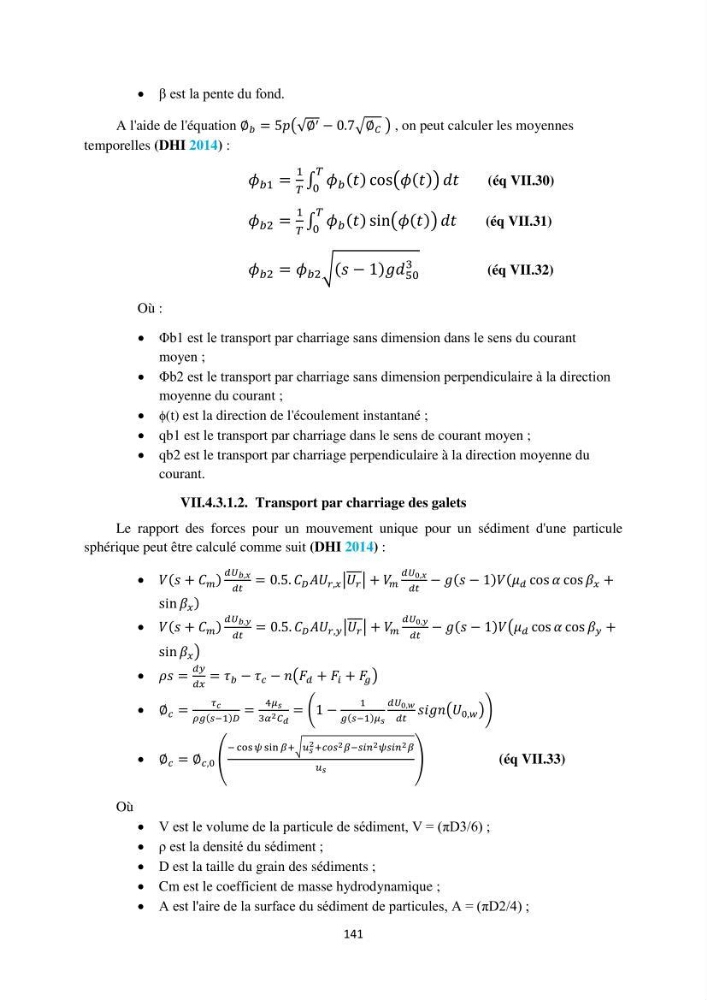
A l'aide de l'équation ∅ í µí± = 5í µí±(√∅ ′ − 0.7√∅ í µí°¶ ) , on peut calculer les moyennes
temporelles (DHI 2014) :
í µí¼ í µí±1 =
1
í µí±
∫ í µí¼ í µí± (í µí±¡) cos(í µí¼(í µí±¡))
í µí±
0
í µí±í µí(éq VII.30)
í µí¼ í µí±2 =
1
í µí±
∫ í µí¼ í µí± (í µí±¡) sin(í µí¼(í µí±¡))
í µí±
0
í µí±í µí(éq VII.31)
í µí¼ í µí±2 = í µí¼ í µí±2 √(í µí± − 1)í µí±í µí± 50
3
(éq VII.32)
Où :
Φb1 est le transport par charriage sans dimension dans le sens du courant
moyen ;
Φb2 est le transport par charriage sans dimension perpendiculaire à la direction
moyenne du courant ;
(t) est la direction de l'écoulement instantané ;
qb1 est le transport par charriage dans le sens de courant moyen ;
qb2 est le transport par charriage perpendiculaire à la direction moyenne du
courant.
VII.4.3.1.2. Transport par charriage des galets
Le rapport des forces pour un mouvement unique pour un sédiment d'une particule
sphérique peut être calculé comme suit (DHI 2014) :
í µí±(í µí± + í µí°¶ í µí± )
í µí±í µí± í µí±,í µí±¥
í µí±í µí= 0.5. í µí°¶ í µí°· í µí°´í µí± í µí±,í µí±¥ |í µí± í µí± | + í µí± í µí±
í µí±í µí± 0,í µí±¥
í µí±í µí− í µí±(í µí± − 1)í µí±(í µí¼ í µí± cos í µí»¼ cos í µí»½ í µí±¥ +
sin í µí»½ í µí±¥ )
í µí±(í µí± + í µí°¶ í µí± )
í µí±í µí± í µí±,í µí±¦
í µí±í µí= 0.5. í µí°¶ í µí°· í µí°´í µí± í µí±,í µí±¦ |í µí± í µí± | + í µí± í µí±
í µí±í µí± 0,í µí±¦
í µí±í µí− í µí±(í µí± − 1)í µí±(í µí¼ í µí± cos í µí»¼ cos í µí»½ í µí±¦ +
sin í µí»½ í µí±¥ )
í µí¼í µí± =
í µí±í µí±¦
í µí±í µí±¥
= í µí¼ í µí± − í µí¼ í µí± − í µí±(í µí°¹ í µí± + í µí°¹ í µí± + í µí°¹ í µí± )
∅ í µí± =
í µí¼ í µí±
í µí¼í µí±(í µí± −1)í µí°·
=
4í µí¼ í µí±
3í µí»¼ 2 í µí°¶ í µí±
= (1 −
1
í µí±(í µí± −1)í µí¼ í µí±
í µí±í µí± 0,í µí±¤
í µí±í µíí µí± í µí±í µí±í µí±(í µí± 0,í µí±¤ ))
∅ í µí± = ∅ í µí±,0 (
− cos í µí¼ sin í µí»½+√í µí±¢ í µí±
2 +í µí±í µí±í µí± 2 í µí»½−í µí± í µí±í µí± 2 í µí¼í µí± í µí±í µí± 2 í µí»½
í µí±¢ í µí±
)
(éq VII.33)
Où
V est le volume de la particule de sédiment, V = (πD3/6) ;
ρ est la densité du sédiment ;
D est la taille du grain des sédiments ;
Cm est le coefficient de masse hydrodynamique ;
A est l'aire de la surface du sédiment de particules, A = (πD2/4) ;
β est la pente du fond.
A l'aide de l'équation ∅ í µí± = 5í µí±(√∅ ′ − 0.7√∅ í µí°¶ ) , on peut calculer les moyennes
temporelles (DHI 2014) :
í µí¼ í µí±1 =
1
í µí±
∫ í µí¼ í µí± (í µí±¡) cos(í µí¼(í µí±¡))
í µí±
0
í µí±í µí(éq VII.30)
í µí¼ í µí±2 =
1
í µí±
∫ í µí¼ í µí± (í µí±¡) sin(í µí¼(í µí±¡))
í µí±
0
í µí±í µí(éq VII.31)
í µí¼ í µí±2 = í µí¼ í µí±2 √(í µí± − 1)í µí±í µí± 50
3
(éq VII.32)
Où :
Φb1 est le transport par charriage sans dimension dans le sens du courant
moyen ;
Φb2 est le transport par charriage sans dimension perpendiculaire à la direction
moyenne du courant ;
(t) est la direction de l'écoulement instantané ;
qb1 est le transport par charriage dans le sens de courant moyen ;
qb2 est le transport par charriage perpendiculaire à la direction moyenne du
courant.
VII.4.3.1.2. Transport par charriage des galets
Le rapport des forces pour un mouvement unique pour un sédiment d'une particule
sphérique peut être calculé comme suit (DHI 2014) :
í µí±(í µí± + í µí°¶ í µí± )
í µí±í µí± í µí±,í µí±¥
í µí±í µí= 0.5. í µí°¶ í µí°· í µí°´í µí± í µí±,í µí±¥ |í µí± í µí± | + í µí± í µí±
í µí±í µí± 0,í µí±¥
í µí±í µí− í µí±(í µí± − 1)í µí±(í µí¼ í µí± cos í µí»¼ cos í µí»½ í µí±¥ +
sin í µí»½ í µí±¥ )
í µí±(í µí± + í µí°¶ í µí± )
í µí±í µí± í µí±,í µí±¦
í µí±í µí= 0.5. í µí°¶ í µí°· í µí°´í µí± í µí±,í µí±¦ |í µí± í µí± | + í µí± í µí±
í µí±í µí± 0,í µí±¦
í µí±í µí− í µí±(í µí± − 1)í µí±(í µí¼ í µí± cos í µí»¼ cos í µí»½ í µí±¦ +
sin í µí»½ í µí±¥ )
í µí¼í µí± =
í µí±í µí±¦
í µí±í µí±¥
= í µí¼ í µí± − í µí¼ í µí± − í µí±(í µí°¹ í µí± + í µí°¹ í µí± + í µí°¹ í µí± )
∅ í µí± =
í µí¼ í µí±
í µí¼í µí±(í µí± −1)í µí°·
=
4í µí¼ í µí±
3í µí»¼ 2 í µí°¶ í µí±
= (1 −
1
í µí±(í µí± −1)í µí¼ í µí±
í µí±í µí± 0,í µí±¤
í µí±í µíí µí± í µí±í µí±í µí±(í µí± 0,í µí±¤ ))
∅ í µí± = ∅ í µí±,0 (
− cos í µí¼ sin í µí»½+√í µí±¢ í µí±
2 +í µí±í µí±í µí± 2 í µí»½−í µí± í µí±í µí± 2 í µí¼í µí± í µí±í µí± 2 í µí»½
í µí±¢ í µí±
)
(éq VII.33)
Où
V est le volume de la particule de sédiment, V = (πD3/6) ;
ρ est la densité du sédiment ;
D est la taille du grain des sédiments ;
Cm est le coefficient de masse hydrodynamique ;
A est l'aire de la surface du sédiment de particules, A = (πD2/4) ;