

34
Temperature
0
4
8
12
16
20
24
Daylength (hrs)
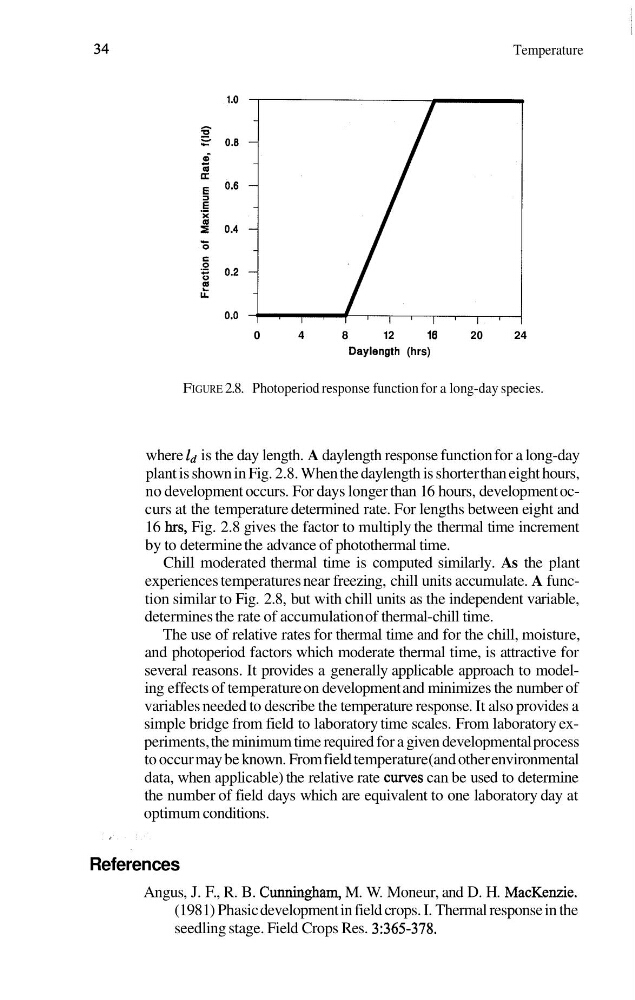
FIGURE 2.8. Photoperiod response function for a long-day species.
where Id is the day length. A daylength response function for a long-day
plant is shown in Fig. 2.8. When the daylength is shorter than eight hours,
no development occurs. For days longer than 16 hours, development occurs at the temperature determined rate. For lengths between eight and
16 hrs, Fig. 2.8 gives the factor to multiply the thermal time increment
by to determine the advance of photothermal time.
Chill moderated thermal time is computed similarly. As the plant
experiences temperatures near freezing, chill units accumulate. A function similar to Fig. 2.8, but with chill units as the independent variable,
determines the rate of accumulation of thermal-chill time.
The use of relative rates for thermal time and for the chill, moisture,
and photoperiod factors which moderate thermal time, is attractive for
several reasons. It provides a generally applicable approach to modeling effects of temperature on development and minimizes the number of
variables needed to describe the temperature response. It also provides a
simple bridge from field to laboratory time scales. From laboratory experiments, the minimum time required for a given developmental process
to occur may be known. From field temperature (and other environmental
data, when applicable) the relative rate curves can be used to determine
the number of field days which are equivalent to one laboratory day at
optimum conditions.
References
Angus, J. F., R. B. Cunningham, M. W. Moneur, and D. H. MacKenzie.
(198 1) Phasic development in field crops. I. Thermal response in the
seedling stage. Field Crops Res. 3:365-378.
Temperature
0
4
8
12
16
20
24
Daylength (hrs)
FIGURE 2.8. Photoperiod response function for a long-day species.
where Id is the day length. A daylength response function for a long-day
plant is shown in Fig. 2.8. When the daylength is shorter than eight hours,
no development occurs. For days longer than 16 hours, development occurs at the temperature determined rate. For lengths between eight and
16 hrs, Fig. 2.8 gives the factor to multiply the thermal time increment
by to determine the advance of photothermal time.
Chill moderated thermal time is computed similarly. As the plant
experiences temperatures near freezing, chill units accumulate. A function similar to Fig. 2.8, but with chill units as the independent variable,
determines the rate of accumulation of thermal-chill time.
The use of relative rates for thermal time and for the chill, moisture,
and photoperiod factors which moderate thermal time, is attractive for
several reasons. It provides a generally applicable approach to modeling effects of temperature on development and minimizes the number of
variables needed to describe the temperature response. It also provides a
simple bridge from field to laboratory time scales. From laboratory experiments, the minimum time required for a given developmental process
to occur may be known. From field temperature (and other environmental
data, when applicable) the relative rate curves can be used to determine
the number of field days which are equivalent to one laboratory day at
optimum conditions.
References
Angus, J. F., R. B. Cunningham, M. W. Moneur, and D. H. MacKenzie.
(198 1) Phasic development in field crops. I. Thermal response in the
seedling stage. Field Crops Res. 3:365-378.