

Sun Angles and Daylength
169
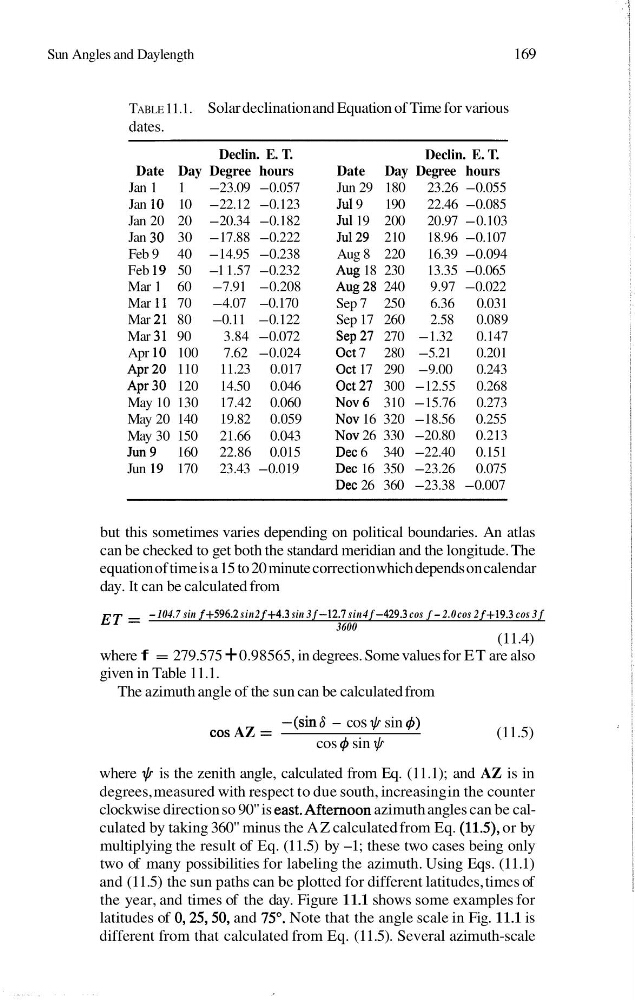
TABLE 1 1.1. Solar declination and Equation of Time for various
dates.
Declin. E. T.
Date Day Degree hours
Jan 1 1
-23.09 -0.057
Jan 10 10 -22.12 -0.123
Jan 20 20 -20.34 -0.182
Jan 30 30 -17.88 -0.222
Feb 9 40 -14.95 -0.238
Feb 19 50 -1 1.57 -0.232
Mar 1 60 -7.91 -0.208
Mar 11 70 -4.07 -0.170
Mar 21 80 -0.11 -0.122
Mar 31 90
3.84 -0.072
Apr 10 100
7.62 -0.024
Apr20 110 11.23 0.017
Apr30 120 14.50 0.046
May 10 130 17.42 0.060
May 20 140
19.82 0.059
May 30 150
21.66 0.043
Jun9 160 22.86 0.015
Jun 19 170 23.43 -0.019
Declin. E. T.
Date Day Degree hours
Jun 29 180 23.26 -0.055
JuI 9 190
22.46 -0.085
J u ~
19 200
20.97 -0.103
Ju129 210 18.96 -0.107
Aug 8 220 16.39 -0.094
Aug 18 230
13.35 -0.065
Aug28 240
9.97 -0.022
Sep 7 250
6.36
0.031
Sep 17 260
2.58
0.089
Sep27 270 -1.32
0.147
Oct 7 280 -5.21
0.201
Oct 17 290 -9.00
0.243
Oct27 300 -12.55 0.268
Nov6 310 -15.76 0.273
Nov 16 320 -18.56 0.255
NOV 26 330 -20.80 0.213
Dec 6 340 -22.40 0.151
Dec 16 350 -23.26 0.075
Dec 26 360 -23.38 -0.007
but this sometimes varies depending on political boundaries. An atlas
can be checked to get both the standard meridian and the longitude. The
equation of time is a 15 to 20 minute correction which depends on calendar
day. It can be calculated from
ET = -104.7 sin f+596.2 sin2 f f 4 . 3 sin 3 f -12.7 sin4 f -429.3 cos f -2.0 cos 2 f+l9.3 cos 3 f
3600
(1 1.4)
where f = 279.575 + 0.98565, in degrees. Some values for ET are also
given in Table 1 1.1.
The azimuth angle of the sun can be calculated from
-(sin 6 - cos I) sin 4)
cos AZ =
(1 1.5)
cos 4 sin I)
where @ is the zenith angle, calculated from Eq. (1 1.1); and AZ is in
degrees, measured with respect to due south, increasing in the counter
clockwise direction so 90" is east.Afternoon azimuth angles can be calculated by taking 360" minus the AZ calculated from Eq. (11.5), or by
multiplying the result of Eq. (11.5) by -1; these two cases being only
two of many possibilities for labeling the azimuth. Using Eqs. (11.1)
and (11.5) the sun paths can be plotted for different latitudes, times of
the year, and times of the day. Figure 11.1 shows some examples for
latitudes of 0,25,50, and 75". Note that the angle scale in Fig. 11.1 is
different from that calculated from Eq. (11.5). Several azimuth-scale
169
TABLE 1 1.1. Solar declination and Equation of Time for various
dates.
Declin. E. T.
Date Day Degree hours
Jan 1 1
-23.09 -0.057
Jan 10 10 -22.12 -0.123
Jan 20 20 -20.34 -0.182
Jan 30 30 -17.88 -0.222
Feb 9 40 -14.95 -0.238
Feb 19 50 -1 1.57 -0.232
Mar 1 60 -7.91 -0.208
Mar 11 70 -4.07 -0.170
Mar 21 80 -0.11 -0.122
Mar 31 90
3.84 -0.072
Apr 10 100
7.62 -0.024
Apr20 110 11.23 0.017
Apr30 120 14.50 0.046
May 10 130 17.42 0.060
May 20 140
19.82 0.059
May 30 150
21.66 0.043
Jun9 160 22.86 0.015
Jun 19 170 23.43 -0.019
Declin. E. T.
Date Day Degree hours
Jun 29 180 23.26 -0.055
JuI 9 190
22.46 -0.085
J u ~
19 200
20.97 -0.103
Ju129 210 18.96 -0.107
Aug 8 220 16.39 -0.094
Aug 18 230
13.35 -0.065
Aug28 240
9.97 -0.022
Sep 7 250
6.36
0.031
Sep 17 260
2.58
0.089
Sep27 270 -1.32
0.147
Oct 7 280 -5.21
0.201
Oct 17 290 -9.00
0.243
Oct27 300 -12.55 0.268
Nov6 310 -15.76 0.273
Nov 16 320 -18.56 0.255
NOV 26 330 -20.80 0.213
Dec 6 340 -22.40 0.151
Dec 16 350 -23.26 0.075
Dec 26 360 -23.38 -0.007
but this sometimes varies depending on political boundaries. An atlas
can be checked to get both the standard meridian and the longitude. The
equation of time is a 15 to 20 minute correction which depends on calendar
day. It can be calculated from
ET = -104.7 sin f+596.2 sin2 f f 4 . 3 sin 3 f -12.7 sin4 f -429.3 cos f -2.0 cos 2 f+l9.3 cos 3 f
3600
(1 1.4)
where f = 279.575 + 0.98565, in degrees. Some values for ET are also
given in Table 1 1.1.
The azimuth angle of the sun can be calculated from
-(sin 6 - cos I) sin 4)
cos AZ =
(1 1.5)
cos 4 sin I)
where @ is the zenith angle, calculated from Eq. (1 1.1); and AZ is in
degrees, measured with respect to due south, increasing in the counter
clockwise direction so 90" is east.Afternoon azimuth angles can be calculated by taking 360" minus the AZ calculated from Eq. (11.5), or by
multiplying the result of Eq. (11.5) by -1; these two cases being only
two of many possibilities for labeling the azimuth. Using Eqs. (11.1)
and (11.5) the sun paths can be plotted for different latitudes, times of
the year, and times of the day. Figure 11.1 shows some examples for
latitudes of 0,25,50, and 75". Note that the angle scale in Fig. 11.1 is
different from that calculated from Eq. (11.5). Several azimuth-scale