

Definitions
In environmental biophysics we often deal with the thermal radiation
exchange between objects and the clear sky. Under these conditions the
emissivity in the 8 to 14 p m portion of the 4 to 80 p m wavelength band
is most important. On the rare occasion that we are interested in the
emissivity of a particular wavelength band, for example the 8 to 14 p m
wavelength band of many infrared thermometers, we use EgPl4.
From Eq. (10.2) it can be seen that radiative properties of a material
(reflection, absorption, transmission coefficients, and emissivity) depend
on the wavelength distribution of the source of radiation, as well as the
characteristics of the material. A useful way to conceptualize radiation
interaction with matter is to always recognize that a source, a medium,
and a receiver are involved. The intervening medium is often referred to
as a filter. Filters can be natural, such as the atmosphere or water, or they
can be artificial and manufactured to accomplish some particular task.
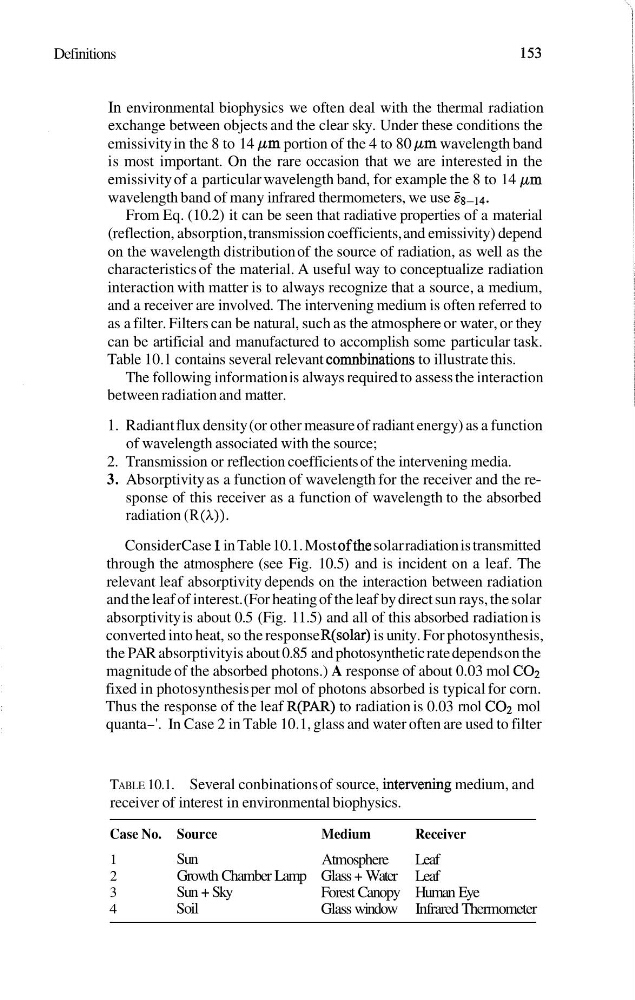
Table 10.1 contains several relevant comnbinations to illustrate this.
The following information is always required to assess the interaction
between radiation and matter.
1. Radiant flux density (or other measure of radiant energy) as a function
of wavelength associated with the source;
2. Transmission or reflection coefficients of the intervening media.
3. Absorptivity as a function of wavelength for the receiver and the response of this receiver as a function of wavelength to the absorbed
radiation (R (A)).
Consider Case 1 in Table 10.1. Most ofthe solar radiation is transmitted
through the atmosphere (see Fig. 10.5) and is incident on a leaf. The
relevant leaf absorptivity depends on the interaction between radiation
and the leaf of interest. (For heating of the leaf by direct sun rays, the solar
absorptivity is about 0.5 (Fig. 11.5) and all of this absorbed radiation is
converted into heat, so the response R(so1ar) is unity. For photosynthesis,
the PAR absorptivity is about 0.85 and photosynthetic rate depends on the
magnitude of the absorbed photons.) A response of about 0.03 mol C02
fixed in photosynthesis per mol of photons absorbed is typical for corn.
Thus the response of the leaf R(PAR) to radiation is 0.03 rnol COz mol
quanta-'. In Case 2 in Table 10.1, glass and water often are used to filter
TABLE 10.1. Several conbinations of source, intervening medium, and
receiver of interest in environmental biophysics.
Case No. Source
Medium
Receiver
1
Sun
Atmosphere
Leaf
2
Growth Chamber Lamp Glass + Water Leaf
3
Sun + Sky
Forest Canopy Human Eye
4
Soil
Glass window Infrared Thermometer
In environmental biophysics we often deal with the thermal radiation
exchange between objects and the clear sky. Under these conditions the
emissivity in the 8 to 14 p m portion of the 4 to 80 p m wavelength band
is most important. On the rare occasion that we are interested in the
emissivity of a particular wavelength band, for example the 8 to 14 p m
wavelength band of many infrared thermometers, we use EgPl4.
From Eq. (10.2) it can be seen that radiative properties of a material
(reflection, absorption, transmission coefficients, and emissivity) depend
on the wavelength distribution of the source of radiation, as well as the
characteristics of the material. A useful way to conceptualize radiation
interaction with matter is to always recognize that a source, a medium,
and a receiver are involved. The intervening medium is often referred to
as a filter. Filters can be natural, such as the atmosphere or water, or they
can be artificial and manufactured to accomplish some particular task.
Table 10.1 contains several relevant comnbinations to illustrate this.
The following information is always required to assess the interaction
between radiation and matter.
1. Radiant flux density (or other measure of radiant energy) as a function
of wavelength associated with the source;
2. Transmission or reflection coefficients of the intervening media.
3. Absorptivity as a function of wavelength for the receiver and the response of this receiver as a function of wavelength to the absorbed
radiation (R (A)).
Consider Case 1 in Table 10.1. Most ofthe solar radiation is transmitted
through the atmosphere (see Fig. 10.5) and is incident on a leaf. The
relevant leaf absorptivity depends on the interaction between radiation
and the leaf of interest. (For heating of the leaf by direct sun rays, the solar
absorptivity is about 0.5 (Fig. 11.5) and all of this absorbed radiation is
converted into heat, so the response R(so1ar) is unity. For photosynthesis,
the PAR absorptivity is about 0.85 and photosynthetic rate depends on the
magnitude of the absorbed photons.) A response of about 0.03 mol C02
fixed in photosynthesis per mol of photons absorbed is typical for corn.
Thus the response of the leaf R(PAR) to radiation is 0.03 rnol COz mol
quanta-'. In Case 2 in Table 10.1, glass and water often are used to filter
TABLE 10.1. Several conbinations of source, intervening medium, and
receiver of interest in environmental biophysics.
Case No. Source
Medium
Receiver
1
Sun
Atmosphere
Leaf
2
Growth Chamber Lamp Glass + Water Leaf
3
Sun + Sky
Forest Canopy Human Eye
4
Soil
Glass window Infrared Thermometer