

WORLD ATLAS OF CORAL REEFS
purposes, and cover a broad range of management
regimes, from strict protection for the total preservation of
natural ecosystem processes, to the measured and interactive management of a seascape with multiple human
uses, through to a fisheries protection role within a wider
system of fisheries management.
Overall, the majority of existing coral reef protected
areas have been established with nature conservation as
their primary motive. Scientists and non-governmental
organizations (NGOs) have been key in driving for the
designation of such sites, while commitments at national
and international levels have strongly encouraged governments to act to set aside areas for biodiversity conservation.
In reality, sites which are established without broader
consideration of local communities, and without clearly
accounting for the various costs and benefits involved
in their establishment, are invariably met with opposition,
or simply ignored. A great many of the sites listed as protected around the world are poorly managed or ineffective.
"Paper parks" are a very real problem worldwide. These
are sites with a legal status, but are unmarked and often
forgotten on the ground.
Without adequate management many of the threats
facing parks will continue or increase. With the exception
of remote sites and some privately protected areas, any
such management requires endorsement and support from
adjacent communities, while this in turn usually requires
recognition of clear economic benefits. Thus, although
biodiversity protection may be the driving force behind
the protection of sites, the inost successful attempts at
developing it have considered other issues, most notably
recreational and fisheries values.
Protected areas and fisheries
Overfishing is a problem on reefs worldwide. In the areas
where it occurs, the dependence of local communities on
reefs is often higher than anywhere else and so, while
control of fishing activities is urgently needed, it is also
particularly difficult to apply. Many protected areas have
failed and been ignored as poverty and the basic need for
food or income have driven people to continue utilizing
these sites for fishing.
Against this background, recent initiatives have
focussed very heavily on community involvement. A number of small areas within fishing grounds have been set
aside where strict rules of no-take are applied, with full
community cooperation. The results have been quite
remarkable. In sites such as Apo Island in the Philippines
and the Hoi Chan Marine Reserve in Belize, fish stocks in
reserves have grown rapidly in number, while individuals
of particular species have also reached considerable sizes.
This abundance leads to a significant net export of fish
from the reserve area, and yields immediately adjacent
to the reserve (where the fishers, of course, now choose to
fish) have boomed. The social and economic arguments
are incontrovertible. Within only a year or two of the
closure of an area to fishing, the total yields from the
wider fishing grounds around these and many other sites
around the world have risen, and continue towards a
plateau of higher and more sustaimble yields after five
or ten years. Further economic benefits have been gained
from tourism in a number of these no-take zones. The
high fish abundance makes for very popular dive sites,
and carefully managed tourism has little or no impact on
their continuing function as fish reserves.
Protected areas and tourism
In many areas around the world the economic and social
values associated with tourist arrivals are beginning to
compete with, or even outweigh, the value of reefs for
fisheries. Reef-based tourism is attracting millions of
divers per year, and these tourists will often select their
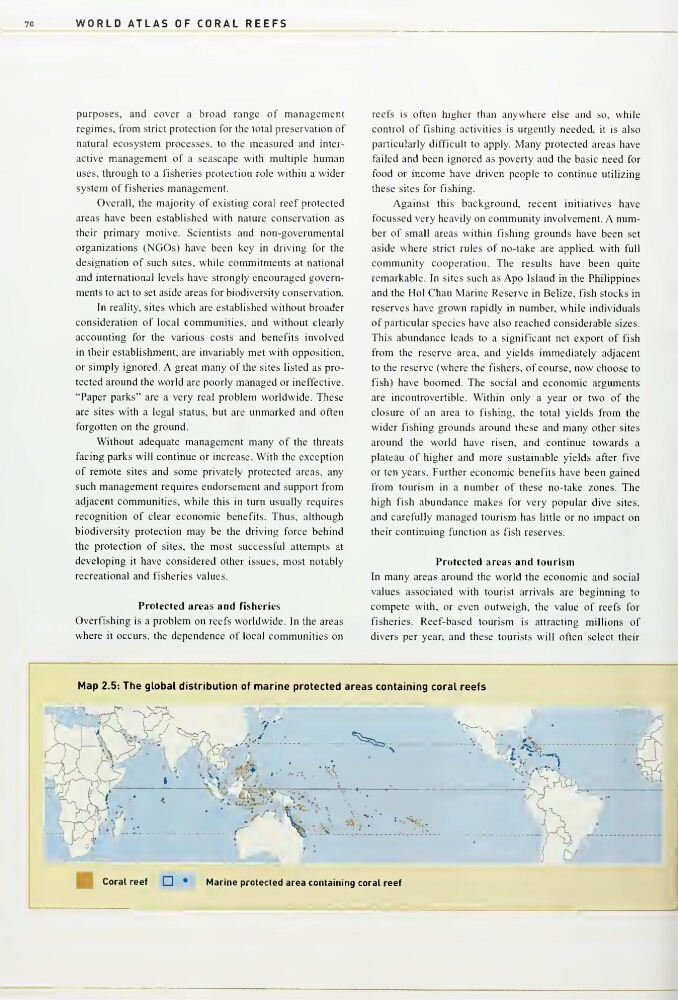
Map 2.5: The global distribution of marine protected areas containing coral reefs
'V-..
Coral reef
D • Marine protected area containing coral reef
purposes, and cover a broad range of management
regimes, from strict protection for the total preservation of
natural ecosystem processes, to the measured and interactive management of a seascape with multiple human
uses, through to a fisheries protection role within a wider
system of fisheries management.
Overall, the majority of existing coral reef protected
areas have been established with nature conservation as
their primary motive. Scientists and non-governmental
organizations (NGOs) have been key in driving for the
designation of such sites, while commitments at national
and international levels have strongly encouraged governments to act to set aside areas for biodiversity conservation.
In reality, sites which are established without broader
consideration of local communities, and without clearly
accounting for the various costs and benefits involved
in their establishment, are invariably met with opposition,
or simply ignored. A great many of the sites listed as protected around the world are poorly managed or ineffective.
"Paper parks" are a very real problem worldwide. These
are sites with a legal status, but are unmarked and often
forgotten on the ground.
Without adequate management many of the threats
facing parks will continue or increase. With the exception
of remote sites and some privately protected areas, any
such management requires endorsement and support from
adjacent communities, while this in turn usually requires
recognition of clear economic benefits. Thus, although
biodiversity protection may be the driving force behind
the protection of sites, the inost successful attempts at
developing it have considered other issues, most notably
recreational and fisheries values.
Protected areas and fisheries
Overfishing is a problem on reefs worldwide. In the areas
where it occurs, the dependence of local communities on
reefs is often higher than anywhere else and so, while
control of fishing activities is urgently needed, it is also
particularly difficult to apply. Many protected areas have
failed and been ignored as poverty and the basic need for
food or income have driven people to continue utilizing
these sites for fishing.
Against this background, recent initiatives have
focussed very heavily on community involvement. A number of small areas within fishing grounds have been set
aside where strict rules of no-take are applied, with full
community cooperation. The results have been quite
remarkable. In sites such as Apo Island in the Philippines
and the Hoi Chan Marine Reserve in Belize, fish stocks in
reserves have grown rapidly in number, while individuals
of particular species have also reached considerable sizes.
This abundance leads to a significant net export of fish
from the reserve area, and yields immediately adjacent
to the reserve (where the fishers, of course, now choose to
fish) have boomed. The social and economic arguments
are incontrovertible. Within only a year or two of the
closure of an area to fishing, the total yields from the
wider fishing grounds around these and many other sites
around the world have risen, and continue towards a
plateau of higher and more sustaimble yields after five
or ten years. Further economic benefits have been gained
from tourism in a number of these no-take zones. The
high fish abundance makes for very popular dive sites,
and carefully managed tourism has little or no impact on
their continuing function as fish reserves.
Protected areas and tourism
In many areas around the world the economic and social
values associated with tourist arrivals are beginning to
compete with, or even outweigh, the value of reefs for
fisheries. Reef-based tourism is attracting millions of
divers per year, and these tourists will often select their
Map 2.5: The global distribution of marine protected areas containing coral reefs
'V-..
Coral reef
D • Marine protected area containing coral reef