

The World of Coral Reefs
Snappers (Lutjanidae)
This is a family of about 100 medium to large, elongate
fishes, all of which are predatory. The majority feed on
fishes, with some crustaceans and other invertebrates,
while a small number feed on plankton. They are popular
food fish in many countries. The majority are found on
reefs, although a few commercially important species are
found in depths between 100 and 500 meters.
A related family, the fusiliers (Caesionidae) are
restricted to the Indo-Pacific. Most of the 20 species are
also reef-associated, however they roam more widely,
often in large schools, feeding on zooplankton during
the day.
Grunts and sweetlips (Haemuiidae)
In many ways these are very similar to the snappers, being
elongate, but heavy bodied. They are generally nocturnal
feeders and largely feed on invertebrates, with some
plankton feeders. They are called grunts because of a
common habit of grinding their pharyngeal teeth which,
amplified by their gas-filled swim bladder, produces a
grunting sound. The term sweetlips comes from the highly
thickened lips of the Indo-Pacific genus Pleclorhinchus.
Butterflyfish (Chaetodontidae)
Among the best known of the reef fishes, these are small
disc-shaped fish, highly colorful with distinctive, almost
flag-like patterns. Most of the 121 recorded species are
reef-associated, and only eight are recorded outside the
tropics. They have small mouths, and many pick at the
substrate, feeding on a mixed diet of invertebrates and
algae. Some are more specialist and feed largely or exclusively on live coral polyps, while a few feed on plankton.
Angelfish (Pomacanthidae)
Closely related to the butterflyfish, these also have
relatively flattened bodies, though more rectangular in
profile. Again this is a highly reef-associated family, with
the vast majority of the 83 known species restricted to
shallow tropical seas. Most are also highly colorful, but
certain smaller species are relatively cryptic. Some
species feed on detritus and algae, others specialize on
sponges, and a few feed on plankton.
Damselfish (Pomacentridae)
These are an abundant and diverse group found on the
coral reefs of the world, with over 320 species. All are
small, and often highly colorful. Many are schooling
species, and feed on plankton. Some are grazers and a
number are known as farmer fish as they actively guard
a patch of algal turf from other grazers. The anemonefish live in a close symbiotic association with large
sea anemones.
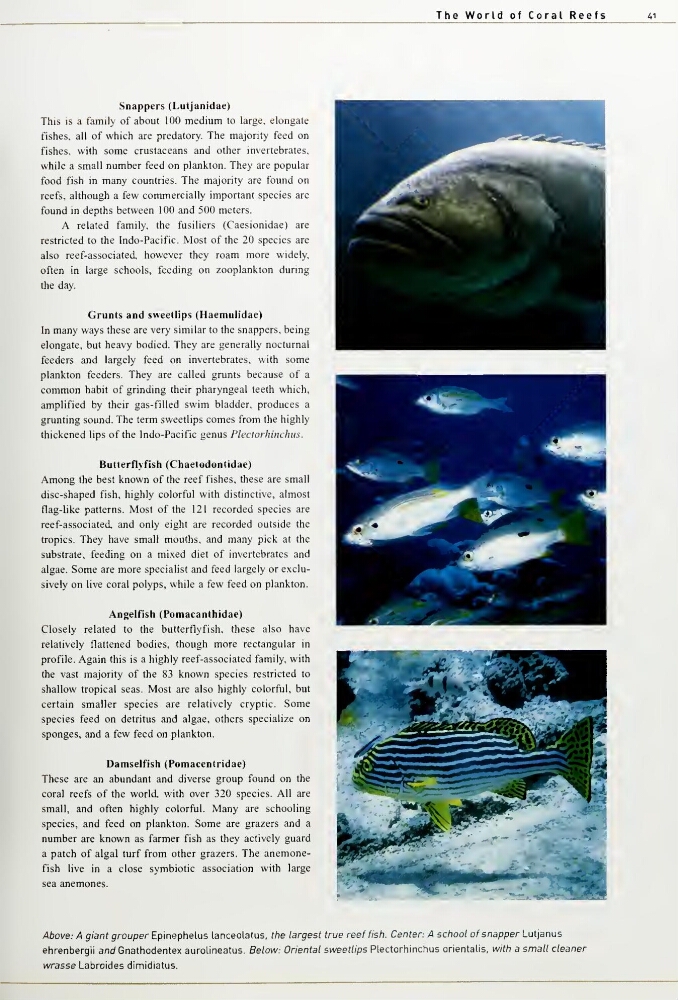
Above: A g/anf grouper Epinephelus lanceolatus, the largest true reef fish. Center: A school o/' snapper Lutjanus
ehrenbergii and Gnathodentex aurolineatus. Below: Oriental sweetlips Plectorhinchus orientalis, with a small cleaner
wrasse Labroides dimidiatus.
Snappers (Lutjanidae)
This is a family of about 100 medium to large, elongate
fishes, all of which are predatory. The majority feed on
fishes, with some crustaceans and other invertebrates,
while a small number feed on plankton. They are popular
food fish in many countries. The majority are found on
reefs, although a few commercially important species are
found in depths between 100 and 500 meters.
A related family, the fusiliers (Caesionidae) are
restricted to the Indo-Pacific. Most of the 20 species are
also reef-associated, however they roam more widely,
often in large schools, feeding on zooplankton during
the day.
Grunts and sweetlips (Haemuiidae)
In many ways these are very similar to the snappers, being
elongate, but heavy bodied. They are generally nocturnal
feeders and largely feed on invertebrates, with some
plankton feeders. They are called grunts because of a
common habit of grinding their pharyngeal teeth which,
amplified by their gas-filled swim bladder, produces a
grunting sound. The term sweetlips comes from the highly
thickened lips of the Indo-Pacific genus Pleclorhinchus.
Butterflyfish (Chaetodontidae)
Among the best known of the reef fishes, these are small
disc-shaped fish, highly colorful with distinctive, almost
flag-like patterns. Most of the 121 recorded species are
reef-associated, and only eight are recorded outside the
tropics. They have small mouths, and many pick at the
substrate, feeding on a mixed diet of invertebrates and
algae. Some are more specialist and feed largely or exclusively on live coral polyps, while a few feed on plankton.
Angelfish (Pomacanthidae)
Closely related to the butterflyfish, these also have
relatively flattened bodies, though more rectangular in
profile. Again this is a highly reef-associated family, with
the vast majority of the 83 known species restricted to
shallow tropical seas. Most are also highly colorful, but
certain smaller species are relatively cryptic. Some
species feed on detritus and algae, others specialize on
sponges, and a few feed on plankton.
Damselfish (Pomacentridae)
These are an abundant and diverse group found on the
coral reefs of the world, with over 320 species. All are
small, and often highly colorful. Many are schooling
species, and feed on plankton. Some are grazers and a
number are known as farmer fish as they actively guard
a patch of algal turf from other grazers. The anemonefish live in a close symbiotic association with large
sea anemones.
Above: A g/anf grouper Epinephelus lanceolatus, the largest true reef fish. Center: A school o/' snapper Lutjanus
ehrenbergii and Gnathodentex aurolineatus. Below: Oriental sweetlips Plectorhinchus orientalis, with a small cleaner
wrasse Labroides dimidiatus.