

272
K, Opuszyñ5ki
needed
to
achieve
“the
123, an additional increase oz’ carp steel—:
alone
might cause greater a yield increment then introduction oz‘
an
accompanying fish. To make our considerations more comp—lex it must
be
said
that
the
above
statements
are
true
provided only the ecolo—
gical point of view is considered.
,_
\
N
_
\\
V
V
\
!
E
a;
{;
_
î
‘
%?
K
=
»
..,_,___‘ 4
@
__
E
Stocking density
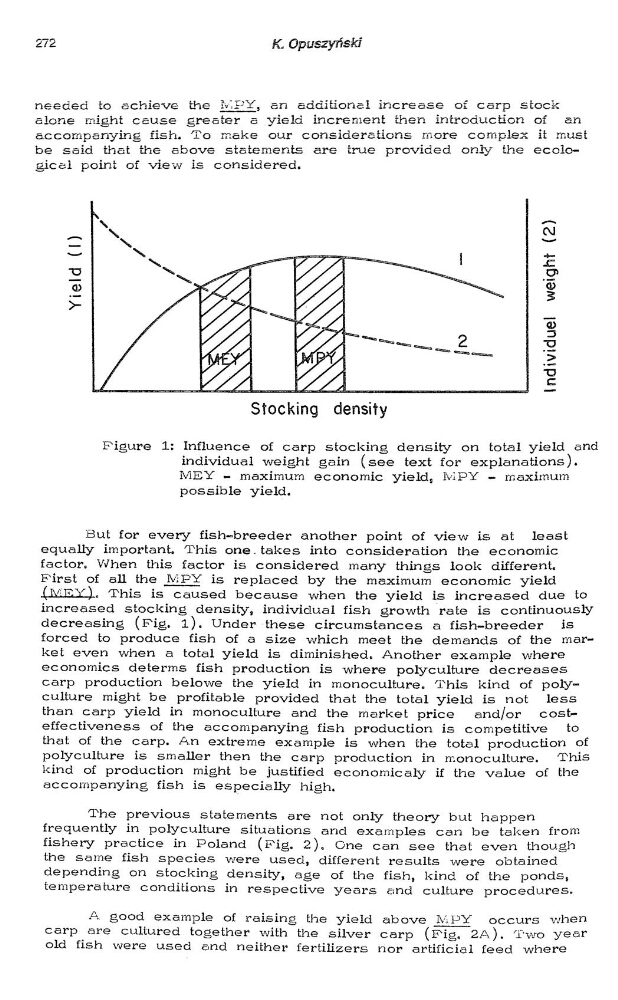
Figure 1: Inuence of carp stocking density on total yield and
individual weight gain (see text for explanations).
MEY -
maximum economic yield,
»
maximum
possible yield.
But for every sh—breeder another point of view is at
least
equally important. This one.takes into consideration the economic
factor. When this factor is
considered many things look different.
First of all the MPY is replaced by the maximum economic yield
LMŒÏ.). This is caused because when the yield is increased due to
increased stocking
individual fish growth rate is continuou51y
decreasing (Fig, 1). Under these circumstances a sh—breeder
is
forced
to
produce fish of 63 size which meet the demande of the mar—ket
even
when
a
total yield is diminished. Another example where
economics determs fish production is where polycuIture decreases
carp
production belowe the yield in monoculture. This kind of poly—
culture
might be profitable provided that the total yield is not
less
than
carp
yield in monoculture and the market price
and/or
cost——
effectiveness
of
the
accompanying fish production is competitive
to
that
of
the
carp.
An
extreme
example is when the total production of
polyculture is smaller then the carp production in monoculture.
This
kmd
of
production might be justied economicaly if the value of the
accompanying fish is especially high.
The
previous statements are not only theory but happen
frequently in polyculture situations and examples can be taken from
shery practice in Poland (Fig…
One
can
see
that
even
though
the
same
fish
species were used, different results were obtained
depending on stocking density, age of the fish, kind of the pondss
temperature conditions in respective years and culture procedures.
A
good example of raising the yield above l\‘3i—3Y
occurs
when
carp
are
cultured
together with the silver carp
(Fig. ZA). TWO year
old
fish
were
used
and
neither fertizers
nor
artificial feed
Where
K, Opuszyñ5ki
needed
to
achieve
“the
123, an additional increase oz’ carp steel—:
alone
might cause greater a yield increment then introduction oz‘
an
accompanying fish. To make our considerations more comp—lex it must
be
said
that
the
above
statements
are
true
provided only the ecolo—
gical point of view is considered.
,_
\
N
_
\\
V
V
\
!
E
a;
{;
_
î
‘
%?
K
=
»
..,_,___‘ 4
@
__
E
Stocking density
Figure 1: Inuence of carp stocking density on total yield and
individual weight gain (see text for explanations).
MEY -
maximum economic yield,
»
maximum
possible yield.
But for every sh—breeder another point of view is at
least
equally important. This one.takes into consideration the economic
factor. When this factor is
considered many things look different.
First of all the MPY is replaced by the maximum economic yield
LMŒÏ.). This is caused because when the yield is increased due to
increased stocking
individual fish growth rate is continuou51y
decreasing (Fig, 1). Under these circumstances a sh—breeder
is
forced
to
produce fish of 63 size which meet the demande of the mar—ket
even
when
a
total yield is diminished. Another example where
economics determs fish production is where polycuIture decreases
carp
production belowe the yield in monoculture. This kind of poly—
culture
might be profitable provided that the total yield is not
less
than
carp
yield in monoculture and the market price
and/or
cost——
effectiveness
of
the
accompanying fish production is competitive
to
that
of
the
carp.
An
extreme
example is when the total production of
polyculture is smaller then the carp production in monoculture.
This
kmd
of
production might be justied economicaly if the value of the
accompanying fish is especially high.
The
previous statements are not only theory but happen
frequently in polyculture situations and examples can be taken from
shery practice in Poland (Fig…
One
can
see
that
even
though
the
same
fish
species were used, different results were obtained
depending on stocking density, age of the fish, kind of the pondss
temperature conditions in respective years and culture procedures.
A
good example of raising the yield above l\‘3i—3Y
occurs
when
carp
are
cultured
together with the silver carp
(Fig. ZA). TWO year
old
fish
were
used
and
neither fertizers
nor
artificial feed
Where