

Many clones have already been analyzed through EST for Japanese medaka,
eels, and flounder. This section will introduce some of the clones obtained through
EST analysis of flounder livers, spleens, and leukocytes.
For a total of 1374 clones, including 350 in the flounder’s liver, 41 in its spleen,
and 983 in its leukocytes, sequences averaging 700 bases have been set from their
3′ or 5′ end and their homologues sought in database sequences. Of the 1374 clones,
a total of 787 showed homology with previously registered genes, while the
remaining 587 were as yet unknown (Table 3.3).
The 787 clones with homologs in the registered gene sequences include some
with identical base sequences. A total of 416 were ultimately identified, including
86 in the liver, 17 in the spleen, and 313 in the leukocytes. These genes were
categorized into those involved in cell division, factors in intercellular information
and signal transmission, those involved in cell structure and movement, factors in
cell and organism defense, those involved in gene and protein expression, and those
involved in energy metabolism (Table 3.4). Particularly interesting were the many
genes found with involvement in organism defense and immunity. In addition to the
clones exhibiting homology, clone base sequences without homology were registered in the Gene Bank database, allowing them to be searched at any time.
Because of a lack of equalization when the cDNA library was created, large
quantities of gelatinase-b, ribosomal protein L23, collagenase, b-actin, brain
myosine II isoform, and osteoclast-activating factor were detected in the leukocytes.
These may be said to constitute the most expressed genes among those in the
flounder leukocytes. In the liver, large amounts of apolipoprotein and complement
C3 were found, along with cystatin.
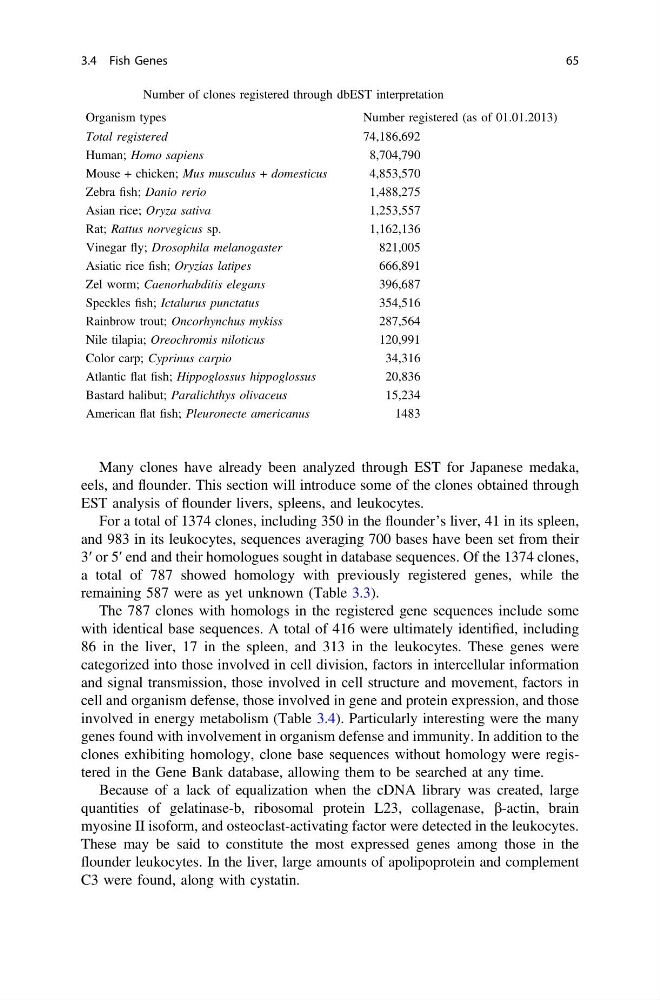
Table 3.2 Number of clones registered through dbEST interpretation
Organism types
Number registered (as of 01.01.2013)
Total registered
74,186,692
Human; Homo sapiens
8,704,790
Mouse + chicken; Mus musculus + domesticus
4,853,570
Zebra fish; Danio rerio
1,488,275
Asian rice; Oryza sativa
1,253,557
Rat; Rattus norvegicus sp.
1,162,136
Vinegar fly; Drosophila melanogaster
821,005
Asiatic rice fish; Oryzias latipes
666,891
Zel worm; Caenorhabditis elegans
396,687
Speckles fish; Ictalurus punctatus
354,516
Rainbrow trout; Oncorhynchus mykiss
287,564
Nile tilapia; Oreochromis niloticus
120,991
Color carp; Cyprinus carpio
34,316
Atlantic flat fish; Hippoglossus hippoglossus
20,836
Bastard halibut; Paralichthys olivaceus
15,234
American flat fish; Pleuronecte americanus
1483
3.4 Fish Genes
65
eels, and flounder. This section will introduce some of the clones obtained through
EST analysis of flounder livers, spleens, and leukocytes.
For a total of 1374 clones, including 350 in the flounder’s liver, 41 in its spleen,
and 983 in its leukocytes, sequences averaging 700 bases have been set from their
3′ or 5′ end and their homologues sought in database sequences. Of the 1374 clones,
a total of 787 showed homology with previously registered genes, while the
remaining 587 were as yet unknown (Table 3.3).
The 787 clones with homologs in the registered gene sequences include some
with identical base sequences. A total of 416 were ultimately identified, including
86 in the liver, 17 in the spleen, and 313 in the leukocytes. These genes were
categorized into those involved in cell division, factors in intercellular information
and signal transmission, those involved in cell structure and movement, factors in
cell and organism defense, those involved in gene and protein expression, and those
involved in energy metabolism (Table 3.4). Particularly interesting were the many
genes found with involvement in organism defense and immunity. In addition to the
clones exhibiting homology, clone base sequences without homology were registered in the Gene Bank database, allowing them to be searched at any time.
Because of a lack of equalization when the cDNA library was created, large
quantities of gelatinase-b, ribosomal protein L23, collagenase, b-actin, brain
myosine II isoform, and osteoclast-activating factor were detected in the leukocytes.
These may be said to constitute the most expressed genes among those in the
flounder leukocytes. In the liver, large amounts of apolipoprotein and complement
C3 were found, along with cystatin.
Table 3.2 Number of clones registered through dbEST interpretation
Organism types
Number registered (as of 01.01.2013)
Total registered
74,186,692
Human; Homo sapiens
8,704,790
Mouse + chicken; Mus musculus + domesticus
4,853,570
Zebra fish; Danio rerio
1,488,275
Asian rice; Oryza sativa
1,253,557
Rat; Rattus norvegicus sp.
1,162,136
Vinegar fly; Drosophila melanogaster
821,005
Asiatic rice fish; Oryzias latipes
666,891
Zel worm; Caenorhabditis elegans
396,687
Speckles fish; Ictalurus punctatus
354,516
Rainbrow trout; Oncorhynchus mykiss
287,564
Nile tilapia; Oreochromis niloticus
120,991
Color carp; Cyprinus carpio
34,316
Atlantic flat fish; Hippoglossus hippoglossus
20,836
Bastard halibut; Paralichthys olivaceus
15,234
American flat fish; Pleuronecte americanus
1483
3.4 Fish Genes
65