

(2) Solid Fuel
Large amounts of seaweed body biomass are formed when photosynthetic
microorganisms are used for hydrogen production. These can potentially
serve as alternatives to coal as a power plant fuel if they can be cheaply
dehydrated, dried, and converted to briquette form. Seaweed body biomass
can also be carbonized and converted to solid fuel in the presence of a large
and affordable high-temperature heat source.
(3) Liquid Fuel
The seaweed biomass produced in large volumes with hydrogen production
through photosynthetic microorganisms contains relatively large concentrations of lipids. Biodiesel fuel may be produced through the supply of
seaweed body biomass to the solid-liquid separation (dehydration), lipid
extraction, methyl esterification, and refinement process. Since algae
accumulate sugars (glycogen) in bacterial bodies under dark conditions,
bioethanol can also be produced through their supply to the ethanol fermentation, distillation, dehydration, and refinement process.
(4) Photobioreactors
A photobioreactor (PBR) is a system used when producing hydrogen
through photosynthetic microorganisms. Since hydrogen production
through photosynthetic microorganisms inextricably entails the use of solar
energy, various forms of PBR have been developed to efficiently receive,
transmit, and disperse solar light in ways that reflect solar radiation
characteristics.
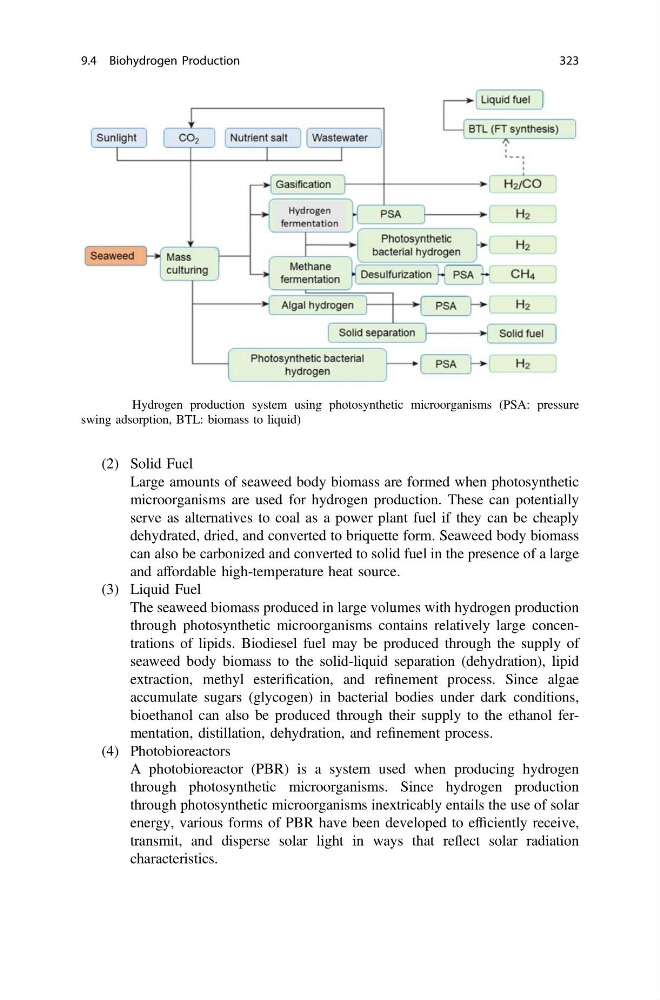
Fig. 9.8 Hydrogen production system using photosynthetic microorganisms (PSA: pressure
swing adsorption, BTL: biomass to liquid)
9.4 Biohydrogen Production
323
Large amounts of seaweed body biomass are formed when photosynthetic
microorganisms are used for hydrogen production. These can potentially
serve as alternatives to coal as a power plant fuel if they can be cheaply
dehydrated, dried, and converted to briquette form. Seaweed body biomass
can also be carbonized and converted to solid fuel in the presence of a large
and affordable high-temperature heat source.
(3) Liquid Fuel
The seaweed biomass produced in large volumes with hydrogen production
through photosynthetic microorganisms contains relatively large concentrations of lipids. Biodiesel fuel may be produced through the supply of
seaweed body biomass to the solid-liquid separation (dehydration), lipid
extraction, methyl esterification, and refinement process. Since algae
accumulate sugars (glycogen) in bacterial bodies under dark conditions,
bioethanol can also be produced through their supply to the ethanol fermentation, distillation, dehydration, and refinement process.
(4) Photobioreactors
A photobioreactor (PBR) is a system used when producing hydrogen
through photosynthetic microorganisms. Since hydrogen production
through photosynthetic microorganisms inextricably entails the use of solar
energy, various forms of PBR have been developed to efficiently receive,
transmit, and disperse solar light in ways that reflect solar radiation
characteristics.
Fig. 9.8 Hydrogen production system using photosynthetic microorganisms (PSA: pressure
swing adsorption, BTL: biomass to liquid)
9.4 Biohydrogen Production
323