

Algae have two forms of photosystems, known as Photosystem I (PS I) and
Photosystem II (PS II), and perform oxygen-producing photosynthesis under conditions of light exposure. Algae that are capable of producing hydrogen directly
underwater through photosynthesis are able to produce energy and fix CO 2
simultaneously.
Photosynthetic bacteria possess either PS I or PS II as a photosynthesis and
perform non-oxygen-producing photosynthesis under anaerobic conditions when
exposed to light radiation. Since they are able to use short-chain fatty acids and
other organic matter in wastewater as electron donors, they are capable of energy
production and wastewater treatment simultaneously (Boichenko et al. 2004).
The main reason that photosynthetic microorganisms produce hydrogen is to
moderate the reducing power that results from photosynthesis. Not only photosynthetic microorganisms but all microorganisms must oxide organic or inorganic
matter to obtain energy for growth, at which point handling of the remaining
reducing power (H
+ or e
− ) becomes an issue. When glucose is oxidized into CO 2 ,
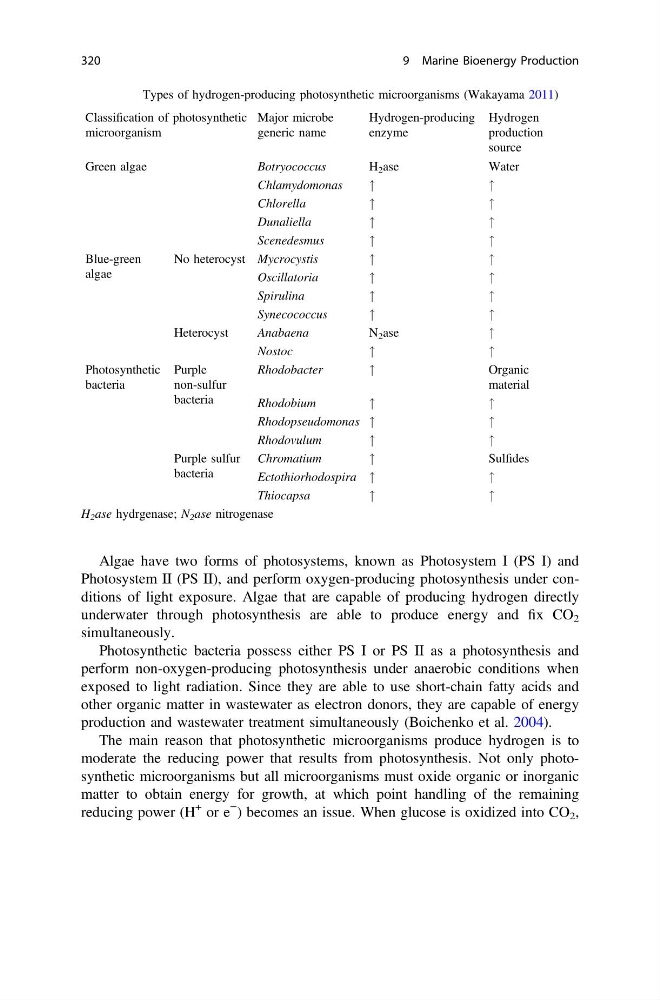
Table 9.5 Types of hydrogen-producing photosynthetic microorganisms (Wakayama 2011)
Classification of photosynthetic
microorganism
Major microbe
generic name
Hydrogen-producing
enzyme
Hydrogen
production
source
Green algae
Botryococcus
H 2 ase
Water
Chlamydomonas
"
"
Chlorella
"
"
Dunaliella
"
"
Scenedesmus
"
"
Blue-green
algae
No heterocyst Mycrocystis
"
"
Oscillatoria
"
"
Spirulina
"
"
Synecococcus
"
"
Heterocyst
Anabaena
N 2 ase
"
Nostoc
"
"
Photosynthetic
bacteria
Purple
non-sulfur
bacteria
Rhodobacter
"
Organic
material
Rhodobium
"
"
Rhodopseudomonas "
"
Rhodovulum
"
"
Purple sulfur
bacteria
Chromatium
"
Sulfides
Ectothiorhodospira "
"
Thiocapsa
"
"
H 2 ase hydrgenase; N 2 ase nitrogenase
320
9 Marine Bioenergy Production
Photosystem II (PS II), and perform oxygen-producing photosynthesis under conditions of light exposure. Algae that are capable of producing hydrogen directly
underwater through photosynthesis are able to produce energy and fix CO 2
simultaneously.
Photosynthetic bacteria possess either PS I or PS II as a photosynthesis and
perform non-oxygen-producing photosynthesis under anaerobic conditions when
exposed to light radiation. Since they are able to use short-chain fatty acids and
other organic matter in wastewater as electron donors, they are capable of energy
production and wastewater treatment simultaneously (Boichenko et al. 2004).
The main reason that photosynthetic microorganisms produce hydrogen is to
moderate the reducing power that results from photosynthesis. Not only photosynthetic microorganisms but all microorganisms must oxide organic or inorganic
matter to obtain energy for growth, at which point handling of the remaining
reducing power (H
+ or e
− ) becomes an issue. When glucose is oxidized into CO 2 ,
Table 9.5 Types of hydrogen-producing photosynthetic microorganisms (Wakayama 2011)
Classification of photosynthetic
microorganism
Major microbe
generic name
Hydrogen-producing
enzyme
Hydrogen
production
source
Green algae
Botryococcus
H 2 ase
Water
Chlamydomonas
"
"
Chlorella
"
"
Dunaliella
"
"
Scenedesmus
"
"
Blue-green
algae
No heterocyst Mycrocystis
"
"
Oscillatoria
"
"
Spirulina
"
"
Synecococcus
"
"
Heterocyst
Anabaena
N 2 ase
"
Nostoc
"
"
Photosynthetic
bacteria
Purple
non-sulfur
bacteria
Rhodobacter
"
Organic
material
Rhodobium
"
"
Rhodopseudomonas "
"
Rhodovulum
"
"
Purple sulfur
bacteria
Chromatium
"
Sulfides
Ectothiorhodospira "
"
Thiocapsa
"
"
H 2 ase hydrgenase; N 2 ase nitrogenase
320
9 Marine Bioenergy Production