

8.5 Natural Cosmetic Ingredients
South Korea has traditionally been home to numerous traditional and folk remedies,
most notably Korean medicine. Most of these, however, have depended upon
land-based plant ingredients, while ingredients from marine sources have been used
only rarely.
The same situation can be seen with cosmetics, which handles many ingredients
that are used in traditional remedies. Europe, by contrast, has traditional
marine-based remedies using marine-derived ingredients such as seaweed, seawater, and sea mud—an approach collectively known as thalassotherapy. Thalassotherapy has recently found its way to South Korea as well, and women in
particular have shown a growing interest in marine-derived ingredients. The bovine
spongiform encephalopathy (BSE) issue as well has led many to avoid
mammal-derived ingredients, resulting in increased interest in marine-based
ingredients as substitutes (Khan and Abourashed 2011).
Cosmetics are substances applied to the human body by rubbing, spraying, and
similar means for the purposes of cleansing and beautifying, increasing attractiveness, altering facial appearance, or maintaining soft skin and hair. In these cases,
actions on the body are moderated. In other words, the aim of cosmetics is to use
mild actions to improve the state of skin or hair through continued, long-term use;
the effects are not as strong as they are in pharmaceuticals.
In addition to being mild, it is important that ingredients must also be well suited
to cosmetic purposes and enjoy a favorable image to be attractive for cosmetic
purposes. Because cosmetics are applied directly to the skin, they must demonstrate
appropriate stability with regard to the skin.
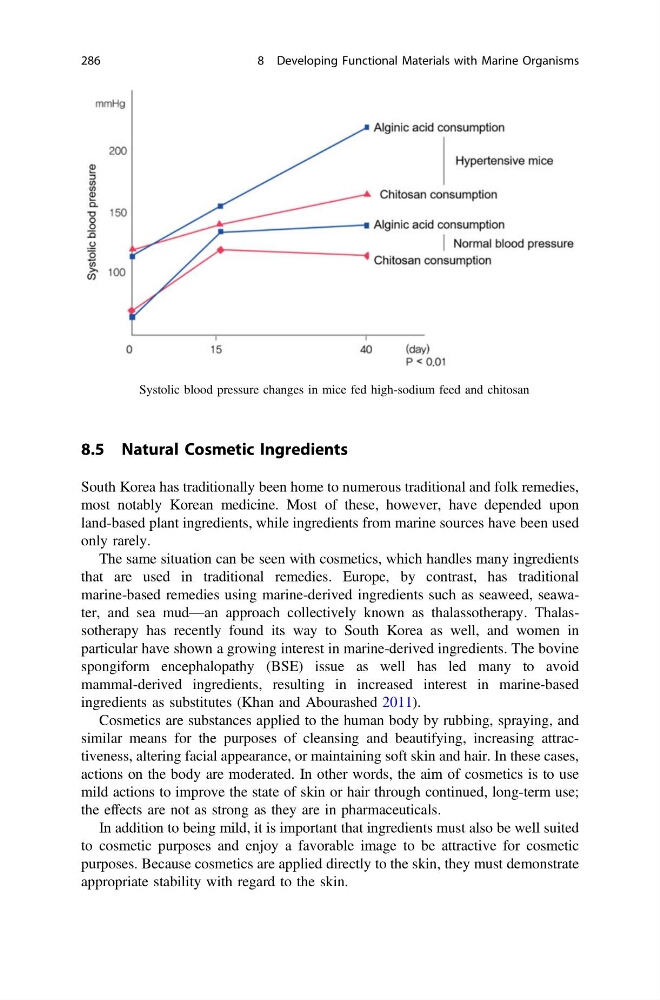
Fig. 8.32 Systolic blood pressure changes in mice fed high-sodium feed and chitosan
286
8 Developing Functional Materials with Marine Organisms
South Korea has traditionally been home to numerous traditional and folk remedies,
most notably Korean medicine. Most of these, however, have depended upon
land-based plant ingredients, while ingredients from marine sources have been used
only rarely.
The same situation can be seen with cosmetics, which handles many ingredients
that are used in traditional remedies. Europe, by contrast, has traditional
marine-based remedies using marine-derived ingredients such as seaweed, seawater, and sea mud—an approach collectively known as thalassotherapy. Thalassotherapy has recently found its way to South Korea as well, and women in
particular have shown a growing interest in marine-derived ingredients. The bovine
spongiform encephalopathy (BSE) issue as well has led many to avoid
mammal-derived ingredients, resulting in increased interest in marine-based
ingredients as substitutes (Khan and Abourashed 2011).
Cosmetics are substances applied to the human body by rubbing, spraying, and
similar means for the purposes of cleansing and beautifying, increasing attractiveness, altering facial appearance, or maintaining soft skin and hair. In these cases,
actions on the body are moderated. In other words, the aim of cosmetics is to use
mild actions to improve the state of skin or hair through continued, long-term use;
the effects are not as strong as they are in pharmaceuticals.
In addition to being mild, it is important that ingredients must also be well suited
to cosmetic purposes and enjoy a favorable image to be attractive for cosmetic
purposes. Because cosmetics are applied directly to the skin, they must demonstrate
appropriate stability with regard to the skin.
Fig. 8.32 Systolic blood pressure changes in mice fed high-sodium feed and chitosan
286
8 Developing Functional Materials with Marine Organisms