

seaweed and sulfated fugan from F. vesiculosus shows differences not only in the
location of the L-fucose linkage but also in sulfation group density and linkage
location (Figs. 6.18 and 6.19c) (Sakai and Kato 2005).
C. Manufacturing Fucoidans
Fucoidans are refined from brown algae, but because of various constraints on those
manufactured as a food ingredient, most are produced through a process of seaweed
extraction and simple fractionation. Because the seaweeds that typically are a
source for fucoidans have fucoidan content of around 2–50% of dry weight, highly
pure fucoidans can be produced through a relatively simple process.
Due to the highly acidic nature of the extraction process, the chemical structure
of the fucoidans is destroyed. Sulfation groups are also reported to hydrolyze under
alkaline conditions.
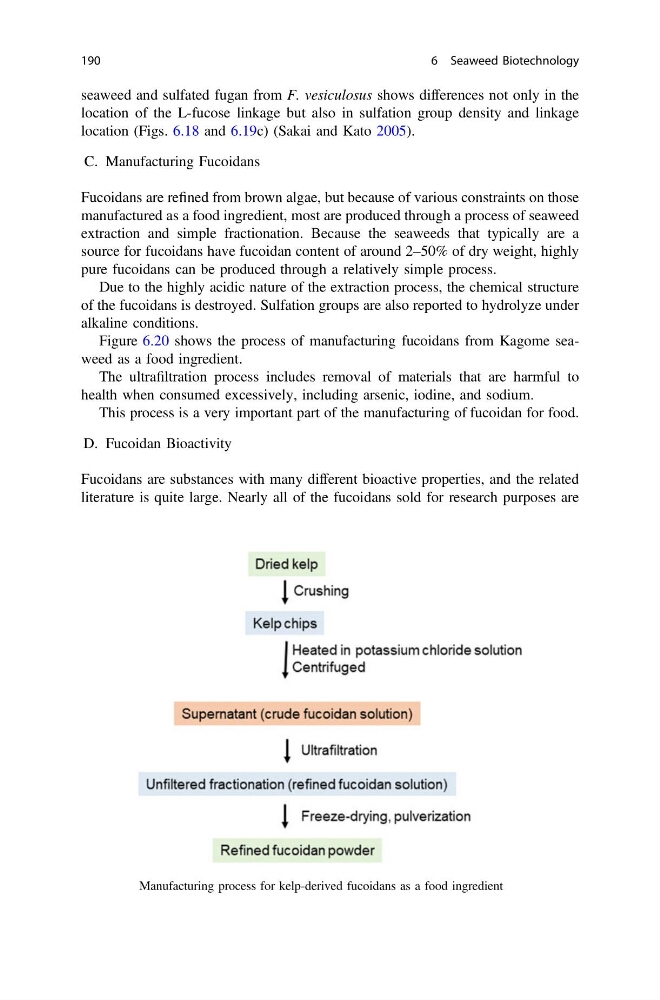
Figure 6.20 shows the process of manufacturing fucoidans from Kagome seaweed as a food ingredient.
The ultrafiltration process includes removal of materials that are harmful to
health when consumed excessively, including arsenic, iodine, and sodium.
This process is a very important part of the manufacturing of fucoidan for food.
D. Fucoidan Bioactivity
Fucoidans are substances with many different bioactive properties, and the related
literature is quite large. Nearly all of the fucoidans sold for research purposes are
Fig. 6.20 Manufacturing process for kelp-derived fucoidans as a food ingredient
190
6 Seaweed Biotechnology
location of the L-fucose linkage but also in sulfation group density and linkage
location (Figs. 6.18 and 6.19c) (Sakai and Kato 2005).
C. Manufacturing Fucoidans
Fucoidans are refined from brown algae, but because of various constraints on those
manufactured as a food ingredient, most are produced through a process of seaweed
extraction and simple fractionation. Because the seaweeds that typically are a
source for fucoidans have fucoidan content of around 2–50% of dry weight, highly
pure fucoidans can be produced through a relatively simple process.
Due to the highly acidic nature of the extraction process, the chemical structure
of the fucoidans is destroyed. Sulfation groups are also reported to hydrolyze under
alkaline conditions.
Figure 6.20 shows the process of manufacturing fucoidans from Kagome seaweed as a food ingredient.
The ultrafiltration process includes removal of materials that are harmful to
health when consumed excessively, including arsenic, iodine, and sodium.
This process is a very important part of the manufacturing of fucoidan for food.
D. Fucoidan Bioactivity
Fucoidans are substances with many different bioactive properties, and the related
literature is quite large. Nearly all of the fucoidans sold for research purposes are
Fig. 6.20 Manufacturing process for kelp-derived fucoidans as a food ingredient
190
6 Seaweed Biotechnology