

experimental manipulations for the single gene locus method are currently being
achieved through development of a primer set to amplify probes through PCR.
Microsatellite region polymorphs: In VNTR-based approaches, primer sets are
designed so that a repeating GT or CA sequence can be found in the middle and
used to amplify the microsatellite region through PCR. Because this approach uses
PCR, a small DNA sample is sufficient. Accordingly, fin fragments may be collected as tissue for DNA extraction, and the approach can be applied to samples
involving young fish, obviating any need to kill the fish used in the experiment.
Because the single gene locus method allows accurate yet simple identification of
alleles at individual gene loci with molecular markers, comparison of films is
possible, and such markers are also optimal for population analysis.
Once a primer has been developed for one fish species that is being researched, it
can also be used for related species in the same genus. It cannot be applied for more
distantly related species, requiring development of different primers for different
species. In the case of microsatellites and the single gene locus method, a primer
must be developed, and the process requires somewhat complex and specialized
facilities, equipment, and technology compared to other methods (Fig. 5.3).
Primer Design: Microsatellite region polymorph detection requires a PCR primer
for the DNA sequence that includes the repeating CA or GT sequence.
DNA from the experimental fish’s DNA is truncated with restriction enzymes,
and the DNA sequence containing the repeating CA or GT sequence is cloned with
plasmids (Fig. 5.3). The repeating CA or GT sequence within the DNA sequence
read by the sequencer is confirmed, and the primer is designed so that this portion is
located in the middle.
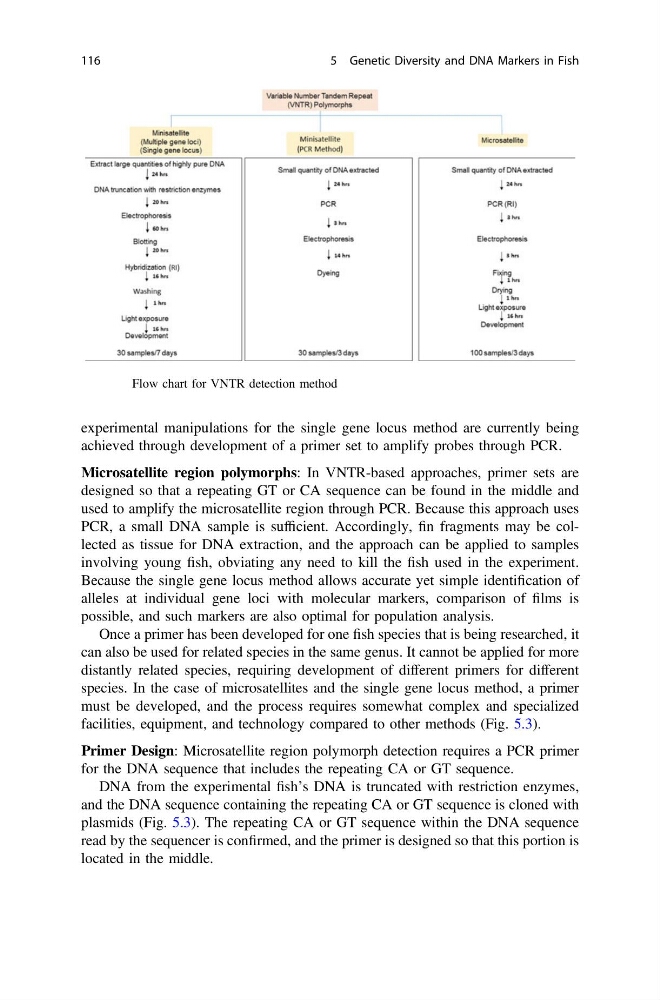
Fig. 5.2 Flow chart for VNTR detection method
116
5 Genetic Diversity and DNA Markers in Fish
achieved through development of a primer set to amplify probes through PCR.
Microsatellite region polymorphs: In VNTR-based approaches, primer sets are
designed so that a repeating GT or CA sequence can be found in the middle and
used to amplify the microsatellite region through PCR. Because this approach uses
PCR, a small DNA sample is sufficient. Accordingly, fin fragments may be collected as tissue for DNA extraction, and the approach can be applied to samples
involving young fish, obviating any need to kill the fish used in the experiment.
Because the single gene locus method allows accurate yet simple identification of
alleles at individual gene loci with molecular markers, comparison of films is
possible, and such markers are also optimal for population analysis.
Once a primer has been developed for one fish species that is being researched, it
can also be used for related species in the same genus. It cannot be applied for more
distantly related species, requiring development of different primers for different
species. In the case of microsatellites and the single gene locus method, a primer
must be developed, and the process requires somewhat complex and specialized
facilities, equipment, and technology compared to other methods (Fig. 5.3).
Primer Design: Microsatellite region polymorph detection requires a PCR primer
for the DNA sequence that includes the repeating CA or GT sequence.
DNA from the experimental fish’s DNA is truncated with restriction enzymes,
and the DNA sequence containing the repeating CA or GT sequence is cloned with
plasmids (Fig. 5.3). The repeating CA or GT sequence within the DNA sequence
read by the sequencer is confirmed, and the primer is designed so that this portion is
located in the middle.
Fig. 5.2 Flow chart for VNTR detection method
116
5 Genetic Diversity and DNA Markers in Fish