

The Great Barrier Reef
82
These chitons use their radulae to scrape the surface of
the boulders, collecting the algae attached to the substratum. Examination of the extruded pellets of these
chitons allows an estimate of the rate of sediment production to be calculated; in this restricted environment,
rates are high.
A recent study of bioerosion across a cross shelf
transect from the northern GBR out into the Coral Sea
found that levels of sediment flowing down the
Daintree River heavily influenced rates and agents of
bioerosion. Experimental substrata at sites at the mouth
of the river and Low Isles, after short periods of exposure are covered in a thick layer of silt that restricts development of the endolithic algae and hence levels of
grazing are low. The silt settles out from the turbid
Figure 8.6 Experimental blocks after six months showing
extensive grazing by Echinometra mathaei at Faaa, Tahiti.
(Photo: M. Peyrot-Clausade.)
(B)
(A)
(C)
(D)
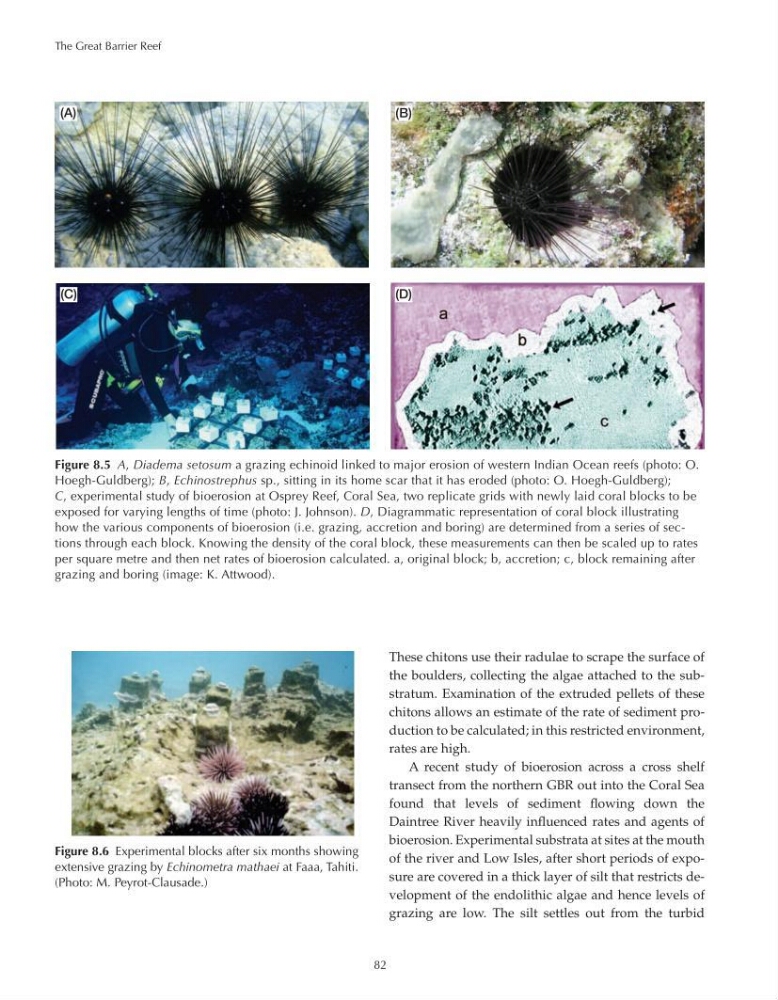
Figure 8.5 A, Diadema setosum a grazing echinoid linked to major erosion of western Indian Ocean reefs (photo: O.
Hoegh-Guldberg); B, Echinostrephus sp., sitting in its home scar that it has eroded (photo: O. Hoegh-Guldberg);
C, experimental study of bioerosion at Osprey Reef, Coral Sea, two replicate grids with newly laid coral blocks to be
exposed for varying lengths of time (photo: J. Johnson). D, Diagrammatic representation of coral block illustrating
how the various components of bioerosion (i.e. grazing, accretion and boring) are determined from a series of sections through each block. Knowing the density of the coral block, these measurements can then be scaled up to rates
per square metre and then net rates of bioerosion calculated. a, original block; b, accretion; c, block remaining after
grazing and boring (image: K. Attwood).
82
These chitons use their radulae to scrape the surface of
the boulders, collecting the algae attached to the substratum. Examination of the extruded pellets of these
chitons allows an estimate of the rate of sediment production to be calculated; in this restricted environment,
rates are high.
A recent study of bioerosion across a cross shelf
transect from the northern GBR out into the Coral Sea
found that levels of sediment flowing down the
Daintree River heavily influenced rates and agents of
bioerosion. Experimental substrata at sites at the mouth
of the river and Low Isles, after short periods of exposure are covered in a thick layer of silt that restricts development of the endolithic algae and hence levels of
grazing are low. The silt settles out from the turbid
Figure 8.6 Experimental blocks after six months showing
extensive grazing by Echinometra mathaei at Faaa, Tahiti.
(Photo: M. Peyrot-Clausade.)
(B)
(A)
(C)
(D)
Figure 8.5 A, Diadema setosum a grazing echinoid linked to major erosion of western Indian Ocean reefs (photo: O.
Hoegh-Guldberg); B, Echinostrephus sp., sitting in its home scar that it has eroded (photo: O. Hoegh-Guldberg);
C, experimental study of bioerosion at Osprey Reef, Coral Sea, two replicate grids with newly laid coral blocks to be
exposed for varying lengths of time (photo: J. Johnson). D, Diagrammatic representation of coral block illustrating
how the various components of bioerosion (i.e. grazing, accretion and boring) are determined from a series of sections through each block. Knowing the density of the coral block, these measurements can then be scaled up to rates
per square metre and then net rates of bioerosion calculated. a, original block; b, accretion; c, block remaining after
grazing and boring (image: K. Attwood).