

8 – Calcification, Erosion and the Establishment of the Framework of Coral Reefs
81
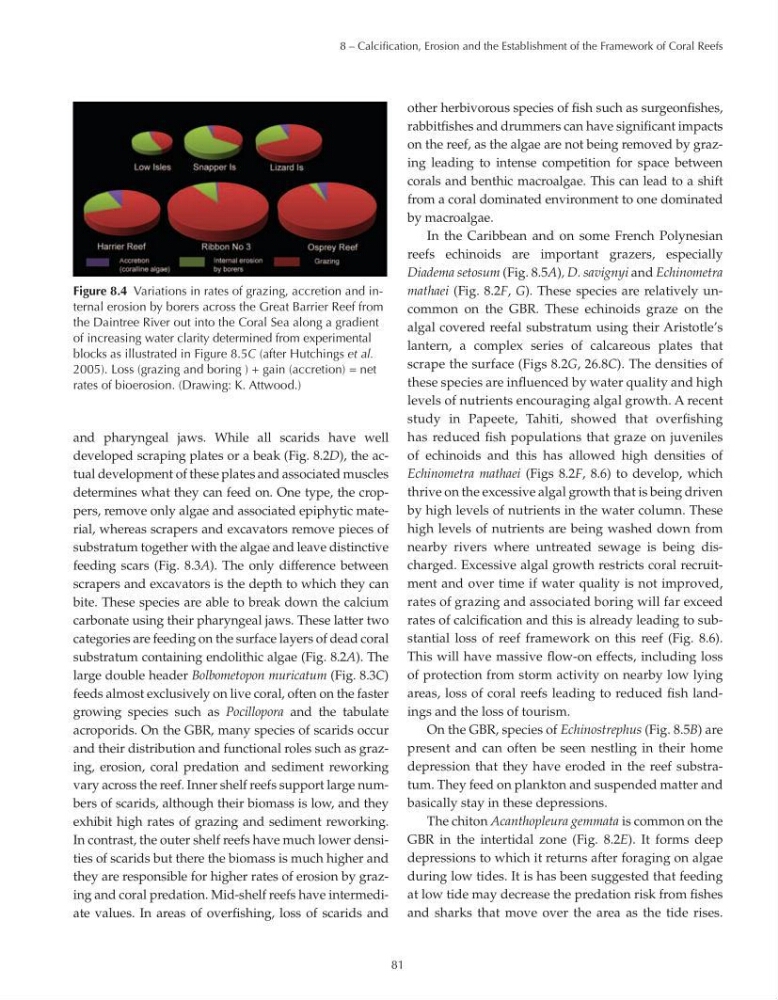
Figure 8.4 Variations in rates of grazing, accretion and internal erosion by borers across the Great Barrier Reef from
the Daintree River out into the Coral Sea along a gradient
of increasing water clarity determined from experimental
blocks as illustrated in Figure 8.5C (after Hutchings et al.
2005). Loss (grazing and boring ) + gain (accretion) = net
rates of bioerosion. (Drawing: K. Attwood.)
other herbivorous species of fish such as surgeonfishes,
rabbitfishes and drummers can have significant impacts
on the reef, as the algae are not being removed by grazing leading to intense competition for space between
corals and benthic macroalgae. This can lead to a shift
from a coral dominated environment to one dominated
by macroalgae.
In the Caribbean and on some French Polynesian
reefs echinoids are important grazers, especially
Diadema setosum (Fig. 8.5A), D. savignyi and Echinometra
mathaei (Fig. 8.2F, G). These species are relatively uncommon on the GBR. These echinoids graze on the
algal covered reefal substratum using their Aristotle’s
lantern, a complex series of calcareous plates that
scrape the surface (Figs 8.2G, 26.8C). The densities of
these species are influenced by water quality and high
levels of nutrients encouraging algal growth. A recent
study in Papeete, Tahiti, showed that overfishing
has reduced fish populations that graze on juveniles
of echinoids and this has allowed high densities of
Echinometra mathaei (Figs 8.2F, 8.6) to develop, which
thrive on the excessive algal growth that is being driven
by high levels of nutrients in the water column. These
high levels of nutrients are being washed down from
nearby rivers where untreated sewage is being discharged. Excessive algal growth restricts coral recruitment and over time if water quality is not improved,
rates of grazing and associated boring will far exceed
rates of calcification and this is already leading to substantial loss of reef framework on this reef (Fig. 8.6).
This will have massive flow-on effects, including loss
of protection from storm activity on nearby low lying
areas, loss of coral reefs leading to reduced fish landings and the loss of tourism.
On the GBR, species of Echinostrephus (Fig. 8.5B) are
present and can often be seen nestling in their home
depression that they have eroded in the reef substratum. They feed on plankton and suspended matter and
basically stay in these depressions.
The chiton Acanthopleura gemmata is common on the
GBR in the intertidal zone (Fig. 8.2E). It forms deep
depressions to which it returns after foraging on algae
during low tides. It is has been suggested that feeding
at low tide may decrease the predation risk from fishes
and sharks that move over the area as the tide rises.
and pharyngeal jaws. While all scarids have well
developed scraping plates or a beak (Fig. 8.2D), the actual development of these plates and associated muscles
determines what they can feed on. One type, the croppers, remove only algae and associated epiphytic material, whereas scrapers and excavators remove pieces of
substratum together with the algae and leave distinctive
feeding scars (Fig. 8.3A). The only difference between
scrapers and excavators is the depth to which they can
bite. These species are able to break down the calcium
carbonate using their pharyngeal jaws. These latter two
categories are feeding on the surface layers of dead coral
substratum containing endolithic algae (Fig. 8.2A). The
large double header Bolbometopon muricatum (Fig. 8.3C)
feeds almost exclusively on live coral, often on the faster
growing species such as Pocillopora and the tabulate
acroporids. On the GBR, many species of scarids occur
and their distribution and functional roles such as grazing, erosion, coral predation and sediment reworking
vary across the reef. Inner shelf reefs support large numbers of scarids, although their biomass is low, and they
exhibit high rates of grazing and sediment reworking.
In contrast, the outer shelf reefs have much lower densities of scarids but there the biomass is much higher and
they are responsible for higher rates of erosion by grazing and coral predation. Mid-shelf reefs have intermediate values. In areas of overfishing, loss of scarids and
81
Figure 8.4 Variations in rates of grazing, accretion and internal erosion by borers across the Great Barrier Reef from
the Daintree River out into the Coral Sea along a gradient
of increasing water clarity determined from experimental
blocks as illustrated in Figure 8.5C (after Hutchings et al.
2005). Loss (grazing and boring ) + gain (accretion) = net
rates of bioerosion. (Drawing: K. Attwood.)
other herbivorous species of fish such as surgeonfishes,
rabbitfishes and drummers can have significant impacts
on the reef, as the algae are not being removed by grazing leading to intense competition for space between
corals and benthic macroalgae. This can lead to a shift
from a coral dominated environment to one dominated
by macroalgae.
In the Caribbean and on some French Polynesian
reefs echinoids are important grazers, especially
Diadema setosum (Fig. 8.5A), D. savignyi and Echinometra
mathaei (Fig. 8.2F, G). These species are relatively uncommon on the GBR. These echinoids graze on the
algal covered reefal substratum using their Aristotle’s
lantern, a complex series of calcareous plates that
scrape the surface (Figs 8.2G, 26.8C). The densities of
these species are influenced by water quality and high
levels of nutrients encouraging algal growth. A recent
study in Papeete, Tahiti, showed that overfishing
has reduced fish populations that graze on juveniles
of echinoids and this has allowed high densities of
Echinometra mathaei (Figs 8.2F, 8.6) to develop, which
thrive on the excessive algal growth that is being driven
by high levels of nutrients in the water column. These
high levels of nutrients are being washed down from
nearby rivers where untreated sewage is being discharged. Excessive algal growth restricts coral recruitment and over time if water quality is not improved,
rates of grazing and associated boring will far exceed
rates of calcification and this is already leading to substantial loss of reef framework on this reef (Fig. 8.6).
This will have massive flow-on effects, including loss
of protection from storm activity on nearby low lying
areas, loss of coral reefs leading to reduced fish landings and the loss of tourism.
On the GBR, species of Echinostrephus (Fig. 8.5B) are
present and can often be seen nestling in their home
depression that they have eroded in the reef substratum. They feed on plankton and suspended matter and
basically stay in these depressions.
The chiton Acanthopleura gemmata is common on the
GBR in the intertidal zone (Fig. 8.2E). It forms deep
depressions to which it returns after foraging on algae
during low tides. It is has been suggested that feeding
at low tide may decrease the predation risk from fishes
and sharks that move over the area as the tide rises.
and pharyngeal jaws. While all scarids have well
developed scraping plates or a beak (Fig. 8.2D), the actual development of these plates and associated muscles
determines what they can feed on. One type, the croppers, remove only algae and associated epiphytic material, whereas scrapers and excavators remove pieces of
substratum together with the algae and leave distinctive
feeding scars (Fig. 8.3A). The only difference between
scrapers and excavators is the depth to which they can
bite. These species are able to break down the calcium
carbonate using their pharyngeal jaws. These latter two
categories are feeding on the surface layers of dead coral
substratum containing endolithic algae (Fig. 8.2A). The
large double header Bolbometopon muricatum (Fig. 8.3C)
feeds almost exclusively on live coral, often on the faster
growing species such as Pocillopora and the tabulate
acroporids. On the GBR, many species of scarids occur
and their distribution and functional roles such as grazing, erosion, coral predation and sediment reworking
vary across the reef. Inner shelf reefs support large numbers of scarids, although their biomass is low, and they
exhibit high rates of grazing and sediment reworking.
In contrast, the outer shelf reefs have much lower densities of scarids but there the biomass is much higher and
they are responsible for higher rates of erosion by grazing and coral predation. Mid-shelf reefs have intermediate values. In areas of overfishing, loss of scarids and