

8 – Calcification, Erosion and the Establishment of the Framework of Coral Reefs
77
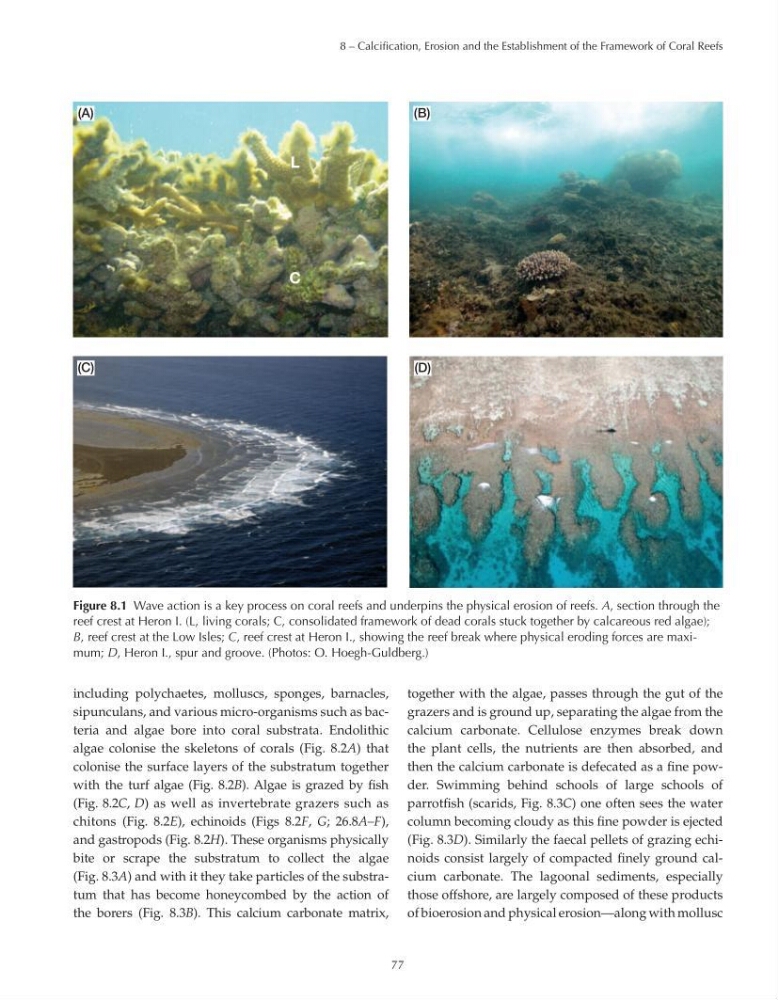
Figure 8.1 Wave action is a key process on coral reefs and underpins the physical erosion of reefs. A, section through the
reef crest at Heron I. (L, living corals; C, consolidated framework of dead corals stuck together by calcareous red algae);
B, reef crest at the Low Isles; C, reef crest at Heron I., showing the reef break where physical eroding forces are maximum; D, Heron I., spur and groove. (Photos: O. Hoegh-Guldberg.)
(A)
L
C
(B)
(C)
(D)
including polychaetes, molluscs, sponges, barnacles,
sipunculans, and various micro-organisms such as bacteria and algae bore into coral substrata. Endolithic
algae colonise the skeletons of corals (Fig. 8.2A) that
colonise the surface layers of the substratum together
with the turf algae (Fig. 8.2B). Algae is grazed by fish
(Fig. 8.2C, D) as well as invertebrate grazers such as
chitons (Fig. 8.2E), echinoids (Figs 8.2F, G; 26.8A–F),
and gastropods (Fig. 8.2H). These organisms physically
bite or scrape the substratum to collect the algae
(Fig. 8.3A) and with it they take particles of the substratum that has become honeycombed by the action of
the borers (Fig. 8.3B). This calcium carbonate matrix,
together with the algae, passes through the gut of the
grazers and is ground up, separating the algae from the
calcium carbonate. Cellulose enzymes break down
the plant cells, the nutrients are then absorbed, and
then the calcium carbonate is defecated as a fine powder. Swimming behind schools of large schools of
parrotfish (scarids, Fig. 8.3C) one often sees the water
column becoming cloudy as this fine powder is ejected
(Fig. 8.3D). Similarly the faecal pellets of grazing echinoids consist largely of compacted finely ground calcium carbonate. The lagoonal sediments, especially
those offshore, are largely composed of these products
of bioerosion and physical erosion—along with mollusc
77
Figure 8.1 Wave action is a key process on coral reefs and underpins the physical erosion of reefs. A, section through the
reef crest at Heron I. (L, living corals; C, consolidated framework of dead corals stuck together by calcareous red algae);
B, reef crest at the Low Isles; C, reef crest at Heron I., showing the reef break where physical eroding forces are maximum; D, Heron I., spur and groove. (Photos: O. Hoegh-Guldberg.)
(A)
L
C
(B)
(C)
(D)
including polychaetes, molluscs, sponges, barnacles,
sipunculans, and various micro-organisms such as bacteria and algae bore into coral substrata. Endolithic
algae colonise the skeletons of corals (Fig. 8.2A) that
colonise the surface layers of the substratum together
with the turf algae (Fig. 8.2B). Algae is grazed by fish
(Fig. 8.2C, D) as well as invertebrate grazers such as
chitons (Fig. 8.2E), echinoids (Figs 8.2F, G; 26.8A–F),
and gastropods (Fig. 8.2H). These organisms physically
bite or scrape the substratum to collect the algae
(Fig. 8.3A) and with it they take particles of the substratum that has become honeycombed by the action of
the borers (Fig. 8.3B). This calcium carbonate matrix,
together with the algae, passes through the gut of the
grazers and is ground up, separating the algae from the
calcium carbonate. Cellulose enzymes break down
the plant cells, the nutrients are then absorbed, and
then the calcium carbonate is defecated as a fine powder. Swimming behind schools of large schools of
parrotfish (scarids, Fig. 8.3C) one often sees the water
column becoming cloudy as this fine powder is ejected
(Fig. 8.3D). Similarly the faecal pellets of grazing echinoids consist largely of compacted finely ground calcium carbonate. The lagoonal sediments, especially
those offshore, are largely composed of these products
of bioerosion and physical erosion—along with mollusc