

The Great Barrier Reef
62
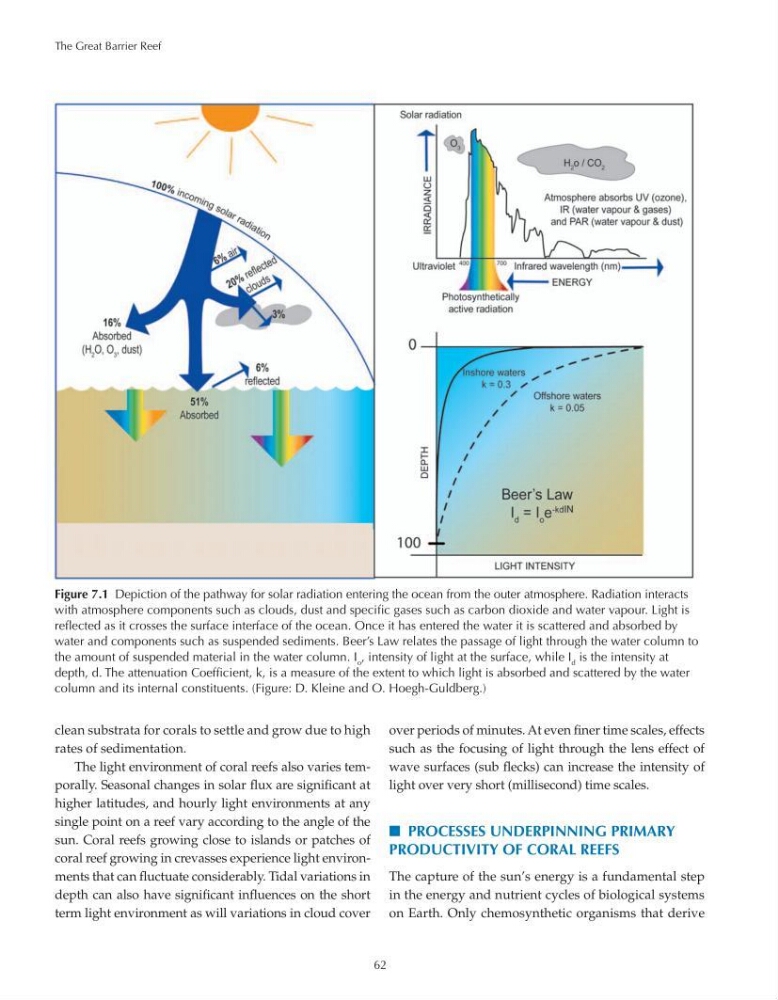
Figure 7.1 Depiction of the pathway for solar radiation entering the ocean from the outer atmosphere. Radiation interacts
with atmosphere components such as clouds, dust and specific gases such as carbon dioxide and water vapour. Light is
reflected as it crosses the surface interface of the ocean. Once it has entered the water it is scattered and absorbed by
water and components such as suspended sediments. Beer’s Law relates the passage of light through the water column to
the amount of suspended material in the water column. I o , intensity of light at the surface, while I d is the intensity at
depth, d. The attenuation Coefficient, k, is a measure of the extent to which light is absorbed and scattered by the water
column and its internal constituents. (Figure: D. Kleine and O. Hoegh-Guldberg.)
clean substrata for corals to settle and grow due to high
rates of sedimentation.
The light environment of coral reefs also varies temporally. Seasonal changes in solar flux are significant at
higher latitudes, and hourly light environments at any
single point on a reef vary according to the angle of the
sun. Coral reefs growing close to islands or patches of
coral reef growing in crevasses experience light environments that can fluctuate considerably. Tidal variations in
depth can also have significant influences on the short
term light environment as will variations in cloud cover
over periods of minutes. At even finer time scales, effects
such as the focusing of light through the lens effect of
wave surfaces (sub flecks) can increase the intensity of
light over very short (millisecond) time scales.
N PROCESSES UNDERPINNING PRIMARY
PRODUCTIVITY OF CORAL REEFS
The capture of the sun’s energy is a fundamental step
in the energy and nutrient cycles of biological systems
on Earth. Only chemosynthetic organisms that derive
62
Figure 7.1 Depiction of the pathway for solar radiation entering the ocean from the outer atmosphere. Radiation interacts
with atmosphere components such as clouds, dust and specific gases such as carbon dioxide and water vapour. Light is
reflected as it crosses the surface interface of the ocean. Once it has entered the water it is scattered and absorbed by
water and components such as suspended sediments. Beer’s Law relates the passage of light through the water column to
the amount of suspended material in the water column. I o , intensity of light at the surface, while I d is the intensity at
depth, d. The attenuation Coefficient, k, is a measure of the extent to which light is absorbed and scattered by the water
column and its internal constituents. (Figure: D. Kleine and O. Hoegh-Guldberg.)
clean substrata for corals to settle and grow due to high
rates of sedimentation.
The light environment of coral reefs also varies temporally. Seasonal changes in solar flux are significant at
higher latitudes, and hourly light environments at any
single point on a reef vary according to the angle of the
sun. Coral reefs growing close to islands or patches of
coral reef growing in crevasses experience light environments that can fluctuate considerably. Tidal variations in
depth can also have significant influences on the short
term light environment as will variations in cloud cover
over periods of minutes. At even finer time scales, effects
such as the focusing of light through the lens effect of
wave surfaces (sub flecks) can increase the intensity of
light over very short (millisecond) time scales.
N PROCESSES UNDERPINNING PRIMARY
PRODUCTIVITY OF CORAL REEFS
The capture of the sun’s energy is a fundamental step
in the energy and nutrient cycles of biological systems
on Earth. Only chemosynthetic organisms that derive