

6 – Seabed Environments, Habitats and Biological Assemblages
55
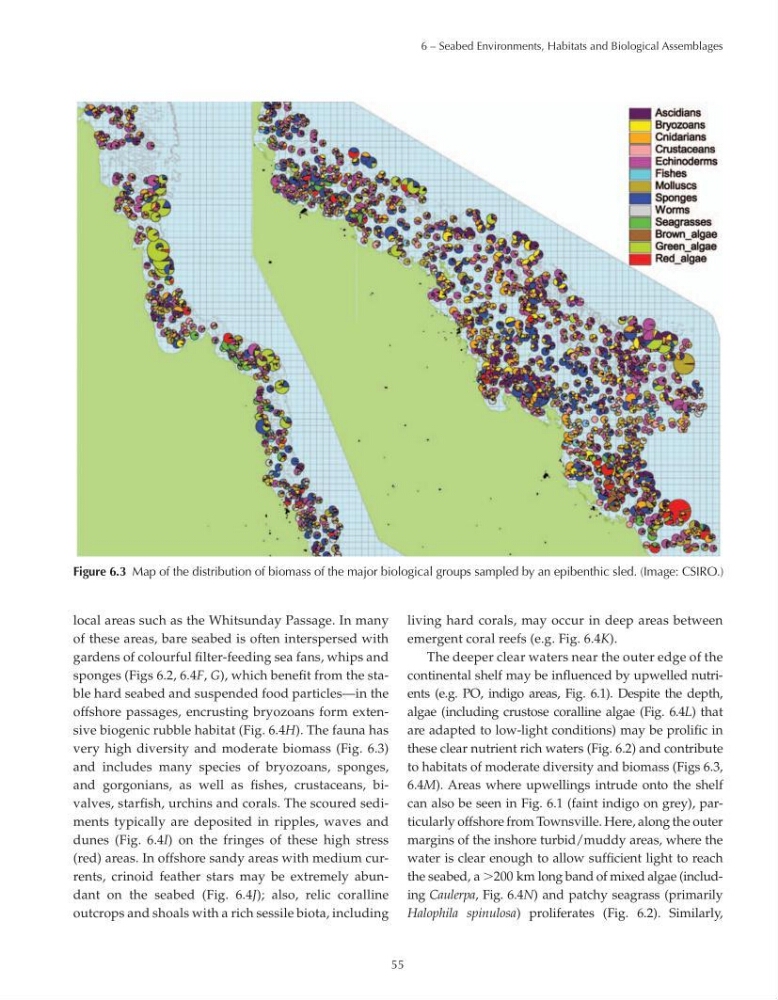
Figure 6.3 Map of the distribution of biomass of the major biological groups sampled by an epibenthic sled. (Image: CSIRO.)
local areas such as the Whitsunday Passage. In many
of these areas, bare seabed is often interspersed with
gardens of colourful filter-feeding sea fans, whips and
sponges (Figs 6.2, 6.4F, G), which benefit from the stable hard seabed and suspended food particles—in the
offshore passages, encrusting bryozoans form extensive biogenic rubble habitat (Fig. 6.4H). The fauna has
very high diversity and moderate biomass (Fig. 6.3)
and includes many species of bryozoans, sponges,
and gorgonians, as well as fishes, crustaceans, bivalves, starfish, urchins and corals. The scoured sediments typically are deposited in ripples, waves and
dunes (Fig. 6.4I) on the fringes of these high stress
(red) areas. In offshore sandy areas with medium currents, crinoid feather stars may be extremely abundant on the seabed (Fig. 6.4J); also, relic coralline
outcrops and shoals with a rich sessile biota, including
living hard corals, may occur in deep areas between
emergent coral reefs (e.g. Fig. 6.4K).
The deeper clear waters near the outer edge of the
continental shelf may be influenced by upwelled nutrients (e.g. PO, indigo areas, Fig. 6.1). Despite the depth,
algae (including crustose coralline algae (Fig. 6.4L) that
are adapted to low-light conditions) may be prolific in
these clear nutrient rich waters (Fig. 6.2) and contribute
to habitats of moderate diversity and biomass (Figs 6.3,
6.4M). Areas where upwellings intrude onto the shelf
can also be seen in Fig. 6.1 (faint indigo on grey), particularly offshore from Townsville. Here, along the outer
margins of the inshore turbid/muddy areas, where the
water is clear enough to allow sufficient light to reach
the seabed, a 200 km long band of mixed algae (including Caulerpa, Fig. 6.4N) and patchy seagrass (primarily
Halophila spinulosa) proliferates (Fig. 6.2). Similarly,
55
Figure 6.3 Map of the distribution of biomass of the major biological groups sampled by an epibenthic sled. (Image: CSIRO.)
local areas such as the Whitsunday Passage. In many
of these areas, bare seabed is often interspersed with
gardens of colourful filter-feeding sea fans, whips and
sponges (Figs 6.2, 6.4F, G), which benefit from the stable hard seabed and suspended food particles—in the
offshore passages, encrusting bryozoans form extensive biogenic rubble habitat (Fig. 6.4H). The fauna has
very high diversity and moderate biomass (Fig. 6.3)
and includes many species of bryozoans, sponges,
and gorgonians, as well as fishes, crustaceans, bivalves, starfish, urchins and corals. The scoured sediments typically are deposited in ripples, waves and
dunes (Fig. 6.4I) on the fringes of these high stress
(red) areas. In offshore sandy areas with medium currents, crinoid feather stars may be extremely abundant on the seabed (Fig. 6.4J); also, relic coralline
outcrops and shoals with a rich sessile biota, including
living hard corals, may occur in deep areas between
emergent coral reefs (e.g. Fig. 6.4K).
The deeper clear waters near the outer edge of the
continental shelf may be influenced by upwelled nutrients (e.g. PO, indigo areas, Fig. 6.1). Despite the depth,
algae (including crustose coralline algae (Fig. 6.4L) that
are adapted to low-light conditions) may be prolific in
these clear nutrient rich waters (Fig. 6.2) and contribute
to habitats of moderate diversity and biomass (Figs 6.3,
6.4M). Areas where upwellings intrude onto the shelf
can also be seen in Fig. 6.1 (faint indigo on grey), particularly offshore from Townsville. Here, along the outer
margins of the inshore turbid/muddy areas, where the
water is clear enough to allow sufficient light to reach
the seabed, a 200 km long band of mixed algae (including Caulerpa, Fig. 6.4N) and patchy seagrass (primarily
Halophila spinulosa) proliferates (Fig. 6.2). Similarly,