

4 – Oceanography
37
(A)
(B)
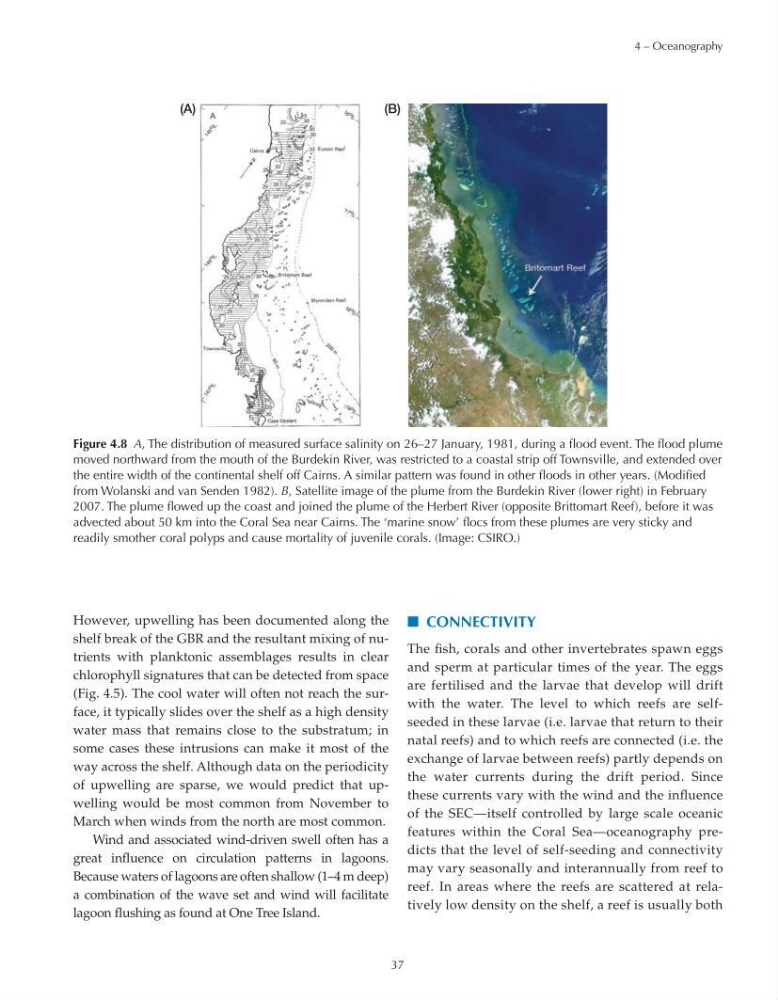
Figure 4.8 A, The distribution of measured surface salinity on 26–27 January, 1981, during a flood event. The flood plume
moved northward from the mouth of the Burdekin River, was restricted to a coastal strip off Townsville, and extended over
the entire width of the continental shelf off Cairns. A similar pattern was found in other floods in other years. (Modified
from Wolanski and van Senden 1982). B, Satellite image of the plume from the Burdekin River (lower right) in February
2007. The plume flowed up the coast and joined the plume of the Herbert River (opposite Brittomart Reef), before it was
advected about 50 km into the Coral Sea near Cairns. The ‘marine snow’ flocs from these plumes are very sticky and
readily smother coral polyps and cause mortality of juvenile corals. (Image: CSIRO.)
However, upwelling has been documented along the
shelf break of the GBR and the resultant mixing of nutrients with planktonic assemblages results in clear
chlorophyll signatures that can be detected from space
(Fig. 4.5). The cool water will often not reach the surface, it typically slides over the shelf as a high density
water mass that remains close to the substratum; in
some cases these intrusions can make it most of the
way across the shelf. Although data on the periodicity
of upwelling are sparse, we would predict that upwelling would be most common from November to
March when winds from the north are most common.
Wind and associated wind-driven swell often has a
great influence on circulation patterns in lagoons.
Because waters of lagoons are often shallow (1–4 m deep)
a combination of the wave set and wind will facilitate
lagoon flushing as found at One Tree Island.
N CONNECTIVITY
The fish, corals and other invertebrates spawn eggs
and sperm at particular times of the year. The eggs
are fertilised and the larvae that develop will drift
with the water. The level to which reefs are selfseeded in these larvae (i.e. larvae that return to their
natal reefs) and to which reefs are connected (i.e. the
exchange of larvae between reefs) partly depends on
the water currents during the drift period. Since
these currents vary with the wind and the influence
of the SEC—itself controlled by large scale oceanic
features within the Coral Sea—oceanography predicts that the level of self-seeding and connectivity
may vary seasonally and interannually from reef to
reef. In areas where the reefs are scattered at relatively low density on the shelf, a reef is usually both
37
(A)
(B)
Figure 4.8 A, The distribution of measured surface salinity on 26–27 January, 1981, during a flood event. The flood plume
moved northward from the mouth of the Burdekin River, was restricted to a coastal strip off Townsville, and extended over
the entire width of the continental shelf off Cairns. A similar pattern was found in other floods in other years. (Modified
from Wolanski and van Senden 1982). B, Satellite image of the plume from the Burdekin River (lower right) in February
2007. The plume flowed up the coast and joined the plume of the Herbert River (opposite Brittomart Reef), before it was
advected about 50 km into the Coral Sea near Cairns. The ‘marine snow’ flocs from these plumes are very sticky and
readily smother coral polyps and cause mortality of juvenile corals. (Image: CSIRO.)
However, upwelling has been documented along the
shelf break of the GBR and the resultant mixing of nutrients with planktonic assemblages results in clear
chlorophyll signatures that can be detected from space
(Fig. 4.5). The cool water will often not reach the surface, it typically slides over the shelf as a high density
water mass that remains close to the substratum; in
some cases these intrusions can make it most of the
way across the shelf. Although data on the periodicity
of upwelling are sparse, we would predict that upwelling would be most common from November to
March when winds from the north are most common.
Wind and associated wind-driven swell often has a
great influence on circulation patterns in lagoons.
Because waters of lagoons are often shallow (1–4 m deep)
a combination of the wave set and wind will facilitate
lagoon flushing as found at One Tree Island.
N CONNECTIVITY
The fish, corals and other invertebrates spawn eggs
and sperm at particular times of the year. The eggs
are fertilised and the larvae that develop will drift
with the water. The level to which reefs are selfseeded in these larvae (i.e. larvae that return to their
natal reefs) and to which reefs are connected (i.e. the
exchange of larvae between reefs) partly depends on
the water currents during the drift period. Since
these currents vary with the wind and the influence
of the SEC—itself controlled by large scale oceanic
features within the Coral Sea—oceanography predicts that the level of self-seeding and connectivity
may vary seasonally and interannually from reef to
reef. In areas where the reefs are scattered at relatively low density on the shelf, a reef is usually both