

22 – Worms
253
(L)
(K)
(J)
(G)
(I)
(H)
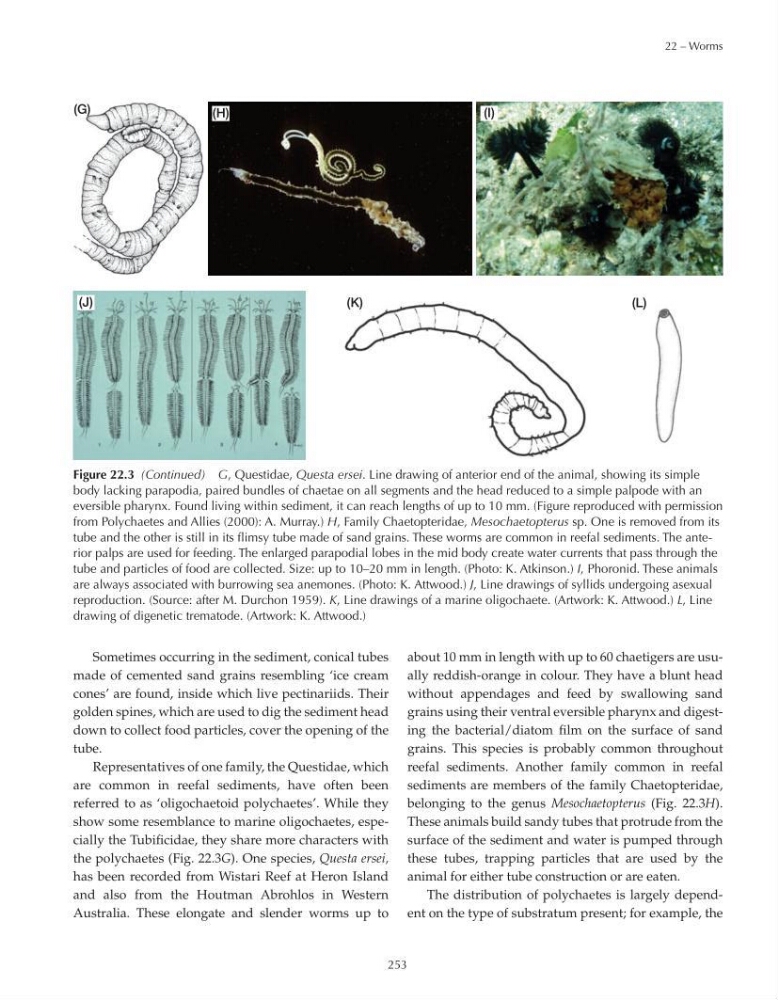
Figure 22.3 (Continued) G, Questidae, Questa ersei. Line drawing of anterior end of the animal, showing its simple
body lacking parapodia, paired bundles of chaetae on all segments and the head reduced to a simple palpode with an
eversible pharynx. Found living within sediment, it can reach lengths of up to 10 mm. (Figure reproduced with permission
from Polychaetes and Allies (2000): A. Murray.) H, Family Chaetopteridae, Mesochaetopterus sp. One is removed from its
tube and the other is still in its flimsy tube made of sand grains. These worms are common in reefal sediments. The anterior palps are used for feeding. The enlarged parapodial lobes in the mid body create water currents that pass through the
tube and particles of food are collected. Size: up to 10–20 mm in length. (Photo: K. Atkinson.) I, Phoronid. These animals
are always associated with burrowing sea anemones. (Photo: K. Attwood.) J, Line drawings of syllids undergoing asexual
reproduction. (Source: after M. Durchon 1959). K, Line drawings of a marine oligochaete. (Artwork: K. Attwood.) L, Line
drawing of digenetic trematode. (Artwork: K. Attwood.)
Sometimes occurring in the sediment, conical tubes
made of cemented sand grains resembling ‘ice cream
cones’ are found, inside which live pectinariids. Their
golden spines, which are used to dig the sediment head
down to collect food particles, cover the opening of the
tube.
Representatives of one family, the Questidae, which
are common in reefal sediments, have often been
referred to as ‘oligochaetoid polychaetes’. While they
show some resemblance to marine oligochaetes, especially the Tubificidae, they share more characters with
the polychaetes (Fig. 22.3G). One species, Questa ersei,
has been recorded from Wistari Reef at Heron Island
and also from the Houtman Abrohlos in Western
Australia. These elongate and slender worms up to
about 10 mm in length with up to 60 chaetigers are usually reddish-orange in colour. They have a blunt head
without appendages and feed by swallowing sand
grains using their ventral eversible pharynx and digesting the bacterial/diatom film on the surface of sand
grains. This species is probably common throughout
reefal sediments. Another family common in reefal
sediments are members of the family Chaetopteridae,
belonging to the genus Mesochaetopterus (Fig. 22.3H).
These animals build sandy tubes that protrude from the
surface of the sediment and water is pumped through
these tubes, trapping particles that are used by the
animal for either tube construction or are eaten.
The distribution of polychaetes is largely dependent on the type of substratum present; for example, the
253
(L)
(K)
(J)
(G)
(I)
(H)
Figure 22.3 (Continued) G, Questidae, Questa ersei. Line drawing of anterior end of the animal, showing its simple
body lacking parapodia, paired bundles of chaetae on all segments and the head reduced to a simple palpode with an
eversible pharynx. Found living within sediment, it can reach lengths of up to 10 mm. (Figure reproduced with permission
from Polychaetes and Allies (2000): A. Murray.) H, Family Chaetopteridae, Mesochaetopterus sp. One is removed from its
tube and the other is still in its flimsy tube made of sand grains. These worms are common in reefal sediments. The anterior palps are used for feeding. The enlarged parapodial lobes in the mid body create water currents that pass through the
tube and particles of food are collected. Size: up to 10–20 mm in length. (Photo: K. Atkinson.) I, Phoronid. These animals
are always associated with burrowing sea anemones. (Photo: K. Attwood.) J, Line drawings of syllids undergoing asexual
reproduction. (Source: after M. Durchon 1959). K, Line drawings of a marine oligochaete. (Artwork: K. Attwood.) L, Line
drawing of digenetic trematode. (Artwork: K. Attwood.)
Sometimes occurring in the sediment, conical tubes
made of cemented sand grains resembling ‘ice cream
cones’ are found, inside which live pectinariids. Their
golden spines, which are used to dig the sediment head
down to collect food particles, cover the opening of the
tube.
Representatives of one family, the Questidae, which
are common in reefal sediments, have often been
referred to as ‘oligochaetoid polychaetes’. While they
show some resemblance to marine oligochaetes, especially the Tubificidae, they share more characters with
the polychaetes (Fig. 22.3G). One species, Questa ersei,
has been recorded from Wistari Reef at Heron Island
and also from the Houtman Abrohlos in Western
Australia. These elongate and slender worms up to
about 10 mm in length with up to 60 chaetigers are usually reddish-orange in colour. They have a blunt head
without appendages and feed by swallowing sand
grains using their ventral eversible pharynx and digesting the bacterial/diatom film on the surface of sand
grains. This species is probably common throughout
reefal sediments. Another family common in reefal
sediments are members of the family Chaetopteridae,
belonging to the genus Mesochaetopterus (Fig. 22.3H).
These animals build sandy tubes that protrude from the
surface of the sediment and water is pumped through
these tubes, trapping particles that are used by the
animal for either tube construction or are eaten.
The distribution of polychaetes is largely dependent on the type of substratum present; for example, the