

21 – Octocorals
233
walls are generally thin, with few sclerites, permitting
colonies to easily inflate with water, dramatically increasing their size (‘hydroskeleton’). Although some
genera are soft and floppy, others have a rough or
distinctly prickly feel due to long, protective sclerites
projecting beyond the polyp head. In the stem and
branches, the sandpaper-like texture can be attributed
to numerous, strongly sculptured, spiny sclerites in the
surface layer. Sclerite forms include prickly needles,
leafy clubs, irregular shaped spiky forms, and tuberculate and thorny spindles, often extensively ornamented
along one side. Members of this family are most often
found in clear-water habitats.
Nephthea (Fig. 21.11). Colonies are arborescent.
Non-retractile polyps, supported by a bundle of sclerites, are arranged in lobes. Sclerites are irregular, spindle or caterpillar-like. Colour: generally brown to
green. Nephthea are found mostly in clear waters, often growing in clusters of several to many colonies.
Similar genera: Stereonephthya, Chromonephthya, Lemnalia and Paralemnalia.
Dendronephthya (Fig. 21.12). Colonies are arborescent with the terminal twigs forming rounded, umbellate
or tree-like groupings. Non-retractile polyps are arranged
in small groups on the end of the twigs, protected by
large supporting sclerites. Colonies are brightly coloured,
azooxanthellate. The sclerites are similar to Nephthea.
Dendronephthya are found in high currents, generally
growing as individual colonies. Similar genera: Scleronephthya, Chromonephthya, Nephthea and Stereonephthya.
Lemnalia (Fig. 21.13). Colonies are arborescent,
formed from bare stalks and branches and generally
thin twigs. Nonretractile polyps are isolated on the
twigs. Colour: cream to brownish. Interior sclerites are
long, thin needles. Surface forms include capstans,
crescents and brackets. Lemnalia are found in clear waters, growing as individual colonies, small clusters
or large assemblages. Similar genera: Nephthea and
Paralemnalia.
Capnella (Fig. 21.14). Colonies are small, arborescent to lobed. The lobes are crowded with incurved
polyps that are covered in club-like sclerites. Interior
sclerites are often globular, with the surface ones leafy
to spiky capstans. Colour: grey or beige. Capnella are
found in a wide range of habitats, as individual colonies or in small groups of colonies.
(A)
(B)
0.1 mm
Surface
Stalk
interior
Polypary
interior
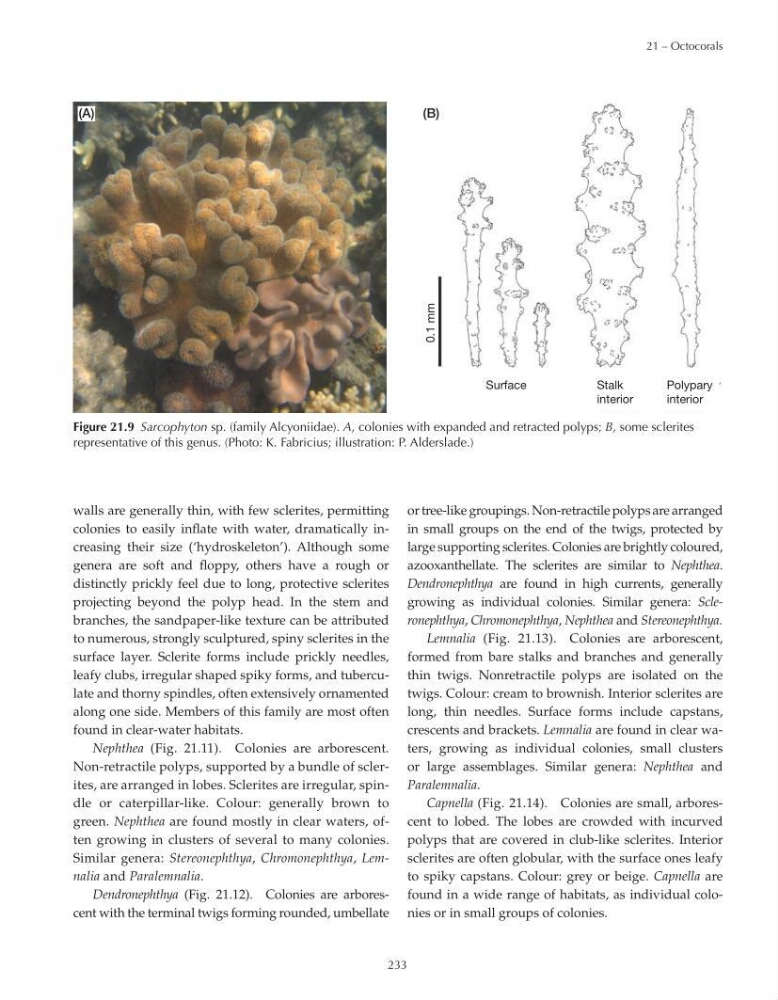
Figure 21.9 Sarcophyton sp. (family Alcyoniidae). A, colonies with expanded and retracted polyps; B, some sclerites
representative of this genus. (Photo: K. Fabricius; illustration: P. Alderslade.)
233
walls are generally thin, with few sclerites, permitting
colonies to easily inflate with water, dramatically increasing their size (‘hydroskeleton’). Although some
genera are soft and floppy, others have a rough or
distinctly prickly feel due to long, protective sclerites
projecting beyond the polyp head. In the stem and
branches, the sandpaper-like texture can be attributed
to numerous, strongly sculptured, spiny sclerites in the
surface layer. Sclerite forms include prickly needles,
leafy clubs, irregular shaped spiky forms, and tuberculate and thorny spindles, often extensively ornamented
along one side. Members of this family are most often
found in clear-water habitats.
Nephthea (Fig. 21.11). Colonies are arborescent.
Non-retractile polyps, supported by a bundle of sclerites, are arranged in lobes. Sclerites are irregular, spindle or caterpillar-like. Colour: generally brown to
green. Nephthea are found mostly in clear waters, often growing in clusters of several to many colonies.
Similar genera: Stereonephthya, Chromonephthya, Lemnalia and Paralemnalia.
Dendronephthya (Fig. 21.12). Colonies are arborescent with the terminal twigs forming rounded, umbellate
or tree-like groupings. Non-retractile polyps are arranged
in small groups on the end of the twigs, protected by
large supporting sclerites. Colonies are brightly coloured,
azooxanthellate. The sclerites are similar to Nephthea.
Dendronephthya are found in high currents, generally
growing as individual colonies. Similar genera: Scleronephthya, Chromonephthya, Nephthea and Stereonephthya.
Lemnalia (Fig. 21.13). Colonies are arborescent,
formed from bare stalks and branches and generally
thin twigs. Nonretractile polyps are isolated on the
twigs. Colour: cream to brownish. Interior sclerites are
long, thin needles. Surface forms include capstans,
crescents and brackets. Lemnalia are found in clear waters, growing as individual colonies, small clusters
or large assemblages. Similar genera: Nephthea and
Paralemnalia.
Capnella (Fig. 21.14). Colonies are small, arborescent to lobed. The lobes are crowded with incurved
polyps that are covered in club-like sclerites. Interior
sclerites are often globular, with the surface ones leafy
to spiky capstans. Colour: grey or beige. Capnella are
found in a wide range of habitats, as individual colonies or in small groups of colonies.
(A)
(B)
0.1 mm
Surface
Stalk
interior
Polypary
interior
Figure 21.9 Sarcophyton sp. (family Alcyoniidae). A, colonies with expanded and retracted polyps; B, some sclerites
representative of this genus. (Photo: K. Fabricius; illustration: P. Alderslade.)