

21 – Octocorals
227
sample <2 mm
2 is sufficient for examination. The sample is cut from the relevant part of
the colony with a scalpel under a dissecting microscope and placed into 1–2 drops of
bleach on a microscope slide. Once the bubbles have ceased, the sclerites are spread out
by stirring, a cover-slip is applied and the sample is investigated under a compound
microscope. Preparations that have dried can be rehydrated with 1–2 drops of water.
Permits are required, see Chapter 12.
(A)
(B)
(C)
(D)
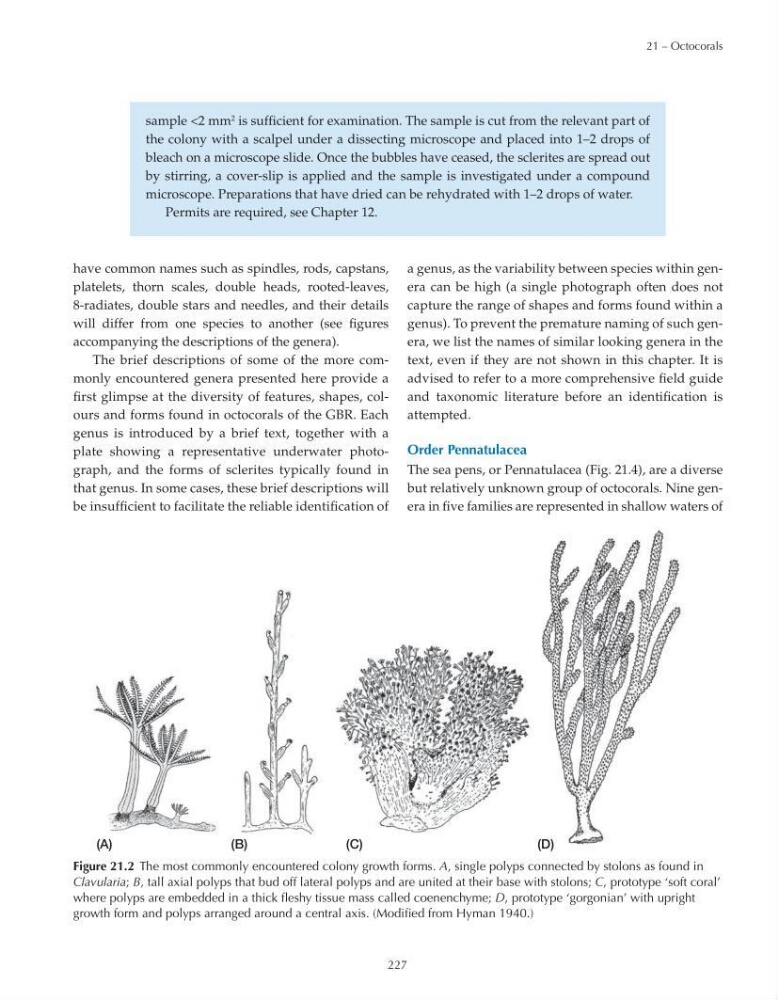
Figure 21.2 The most commonly encountered colony growth forms. A, single polyps connected by stolons as found in
Clavularia; B, tall axial polyps that bud off lateral polyps and are united at their base with stolons; C, prototype ‘soft coral’
where polyps are embedded in a thick fleshy tissue mass called coenenchyme; D, prototype ‘gorgonian’ with upright
growth form and polyps arranged around a central axis. (Modified from Hyman 1940.)
have common names such as spindles, rods, capstans,
platelets, thorn scales, double heads, rooted-leaves,
8-radiates, double stars and needles, and their details
will differ from one species to another (see figures
accompanying the descriptions of the genera).
The brief descriptions of some of the more commonly encountered genera presented here provide a
first glimpse at the diversity of features, shapes, colours and forms found in octocorals of the GBR. Each
genus is introduced by a brief text, together with a
plate showing a representative underwater photograph, and the forms of sclerites typically found in
that genus. In some cases, these brief descriptions will
be insufficient to facilitate the reliable identification of
a genus, as the variability between species within genera can be high (a single photograph often does not
capture the range of shapes and forms found within a
genus). To prevent the premature naming of such genera, we list the names of similar looking genera in the
text, even if they are not shown in this chapter. It is
advised to refer to a more comprehensive field guide
and taxonomic literature before an identification is
attempted.
Order Pennatulacea
The sea pens, or Pennatulacea (Fig. 21.4), are a diverse
but relatively unknown group of octocorals. Nine genera in five families are represented in shallow waters of
227
sample <2 mm
2 is sufficient for examination. The sample is cut from the relevant part of
the colony with a scalpel under a dissecting microscope and placed into 1–2 drops of
bleach on a microscope slide. Once the bubbles have ceased, the sclerites are spread out
by stirring, a cover-slip is applied and the sample is investigated under a compound
microscope. Preparations that have dried can be rehydrated with 1–2 drops of water.
Permits are required, see Chapter 12.
(A)
(B)
(C)
(D)
Figure 21.2 The most commonly encountered colony growth forms. A, single polyps connected by stolons as found in
Clavularia; B, tall axial polyps that bud off lateral polyps and are united at their base with stolons; C, prototype ‘soft coral’
where polyps are embedded in a thick fleshy tissue mass called coenenchyme; D, prototype ‘gorgonian’ with upright
growth form and polyps arranged around a central axis. (Modified from Hyman 1940.)
have common names such as spindles, rods, capstans,
platelets, thorn scales, double heads, rooted-leaves,
8-radiates, double stars and needles, and their details
will differ from one species to another (see figures
accompanying the descriptions of the genera).
The brief descriptions of some of the more commonly encountered genera presented here provide a
first glimpse at the diversity of features, shapes, colours and forms found in octocorals of the GBR. Each
genus is introduced by a brief text, together with a
plate showing a representative underwater photograph, and the forms of sclerites typically found in
that genus. In some cases, these brief descriptions will
be insufficient to facilitate the reliable identification of
a genus, as the variability between species within genera can be high (a single photograph often does not
capture the range of shapes and forms found within a
genus). To prevent the premature naming of such genera, we list the names of similar looking genera in the
text, even if they are not shown in this chapter. It is
advised to refer to a more comprehensive field guide
and taxonomic literature before an identification is
attempted.
Order Pennatulacea
The sea pens, or Pennatulacea (Fig. 21.4), are a diverse
but relatively unknown group of octocorals. Nine genera in five families are represented in shallow waters of