

The Great Barrier Reef
210
added between the preceding cycles. The oral disc
bears a round or oval mouth without syphonoglyphs
(the flagellated furrows found in anemones and zoanthids), and this leads to a pharynx and the paired
mesenteries, which may be complete or incomplete
(reaching or not reaching the pharynx at their upper
limit). In the process of replicating polyps to form a
colony, division may occur either within the polyp
(as evidenced by the presence of dividing corallites
on the surface of the coral) or external to the polyp.
When division is incomplete, corallites may exist in
continuous connection (as in the brain corals) but little is known about the actual form of polyps when
wall structures are combined. In general, the coral
colony can be thought of as the sum of its polyps,
with processes such as feeding and gonad formation
being performed in individual polyps and contributing to the nutrition and sexual propagation of the
colony.
N CLASSIFICATION AND IDENTIFICATION
The classificatory scheme for corals was developed by
reference to the elements of the skeleton. Understanding this requires knowledge of the parts of the skeleton underlying various polyp features and the way
these vary from family to family (Fig. 20.2). Paradoxically, the exoskeleton of a coral appears to an observer
to be inside the polyp, but actually it is underneath.
The remarkable process of skeletal production leads
to a structure that supports almost the entire threedimensional form of the polyp as well as the connecting tissue and continuation of the body cavity
(coenenchyme) between polyps. This creates a colony
architecture that allows species to be identified both
in life and after death, without reference (in most
cases) to the tissue structure of the polyps themselves.
After death, the skeleton persists, although it may be
subject to erosion by other reef organisms, and as a
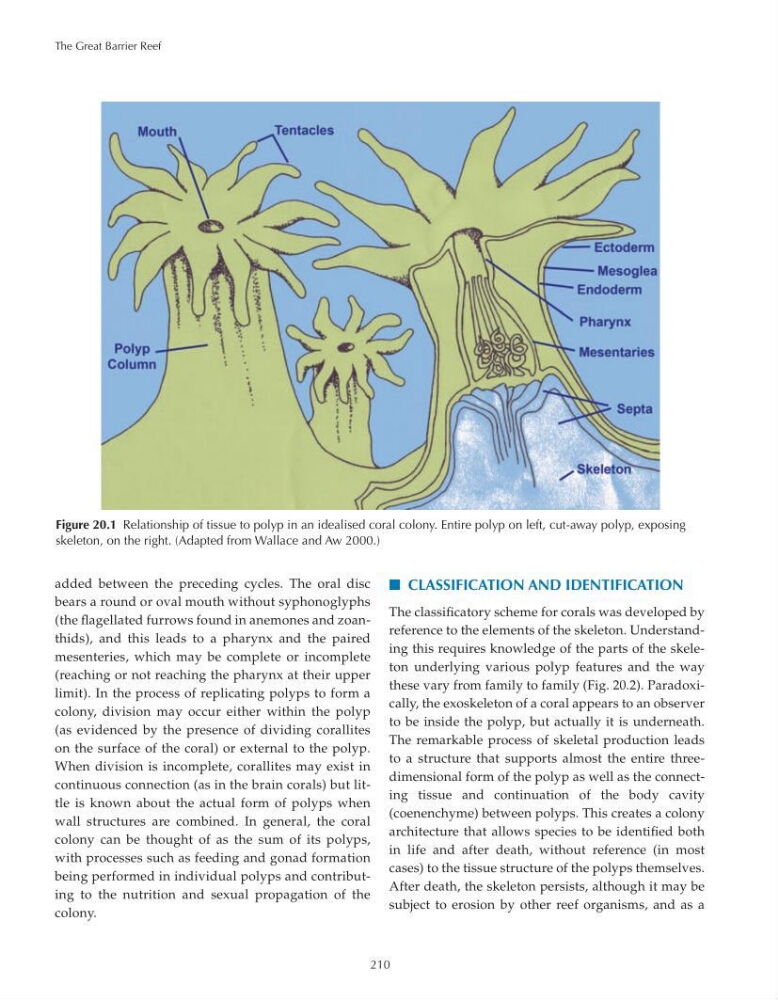
Figure 20.1 Relationship of tissue to polyp in an idealised coral colony. Entire polyp on left, cut-away polyp, exposing
skeleton, on the right. (Adapted from Wallace and Aw 2000.)
210
added between the preceding cycles. The oral disc
bears a round or oval mouth without syphonoglyphs
(the flagellated furrows found in anemones and zoanthids), and this leads to a pharynx and the paired
mesenteries, which may be complete or incomplete
(reaching or not reaching the pharynx at their upper
limit). In the process of replicating polyps to form a
colony, division may occur either within the polyp
(as evidenced by the presence of dividing corallites
on the surface of the coral) or external to the polyp.
When division is incomplete, corallites may exist in
continuous connection (as in the brain corals) but little is known about the actual form of polyps when
wall structures are combined. In general, the coral
colony can be thought of as the sum of its polyps,
with processes such as feeding and gonad formation
being performed in individual polyps and contributing to the nutrition and sexual propagation of the
colony.
N CLASSIFICATION AND IDENTIFICATION
The classificatory scheme for corals was developed by
reference to the elements of the skeleton. Understanding this requires knowledge of the parts of the skeleton underlying various polyp features and the way
these vary from family to family (Fig. 20.2). Paradoxically, the exoskeleton of a coral appears to an observer
to be inside the polyp, but actually it is underneath.
The remarkable process of skeletal production leads
to a structure that supports almost the entire threedimensional form of the polyp as well as the connecting tissue and continuation of the body cavity
(coenenchyme) between polyps. This creates a colony
architecture that allows species to be identified both
in life and after death, without reference (in most
cases) to the tissue structure of the polyps themselves.
After death, the skeleton persists, although it may be
subject to erosion by other reef organisms, and as a
Figure 20.1 Relationship of tissue to polyp in an idealised coral colony. Entire polyp on left, cut-away polyp, exposing
skeleton, on the right. (Adapted from Wallace and Aw 2000.)