

14 – Plankton
139
Large plankton (organisms 1 mm)
Some copepods (Pontella), euphausiids (14 species
on GBR) and many elongate zooplankters such as
larvaceans/appendicularians (e.g. Megalocercus), chaetognaths and fish larvae are over 1 mm long
(Fig. 14.11). Molluscs that include cone-shaped pteropods (15 species on GBR) and gelatinous heteropods
(three species on GBR) are common. Large zooplankton are in the ‘grey’ zone of what is defined as ‘plankton’ in that many have great mobility and could
almost be considered free swimming nekton. The
early life history stages of fish, for example, hatch at
small sizes (2 mm to 6 mm), but many settle on reefs
at large sizes (e.g. 1–4 cm) and have excellent swimming and sensory abilities (i.e. olfaction, hearing and
vision) that assist orientation.
Gelatinous zooplankton are among the most obvious members of the zooplankton (Fig. 14.12). The
Phylum Cnidaria includes the Class Scyphozoa, represented by many large jellyfish, some of which have tentacles that extend over 3 m in length (e.g. Cyanea,
Desmonema, ‘Lions mane’ jellyfish) and they can weigh
over 10 kg. Others have stumpy tentacles, such as
Catostylus, and some of these taxa are targeted by fisheries for sushi grade jellyfish (adults are up to 5 kg wet
weight). Jellyfishes are close relatives of corals and some
taxa (e.g. Phyllorhiza punctata) have symbiotic algae (i.e.
zooxanthellae). One of the most common jellyfish in
coastal waters is Aurelia (moon jelly) that is harmless
and like most jellyfish can be found in great numbers.
Densities of jellyfish can be so great at times that they
are referred to as ‘blooms’. The deadliest jellyfish belong
to the Class Cubozoa and include stingers and multiple
types of jellyfish that are responsible for the medical
condition called Irukandji syndrome (e.g. Carukia barnesi
and Pseudoirukandji spp., see Chapter 18).
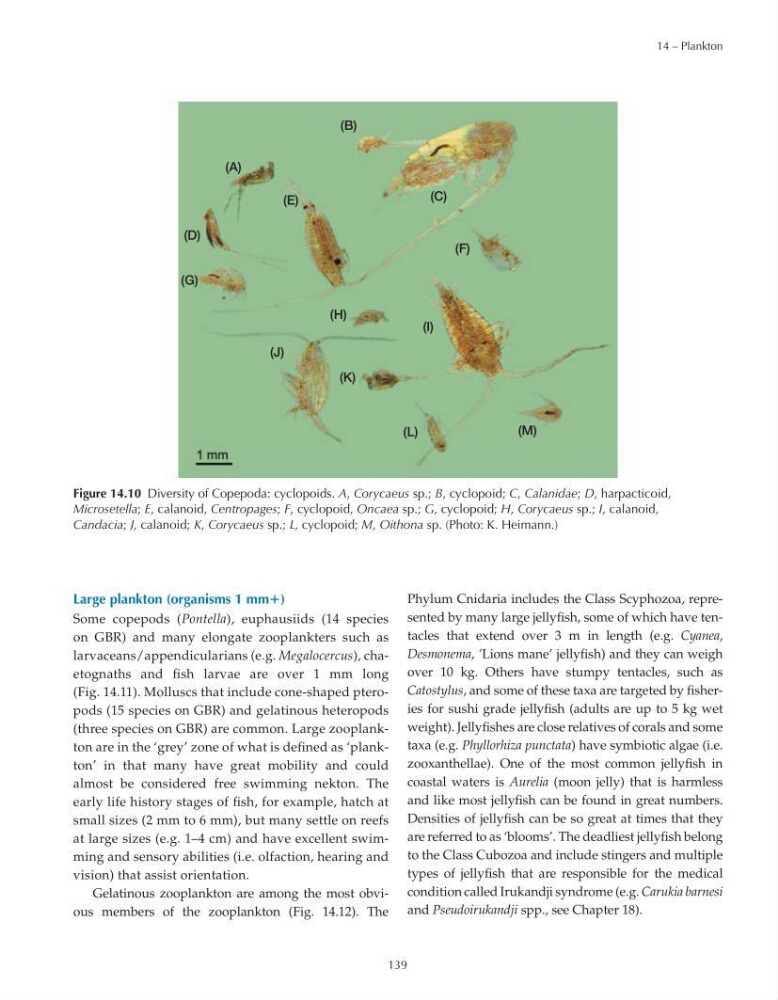
Figure 14.10 Diversity of Copepoda: cyclopoids. A, Corycaeus sp.; B, cyclopoid; C, Calanidae; D, harpacticoid,
Microsetella; E, calanoid, Centropages; F, cyclopoid, Oncaea sp.; G, cyclopoid; H, Corycaeus sp.; I, calanoid,
Candacia; J, calanoid; K, Corycaeus sp.; L, cyclopoid; M, Oithona sp. (Photo: K. Heimann.)
(E)
(C)
(A)
(G)
(J)
(H)
(I)
(K)
(L)
(M)
(D)
(B)
(F)
139
Large plankton (organisms 1 mm)
Some copepods (Pontella), euphausiids (14 species
on GBR) and many elongate zooplankters such as
larvaceans/appendicularians (e.g. Megalocercus), chaetognaths and fish larvae are over 1 mm long
(Fig. 14.11). Molluscs that include cone-shaped pteropods (15 species on GBR) and gelatinous heteropods
(three species on GBR) are common. Large zooplankton are in the ‘grey’ zone of what is defined as ‘plankton’ in that many have great mobility and could
almost be considered free swimming nekton. The
early life history stages of fish, for example, hatch at
small sizes (2 mm to 6 mm), but many settle on reefs
at large sizes (e.g. 1–4 cm) and have excellent swimming and sensory abilities (i.e. olfaction, hearing and
vision) that assist orientation.
Gelatinous zooplankton are among the most obvious members of the zooplankton (Fig. 14.12). The
Phylum Cnidaria includes the Class Scyphozoa, represented by many large jellyfish, some of which have tentacles that extend over 3 m in length (e.g. Cyanea,
Desmonema, ‘Lions mane’ jellyfish) and they can weigh
over 10 kg. Others have stumpy tentacles, such as
Catostylus, and some of these taxa are targeted by fisheries for sushi grade jellyfish (adults are up to 5 kg wet
weight). Jellyfishes are close relatives of corals and some
taxa (e.g. Phyllorhiza punctata) have symbiotic algae (i.e.
zooxanthellae). One of the most common jellyfish in
coastal waters is Aurelia (moon jelly) that is harmless
and like most jellyfish can be found in great numbers.
Densities of jellyfish can be so great at times that they
are referred to as ‘blooms’. The deadliest jellyfish belong
to the Class Cubozoa and include stingers and multiple
types of jellyfish that are responsible for the medical
condition called Irukandji syndrome (e.g. Carukia barnesi
and Pseudoirukandji spp., see Chapter 18).
Figure 14.10 Diversity of Copepoda: cyclopoids. A, Corycaeus sp.; B, cyclopoid; C, Calanidae; D, harpacticoid,
Microsetella; E, calanoid, Centropages; F, cyclopoid, Oncaea sp.; G, cyclopoid; H, Corycaeus sp.; I, calanoid,
Candacia; J, calanoid; K, Corycaeus sp.; L, cyclopoid; M, Oithona sp. (Photo: K. Heimann.)
(E)
(C)
(A)
(G)
(J)
(H)
(I)
(K)
(L)
(M)
(D)
(B)
(F)