

85
9. Human Impact on Coral Reefs
T. P. Hughes
Coral reefs provide important ecosystem goods and
services, such as fisheries and tourism, and have great
aesthetic and cultural value. Until recently, the direct
and indirect effects of overfishing and pollution from
agriculture and land development have been the most
significant causes of the accelerating degradation of
coral reefs in many places, particularly in the Caribbean.
These human impacts have caused ecological shifts
away from the original dominance by corals to a preponderance of fleshy seaweed or other weedy non-coral
species. Importantly, these changes to reefs are compounded by the more recently superimposed impacts
of global climate change, including coral bleaching and
the emergence of disease. Even otherwise lightly impacted reefs, such as the northern and outer Great Barrier Reef, are increasingly vulnerable to climate change.
Coral reefs are in serious decline globally; an estimated
30% are already severely damaged, and close to 60%
may be lost by 2030.
Coral reefs are often described (inaccurately) as
fragile ecosystems in delicate balance with nature; this
notion goes hand in hand with the outmoded idea from
visiting colonial scientists that the tropics are benign
and stable environments (Fig. 9.1). According to this
perspective, humans are typically portrayed as the disrupter of nature’s delicate balance. But are coral reefs
stable, fragile ecosystems? The answer is no, especially
at the scales most relevant to human interaction with
reefs. Coral reefs are subject to a high frequency of
recurrent disturbances, and they have evolved and
thrive in a dynamic environment.
From a demographic perspective, a decline in coral or
a fish population is the result of births (or recruitment)
being exceeded by mortality. As well as increasing the
mortality of corals and other organisms, human activities
also have significant effects on the regenerative processes
of coral reef species, such as fecundity, fertilisation success, larval development and rates of settlement and recruitment. The scale of dispersal of larvae is only beginning
to be understood, and is crucial to understanding patterns
of larval recruitment and recovery from large scale disturbances. Human impacts on reproduction and dispersal
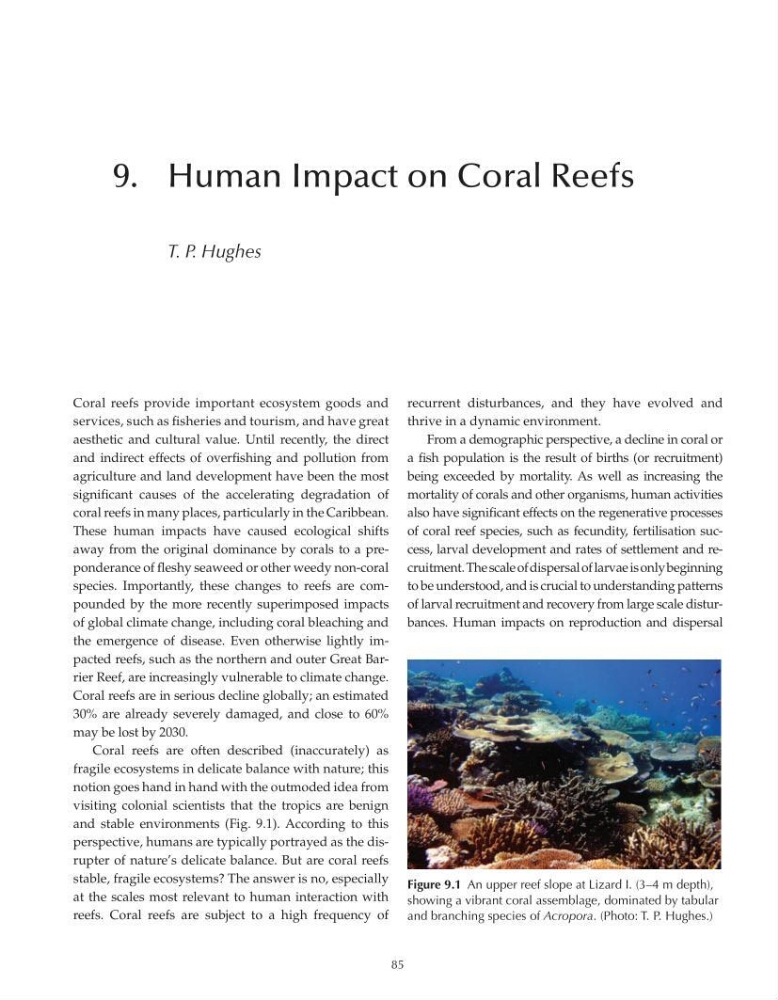
Figure 9.1 An upper reef slope at Lizard I. (3–4 m depth),
showing a vibrant coral assemblage, dominated by tabular
and branching species of Acropora. (Photo: T. P. Hughes.)
9. Human Impact on Coral Reefs
T. P. Hughes
Coral reefs provide important ecosystem goods and
services, such as fisheries and tourism, and have great
aesthetic and cultural value. Until recently, the direct
and indirect effects of overfishing and pollution from
agriculture and land development have been the most
significant causes of the accelerating degradation of
coral reefs in many places, particularly in the Caribbean.
These human impacts have caused ecological shifts
away from the original dominance by corals to a preponderance of fleshy seaweed or other weedy non-coral
species. Importantly, these changes to reefs are compounded by the more recently superimposed impacts
of global climate change, including coral bleaching and
the emergence of disease. Even otherwise lightly impacted reefs, such as the northern and outer Great Barrier Reef, are increasingly vulnerable to climate change.
Coral reefs are in serious decline globally; an estimated
30% are already severely damaged, and close to 60%
may be lost by 2030.
Coral reefs are often described (inaccurately) as
fragile ecosystems in delicate balance with nature; this
notion goes hand in hand with the outmoded idea from
visiting colonial scientists that the tropics are benign
and stable environments (Fig. 9.1). According to this
perspective, humans are typically portrayed as the disrupter of nature’s delicate balance. But are coral reefs
stable, fragile ecosystems? The answer is no, especially
at the scales most relevant to human interaction with
reefs. Coral reefs are subject to a high frequency of
recurrent disturbances, and they have evolved and
thrive in a dynamic environment.
From a demographic perspective, a decline in coral or
a fish population is the result of births (or recruitment)
being exceeded by mortality. As well as increasing the
mortality of corals and other organisms, human activities
also have significant effects on the regenerative processes
of coral reef species, such as fecundity, fertilisation success, larval development and rates of settlement and recruitment. The scale of dispersal of larvae is only beginning
to be understood, and is crucial to understanding patterns
of larval recruitment and recovery from large scale disturbances. Human impacts on reproduction and dispersal
Figure 9.1 An upper reef slope at Lizard I. (3–4 m depth),
showing a vibrant coral assemblage, dominated by tabular
and branching species of Acropora. (Photo: T. P. Hughes.)