

Organic compounds in sludges 241
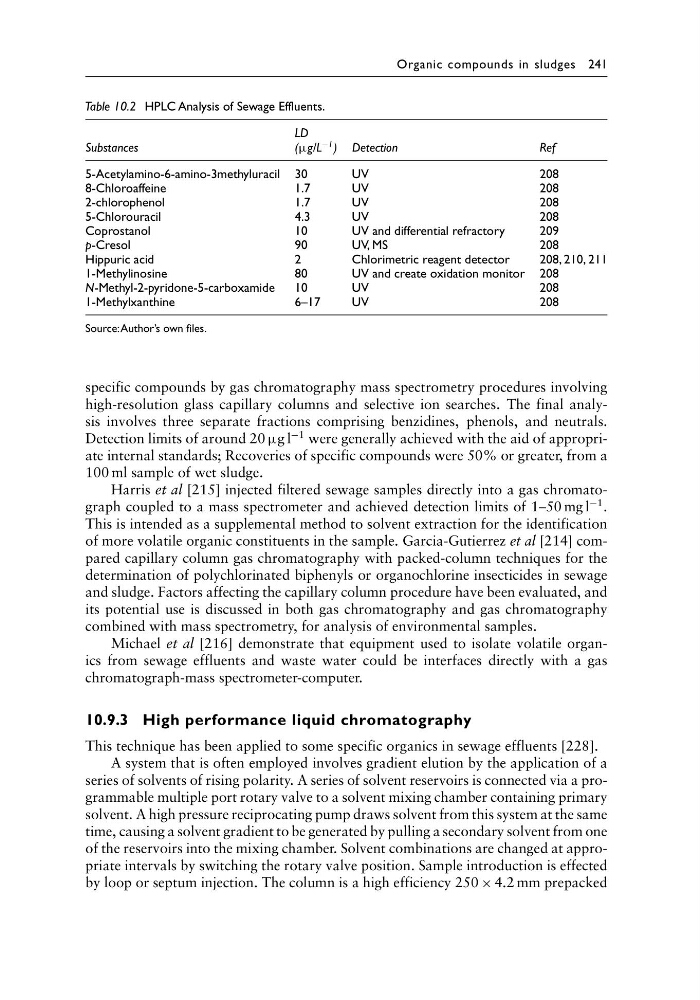
Table 10.2 HPLC Analysis of Sewage Effluents.
LD
Substances
(µg/L
−1 ) Detection
Ref
5-Acetylamino-6-amino-3methyluracil 30
UV
208
8-Chloroaffeine
1.7
UV
208
2-chlorophenol
1.7
UV
208
5-Chlorouracil
4.3
UV
208
Coprostanol
10
UV and differential refractory
209
p-Cresol
90
UV, MS
208
Hippuric acid
2
Chlorimetric reagent detector
208, 210, 211
1-Methylinosine
80
UV and create oxidation monitor 208
N-Methyl-2-pyridone-5-carboxamide
10
UV
208
1-Methylxanthine
6–17
UV
208
Source:Author’s own files.
specific compounds by gas chromatography mass spectrometry procedures involving
high-resolution glass capillary columns and selective ion searches. The final analysis involves three separate fractions comprising benzidines, phenols, and neutrals.
Detection limits of around 20 µg l
−1 were generally achieved with the aid of appropriate internal standards; Recoveries of specific compounds were 50% or greater, from a
100 ml sample of wet sludge.
Harris et al [215] injected filtered sewage samples directly into a gas chromatograph coupled to a mass spectrometer and achieved detection limits of 1–50 mg l
−1 .
This is intended as a supplemental method to solvent extraction for the identification
of more volatile organic constituents in the sample. Garcia-Gutierrez et al [214] compared capillary column gas chromatography with packed-column techniques for the
determination of polychlorinated biphenyls or organochlorine insecticides in sewage
and sludge. Factors affecting the capillary column procedure have been evaluated, and
its potential use is discussed in both gas chromatography and gas chromatography
combined with mass spectrometry, for analysis of environmental samples.
Michael et al [216] demonstrate that equipment used to isolate volatile organics from sewage effluents and waste water could be interfaces directly with a gas
chromatograph-mass spectrometer-computer.
10.9.3 High performance liquid chromatography
This technique has been applied to some specific organics in sewage effluents [228].
A system that is often employed involves gradient elution by the application of a
series of solvents of rising polarity. A series of solvent reservoirs is connected via a programmable multiple port rotary valve to a solvent mixing chamber containing primary
solvent. A high pressure reciprocating pump draws solvent from this system at the same
time, causing a solvent gradient to be generated by pulling a secondary solvent from one
of the reservoirs into the mixing chamber. Solvent combinations are changed at appropriate intervals by switching the rotary valve position. Sample introduction is effected
by loop or septum injection. The column is a high efficiency 250 × 4.2 mm prepacked
Table 10.2 HPLC Analysis of Sewage Effluents.
LD
Substances
(µg/L
−1 ) Detection
Ref
5-Acetylamino-6-amino-3methyluracil 30
UV
208
8-Chloroaffeine
1.7
UV
208
2-chlorophenol
1.7
UV
208
5-Chlorouracil
4.3
UV
208
Coprostanol
10
UV and differential refractory
209
p-Cresol
90
UV, MS
208
Hippuric acid
2
Chlorimetric reagent detector
208, 210, 211
1-Methylinosine
80
UV and create oxidation monitor 208
N-Methyl-2-pyridone-5-carboxamide
10
UV
208
1-Methylxanthine
6–17
UV
208
Source:Author’s own files.
specific compounds by gas chromatography mass spectrometry procedures involving
high-resolution glass capillary columns and selective ion searches. The final analysis involves three separate fractions comprising benzidines, phenols, and neutrals.
Detection limits of around 20 µg l
−1 were generally achieved with the aid of appropriate internal standards; Recoveries of specific compounds were 50% or greater, from a
100 ml sample of wet sludge.
Harris et al [215] injected filtered sewage samples directly into a gas chromatograph coupled to a mass spectrometer and achieved detection limits of 1–50 mg l
−1 .
This is intended as a supplemental method to solvent extraction for the identification
of more volatile organic constituents in the sample. Garcia-Gutierrez et al [214] compared capillary column gas chromatography with packed-column techniques for the
determination of polychlorinated biphenyls or organochlorine insecticides in sewage
and sludge. Factors affecting the capillary column procedure have been evaluated, and
its potential use is discussed in both gas chromatography and gas chromatography
combined with mass spectrometry, for analysis of environmental samples.
Michael et al [216] demonstrate that equipment used to isolate volatile organics from sewage effluents and waste water could be interfaces directly with a gas
chromatograph-mass spectrometer-computer.
10.9.3 High performance liquid chromatography
This technique has been applied to some specific organics in sewage effluents [228].
A system that is often employed involves gradient elution by the application of a
series of solvents of rising polarity. A series of solvent reservoirs is connected via a programmable multiple port rotary valve to a solvent mixing chamber containing primary
solvent. A high pressure reciprocating pump draws solvent from this system at the same
time, causing a solvent gradient to be generated by pulling a secondary solvent from one
of the reservoirs into the mixing chamber. Solvent combinations are changed at appropriate intervals by switching the rotary valve position. Sample introduction is effected
by loop or septum injection. The column is a high efficiency 250 × 4.2 mm prepacked