

Organic compounds in saline marine and estuarine sediments 197
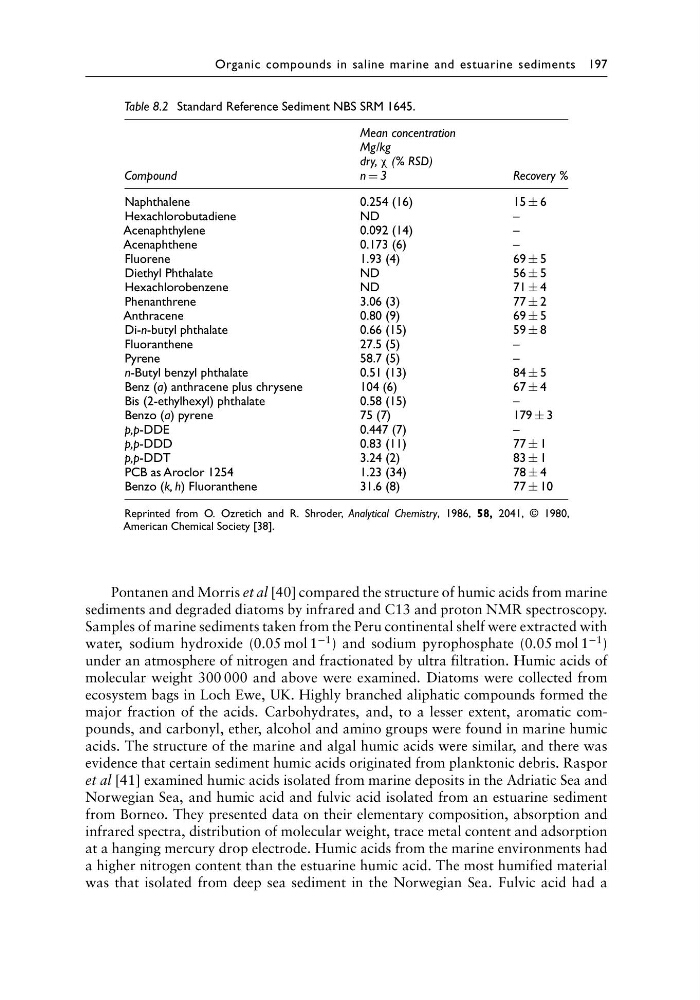
Table 8.2 Standard Reference Sediment NBS SRM 1645.
Mean concentration
Mg/kg
dry, χ (% RSD)
Compound
n = 3
Recovery %
Naphthalene
0.254 (16)
15 ± 6
Hexachlorobutadiene
ND
–
Acenaphthylene
0.092 (14)
–
Acenaphthene
0.173 (6)
–
Fluorene
1.93 (4)
69 ± 5
Diethyl Phthalate
ND
56 ± 5
Hexachlorobenzene
ND
71 ± 4
Phenanthrene
3.06 (3)
77 ± 2
Anthracene
0.80 (9)
69 ± 5
Di-n-butyl phthalate
0.66 (15)
59 ± 8
Fluoranthene
27.5 (5)
–
Pyrene
58.7 (5)
–
n-Butyl benzyl phthalate
0.51 (13)
84 ± 5
Benz (a) anthracene plus chrysene
104 (6)
67 ± 4
Bis (2-ethylhexyl) phthalate
0.58 (15)
–
Benzo (a) pyrene
75 (7)
179 ± 3
p,p-DDE
0.447 (7)
–
p,p-DDD
0.83 (11)
77 ± 1
p,p-DDT
3.24 (2)
83 ± 1
PCB as Aroclor 1254
1.23 (34)
78 ± 4
Benzo (k, h) Fluoranthene
31.6 (8)
77 ± 10
Reprinted from O. Ozretich and R. Shroder, Analytical Chemistry, 1986, 58, 2041, © 1980,
American Chemical Society [38].
Pontanen and Morris et al [40] compared the structure of humic acids from marine
sediments and degraded diatoms by infrared and C13 and proton NMR spectroscopy.
Samples of marine sediments taken from the Peru continental shelf were extracted with
water, sodium hydroxide (0.05 mol 1
−1 ) and sodium pyrophosphate (0.05 mol 1
−1 )
under an atmosphere of nitrogen and fractionated by ultra filtration. Humic acids of
molecular weight 300 000 and above were examined. Diatoms were collected from
ecosystem bags in Loch Ewe, UK. Highly branched aliphatic compounds formed the
major fraction of the acids. Carbohydrates, and, to a lesser extent, aromatic compounds, and carbonyl, ether, alcohol and amino groups were found in marine humic
acids. The structure of the marine and algal humic acids were similar, and there was
evidence that certain sediment humic acids originated from planktonic debris. Raspor
et al [41] examined humic acids isolated from marine deposits in the Adriatic Sea and
Norwegian Sea, and humic acid and fulvic acid isolated from an estuarine sediment
from Borneo. They presented data on their elementary composition, absorption and
infrared spectra, distribution of molecular weight, trace metal content and adsorption
at a hanging mercury drop electrode. Humic acids from the marine environments had
a higher nitrogen content than the estuarine humic acid. The most humified material
was that isolated from deep sea sediment in the Norwegian Sea. Fulvic acid had a
Table 8.2 Standard Reference Sediment NBS SRM 1645.
Mean concentration
Mg/kg
dry, χ (% RSD)
Compound
n = 3
Recovery %
Naphthalene
0.254 (16)
15 ± 6
Hexachlorobutadiene
ND
–
Acenaphthylene
0.092 (14)
–
Acenaphthene
0.173 (6)
–
Fluorene
1.93 (4)
69 ± 5
Diethyl Phthalate
ND
56 ± 5
Hexachlorobenzene
ND
71 ± 4
Phenanthrene
3.06 (3)
77 ± 2
Anthracene
0.80 (9)
69 ± 5
Di-n-butyl phthalate
0.66 (15)
59 ± 8
Fluoranthene
27.5 (5)
–
Pyrene
58.7 (5)
–
n-Butyl benzyl phthalate
0.51 (13)
84 ± 5
Benz (a) anthracene plus chrysene
104 (6)
67 ± 4
Bis (2-ethylhexyl) phthalate
0.58 (15)
–
Benzo (a) pyrene
75 (7)
179 ± 3
p,p-DDE
0.447 (7)
–
p,p-DDD
0.83 (11)
77 ± 1
p,p-DDT
3.24 (2)
83 ± 1
PCB as Aroclor 1254
1.23 (34)
78 ± 4
Benzo (k, h) Fluoranthene
31.6 (8)
77 ± 10
Reprinted from O. Ozretich and R. Shroder, Analytical Chemistry, 1986, 58, 2041, © 1980,
American Chemical Society [38].
Pontanen and Morris et al [40] compared the structure of humic acids from marine
sediments and degraded diatoms by infrared and C13 and proton NMR spectroscopy.
Samples of marine sediments taken from the Peru continental shelf were extracted with
water, sodium hydroxide (0.05 mol 1
−1 ) and sodium pyrophosphate (0.05 mol 1
−1 )
under an atmosphere of nitrogen and fractionated by ultra filtration. Humic acids of
molecular weight 300 000 and above were examined. Diatoms were collected from
ecosystem bags in Loch Ewe, UK. Highly branched aliphatic compounds formed the
major fraction of the acids. Carbohydrates, and, to a lesser extent, aromatic compounds, and carbonyl, ether, alcohol and amino groups were found in marine humic
acids. The structure of the marine and algal humic acids were similar, and there was
evidence that certain sediment humic acids originated from planktonic debris. Raspor
et al [41] examined humic acids isolated from marine deposits in the Adriatic Sea and
Norwegian Sea, and humic acid and fulvic acid isolated from an estuarine sediment
from Borneo. They presented data on their elementary composition, absorption and
infrared spectra, distribution of molecular weight, trace metal content and adsorption
at a hanging mercury drop electrode. Humic acids from the marine environments had
a higher nitrogen content than the estuarine humic acid. The most humified material
was that isolated from deep sea sediment in the Norwegian Sea. Fulvic acid had a