

114 Organic compounds in soils, sediments & sludges
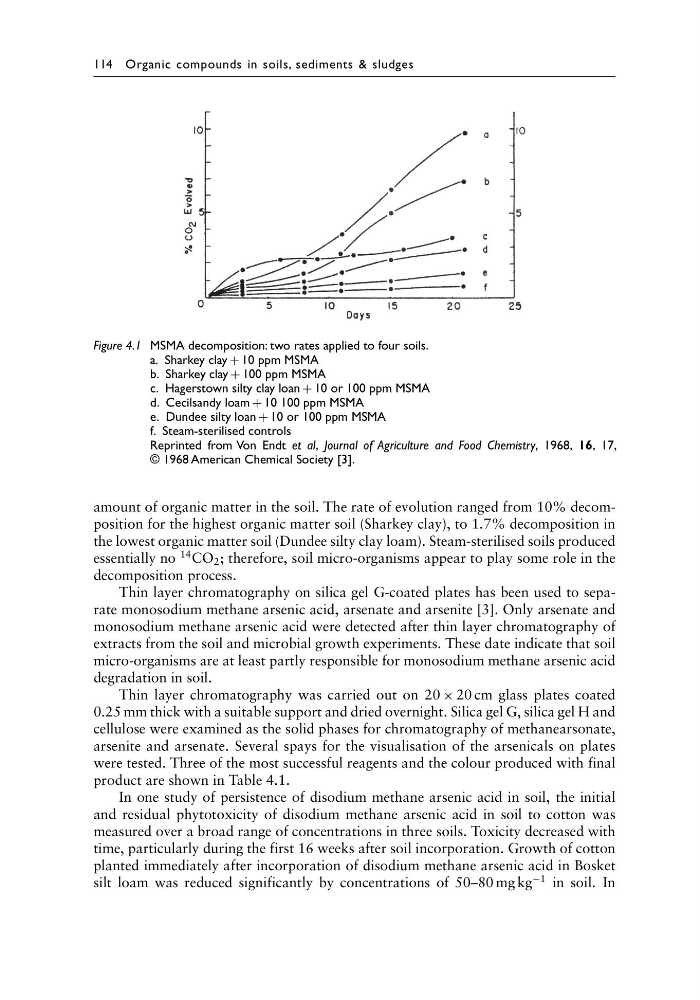
Figure 4.1 MSMA decomposition: two rates applied to four soils.
a. Sharkey clay + 10 ppm MSMA
b. Sharkey clay + 100 ppm MSMA
c. Hagerstown silty clay loan + 10 or 100 ppm MSMA
d. Cecilsandy loam + 10 100 ppm MSMA
e. Dundee silty loan + 10 or 100 ppm MSMA
f. Steam-sterilised controls
Reprinted from Von Endt et al, Journal of Agriculture and Food Chemistry, 1968, 16, 17,
© 1968 American Chemical Society [3].
amount of organic matter in the soil. The rate of evolution ranged from 10% decomposition for the highest organic matter soil (Sharkey clay), to 1.7% decomposition in
the lowest organic matter soil (Dundee silty clay loam). Steam-sterilised soils produced
essentially no
14 CO 2 ; therefore, soil micro-organisms appear to play some role in the
decomposition process.
Thin layer chromatography on silica gel G-coated plates has been used to separate monosodium methane arsenic acid, arsenate and arsenite [3]. Only arsenate and
monosodium methane arsenic acid were detected after thin layer chromatography of
extracts from the soil and microbial growth experiments. These date indicate that soil
micro-organisms are at least partly responsible for monosodium methane arsenic acid
degradation in soil.
Thin layer chromatography was carried out on 20 × 20 cm glass plates coated
0.25 mm thick with a suitable support and dried overnight. Silica gel G, silica gel H and
cellulose were examined as the solid phases for chromatography of methanearsonate,
arsenite and arsenate. Several spays for the visualisation of the arsenicals on plates
were tested. Three of the most successful reagents and the colour produced with final
product are shown in Table 4.1.
In one study of persistence of disodium methane arsenic acid in soil, the initial
and residual phytotoxicity of disodium methane arsenic acid in soil to cotton was
measured over a broad range of concentrations in three soils. Toxicity decreased with
time, particularly during the first 16 weeks after soil incorporation. Growth of cotton
planted immediately after incorporation of disodium methane arsenic acid in Bosket
silt loam was reduced significantly by concentrations of 50–80 mg kg
−1 in soil. In
Figure 4.1 MSMA decomposition: two rates applied to four soils.
a. Sharkey clay + 10 ppm MSMA
b. Sharkey clay + 100 ppm MSMA
c. Hagerstown silty clay loan + 10 or 100 ppm MSMA
d. Cecilsandy loam + 10 100 ppm MSMA
e. Dundee silty loan + 10 or 100 ppm MSMA
f. Steam-sterilised controls
Reprinted from Von Endt et al, Journal of Agriculture and Food Chemistry, 1968, 16, 17,
© 1968 American Chemical Society [3].
amount of organic matter in the soil. The rate of evolution ranged from 10% decomposition for the highest organic matter soil (Sharkey clay), to 1.7% decomposition in
the lowest organic matter soil (Dundee silty clay loam). Steam-sterilised soils produced
essentially no
14 CO 2 ; therefore, soil micro-organisms appear to play some role in the
decomposition process.
Thin layer chromatography on silica gel G-coated plates has been used to separate monosodium methane arsenic acid, arsenate and arsenite [3]. Only arsenate and
monosodium methane arsenic acid were detected after thin layer chromatography of
extracts from the soil and microbial growth experiments. These date indicate that soil
micro-organisms are at least partly responsible for monosodium methane arsenic acid
degradation in soil.
Thin layer chromatography was carried out on 20 × 20 cm glass plates coated
0.25 mm thick with a suitable support and dried overnight. Silica gel G, silica gel H and
cellulose were examined as the solid phases for chromatography of methanearsonate,
arsenite and arsenate. Several spays for the visualisation of the arsenicals on plates
were tested. Three of the most successful reagents and the colour produced with final
product are shown in Table 4.1.
In one study of persistence of disodium methane arsenic acid in soil, the initial
and residual phytotoxicity of disodium methane arsenic acid in soil to cotton was
measured over a broad range of concentrations in three soils. Toxicity decreased with
time, particularly during the first 16 weeks after soil incorporation. Growth of cotton
planted immediately after incorporation of disodium methane arsenic acid in Bosket
silt loam was reduced significantly by concentrations of 50–80 mg kg
−1 in soil. In