

AFB 1 -exo-epoxide, produces DNA adducts by binding to guanine.
18 As
mentioned in the previous chapter (Reaction 4.5), CCl 4 is metabolized to
Á CCl 3 , a highly reactive free radical.
In addition to the quantity, the quality of protein in diets also affects
biotransformation. Experiments indicated a lowered microsomal oxidase
activity in animals fed proteins of low biological value. When dietary proteins
were supplemented with tryptophan, an essential amino acid, the enzyme
activity was enhanced. Recent studies showed that mice exposed to NaF
(5 mgF per kg body weight) exhibited significant decreases in DNA and RNA
levels in the ovary and uterus. Administration of two amino acids, glycine and
glutamine, alone and in combination, ameliorated the toxicity of NaF.
19
Although protein nutrition has an important effect on pollutant toxicity, it
should be pointed out that severely limited protein intake in humans is usually
accompanied by inadequate intake of all other nutrients. Hence, it is often
difficult to identify specific pathological conditions associated specifically with
protein deficiency.
74
Environmental Toxicology
[16:54 26/8/04 P:/CRC PRESS/4365 MING-HO.751 (1670)/4365-005.3d]
Ref: 4365 MING-HO YU Chap-005 Page: 74 65-84
Table 5.3 Effect of Protein on Pesticide Toxicity
a
LD 50 (mg/kg body weight)
Diet 3.5% casein Diet 26% caesin
Chlorinated hydrocarbons
DDT
45
481
Chlordane
137
217
Toxaphene
80
293
Endrin
6.69
16.6
Organophosphates
Parathion
4.86
37.1
Malathion
759
1401
Herbicide and fungicides
Diuron
437
2390
Captan
480
12,600
a
Male rats fed for 28 days from weaning on diets of varying
casein contents.
Source: Tandon, A., Dhawan, D.K. and Nagpaul, J. P., J. Appl.
Toxicol., 18, 187, 1998.
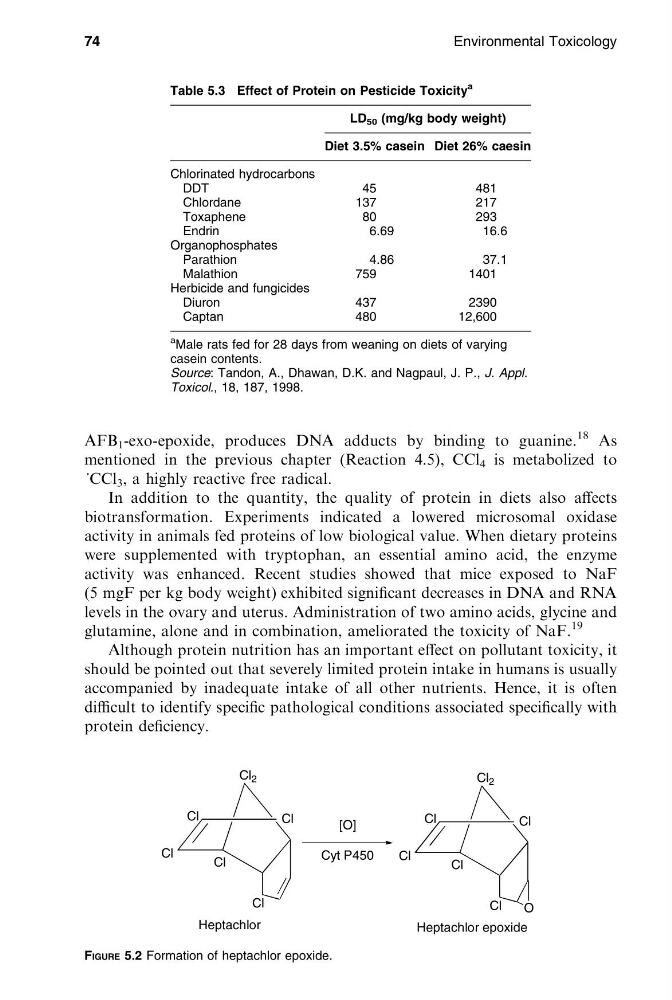
FIGURE 5.2 Formation of heptachlor epoxide.
18 As
mentioned in the previous chapter (Reaction 4.5), CCl 4 is metabolized to
Á CCl 3 , a highly reactive free radical.
In addition to the quantity, the quality of protein in diets also affects
biotransformation. Experiments indicated a lowered microsomal oxidase
activity in animals fed proteins of low biological value. When dietary proteins
were supplemented with tryptophan, an essential amino acid, the enzyme
activity was enhanced. Recent studies showed that mice exposed to NaF
(5 mgF per kg body weight) exhibited significant decreases in DNA and RNA
levels in the ovary and uterus. Administration of two amino acids, glycine and
glutamine, alone and in combination, ameliorated the toxicity of NaF.
19
Although protein nutrition has an important effect on pollutant toxicity, it
should be pointed out that severely limited protein intake in humans is usually
accompanied by inadequate intake of all other nutrients. Hence, it is often
difficult to identify specific pathological conditions associated specifically with
protein deficiency.
74
Environmental Toxicology
[16:54 26/8/04 P:/CRC PRESS/4365 MING-HO.751 (1670)/4365-005.3d]
Ref: 4365 MING-HO YU Chap-005 Page: 74 65-84
Table 5.3 Effect of Protein on Pesticide Toxicity
a
LD 50 (mg/kg body weight)
Diet 3.5% casein Diet 26% caesin
Chlorinated hydrocarbons
DDT
45
481
Chlordane
137
217
Toxaphene
80
293
Endrin
6.69
16.6
Organophosphates
Parathion
4.86
37.1
Malathion
759
1401
Herbicide and fungicides
Diuron
437
2390
Captan
480
12,600
a
Male rats fed for 28 days from weaning on diets of varying
casein contents.
Source: Tandon, A., Dhawan, D.K. and Nagpaul, J. P., J. Appl.
Toxicol., 18, 187, 1998.
FIGURE 5.2 Formation of heptachlor epoxide.