

Since cytochrome P450 requires iron (Fe) for its biosynthesis, deficiency of
Fe may lead to depressed MFO activity. Dietary Fe deficiency in rats has been
shown to result in a rapid loss of the cytochrome P450 content and MFO
activity in the villous cells of duodenal mucosa.
37 As noted earlier, rats fed a
low-protein diet exhibited increased levels (56%) of LPO and decreased
activities of antioxidant enzymes, such as SOD, GSHPx, and catalase. When
lithium (Li) (as carbonate) was administered to rats fed a low-protein diet, the
activity of GSHPx was increased, while the activities of catalase and SOD were
brought to within normal limits. Furthermore, Li treatment diminished the
increase in LPO level.
17
Dietary magnesium (Mg) and potassium (K) restriction have recently been
shown to enhance the toxicity of paraquat (an organic herbicide) in rats.
38 The
main mechanism involved in paraquat toxicity is tissue oxidation by reactive
oxygen radicals generated by redox cycling of the compound.
39 Rats fed a Mgrestricted diet and exposed to paraquat exhibited a severe toxicosis, whereas
those with a K-restricted diet showed a mild toxicosis. Restriction of Mg and K
was shown to have a synergistic effect on paraquat-dependent toxicosis.
37
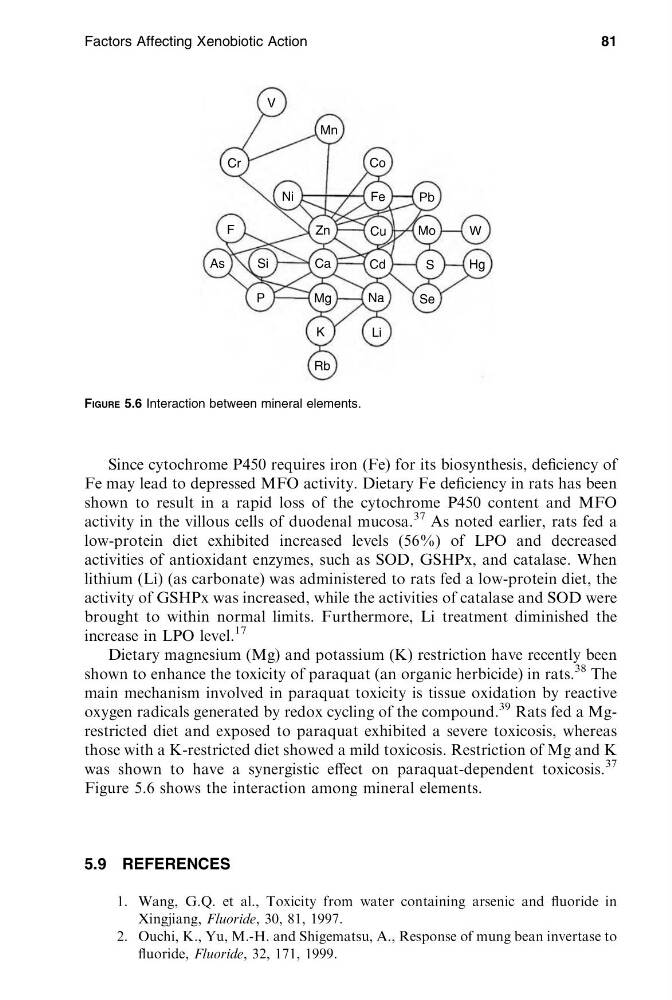
Figure 5.6 shows the interaction among mineral elements.
5.9 REFERENCES
1. Wang, G.Q. et al., Toxicity from water containing arsenic and fluoride in
Xingjiang, Fluoride, 30, 81, 1997.
2. Ouchi, K., Yu, M.-H. and Shigematsu, A., Response of mung bean invertase to
fluoride, Fluoride, 32, 171, 1999.
Factors Affecting Xenobiotic Action
81
[16:54 26/8/04 P:/CRC PRESS/4365 MING-HO.751 (1670)/4365-005.3d]
Ref: 4365 MING-HO YU Chap-005 Page: 81 65-84
FIGURE 5.6 Interaction between mineral elements.
Fe may lead to depressed MFO activity. Dietary Fe deficiency in rats has been
shown to result in a rapid loss of the cytochrome P450 content and MFO
activity in the villous cells of duodenal mucosa.
37 As noted earlier, rats fed a
low-protein diet exhibited increased levels (56%) of LPO and decreased
activities of antioxidant enzymes, such as SOD, GSHPx, and catalase. When
lithium (Li) (as carbonate) was administered to rats fed a low-protein diet, the
activity of GSHPx was increased, while the activities of catalase and SOD were
brought to within normal limits. Furthermore, Li treatment diminished the
increase in LPO level.
17
Dietary magnesium (Mg) and potassium (K) restriction have recently been
shown to enhance the toxicity of paraquat (an organic herbicide) in rats.
38 The
main mechanism involved in paraquat toxicity is tissue oxidation by reactive
oxygen radicals generated by redox cycling of the compound.
39 Rats fed a Mgrestricted diet and exposed to paraquat exhibited a severe toxicosis, whereas
those with a K-restricted diet showed a mild toxicosis. Restriction of Mg and K
was shown to have a synergistic effect on paraquat-dependent toxicosis.
37
Figure 5.6 shows the interaction among mineral elements.
5.9 REFERENCES
1. Wang, G.Q. et al., Toxicity from water containing arsenic and fluoride in
Xingjiang, Fluoride, 30, 81, 1997.
2. Ouchi, K., Yu, M.-H. and Shigematsu, A., Response of mung bean invertase to
fluoride, Fluoride, 32, 171, 1999.
Factors Affecting Xenobiotic Action
81
[16:54 26/8/04 P:/CRC PRESS/4365 MING-HO.751 (1670)/4365-005.3d]
Ref: 4365 MING-HO YU Chap-005 Page: 81 65-84
FIGURE 5.6 Interaction between mineral elements.