

Laboratory studies with isolated rat hepatocytes showed that cellular atocopherol maintains the viability of the cell during a toxic insult.
24 A recent
study showed that male mice treated with NaF (10 mgF per kg body weight)
exhibited changes in epididymal milieu, as revealed by significant decreases in
levels of sialic acid and protein and ATPase activity in epididymides. These
changes in turn disrupted the sperm maturation process, leading to a significant
decline in cauda epididymal sperm count, motility and viability. Consequently,
a significant decline in fertility rate occurred. Withdrawal of NaF treatment for
30 days produced incomplete recovery. However, vitamin E supplementation
during the withdrawal period resulted in recovery of all NaF-induced adverse
effects.
25
5.8.9 VITAMIN C (ASCORBIC ACID)
Vitamin C is found in varying amounts in almost all animal and human body
tissues. In humans, high vitamin C levels occur particularly in adrenal and
pituitary glands, eye lens, and various soft tissues. Vitamin C is a potent
antioxidant and participates in many cellular oxidation–reduction reactions.
Vitamin C-deficient guinea pigs have been shown to exhibit an overall
deficiency in drug oxidation, with marked decreases in N- and O-demethylations, and in the contents of cytochrome P450 and cytochrome P450
reductase.
16 Administration of ascorbate to the deficient animals for 6 days
reversed these losses of MFO activity.
78
Environmental Toxicology
[16:54 26/8/04 P:/CRC PRESS/4365 MING-HO.751 (1670)/4365-005.3d]
Ref: 4365 MING-HO YU Chap-005 Page: 78 65-84
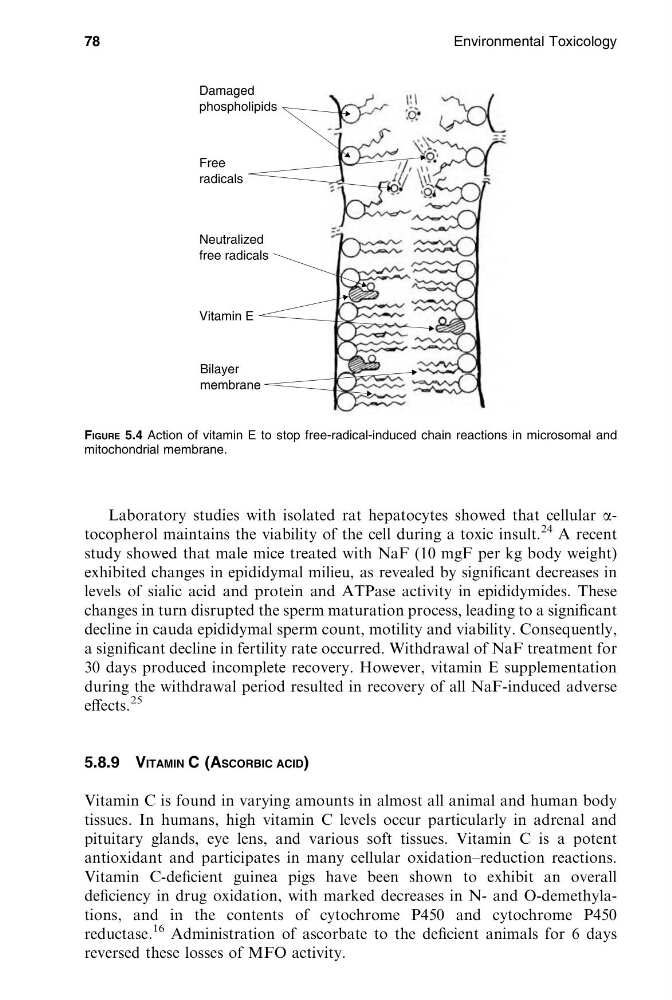
FIGURE 5.4 Action of vitamin E to stop free-radical-induced chain reactions in microsomal and
mitochondrial membrane.
24 A recent
study showed that male mice treated with NaF (10 mgF per kg body weight)
exhibited changes in epididymal milieu, as revealed by significant decreases in
levels of sialic acid and protein and ATPase activity in epididymides. These
changes in turn disrupted the sperm maturation process, leading to a significant
decline in cauda epididymal sperm count, motility and viability. Consequently,
a significant decline in fertility rate occurred. Withdrawal of NaF treatment for
30 days produced incomplete recovery. However, vitamin E supplementation
during the withdrawal period resulted in recovery of all NaF-induced adverse
effects.
25
5.8.9 VITAMIN C (ASCORBIC ACID)
Vitamin C is found in varying amounts in almost all animal and human body
tissues. In humans, high vitamin C levels occur particularly in adrenal and
pituitary glands, eye lens, and various soft tissues. Vitamin C is a potent
antioxidant and participates in many cellular oxidation–reduction reactions.
Vitamin C-deficient guinea pigs have been shown to exhibit an overall
deficiency in drug oxidation, with marked decreases in N- and O-demethylations, and in the contents of cytochrome P450 and cytochrome P450
reductase.
16 Administration of ascorbate to the deficient animals for 6 days
reversed these losses of MFO activity.
78
Environmental Toxicology
[16:54 26/8/04 P:/CRC PRESS/4365 MING-HO.751 (1670)/4365-005.3d]
Ref: 4365 MING-HO YU Chap-005 Page: 78 65-84
FIGURE 5.4 Action of vitamin E to stop free-radical-induced chain reactions in microsomal and
mitochondrial membrane.