

486
CHAPTE R 17 WAVES—I I
S 1
L 1
L 2
S 2
P
P
P
(a)
(b)
(c)
The interference at P
depends on the difference
in the path lengths to reach P.
If the difference is equal to,
say, 2.0 , then the waves
arrive exactly in phase. This
is how transverse waves
would look.
λ
If the difference is equal to,
say, 2.5 , then the waves
arrive exactly out of phase.
This is how transverse
waves would look.
λ
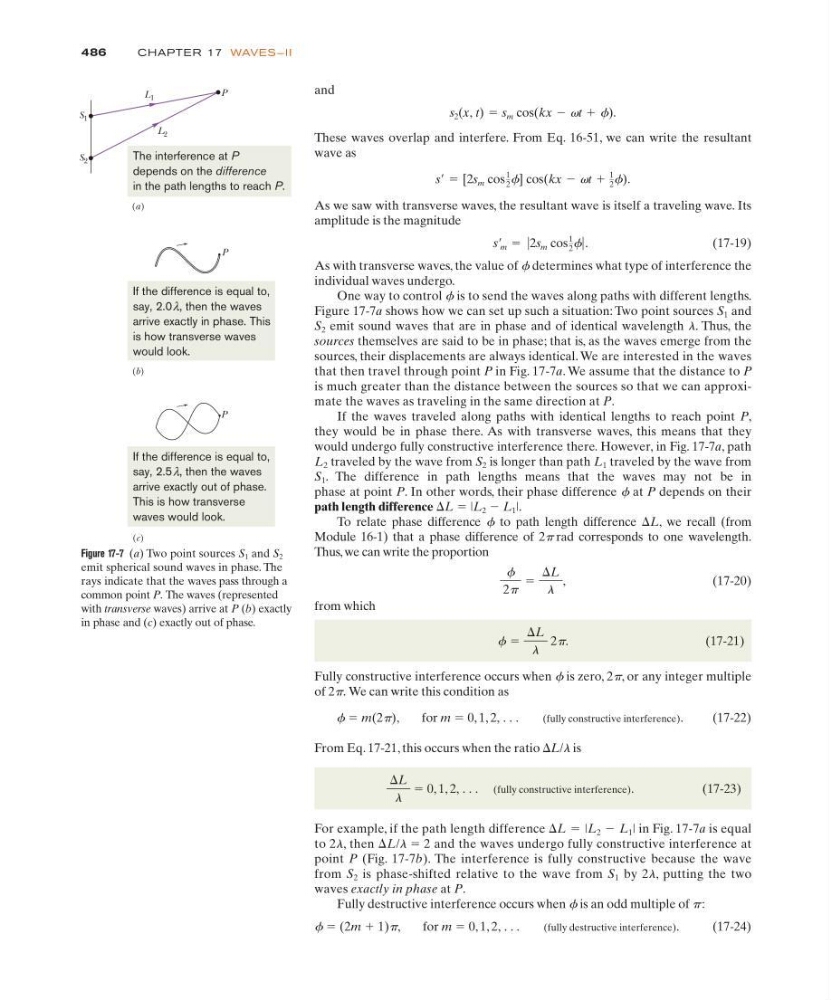
Figure 17-7 (a) Two point sources S 1 and S 2
emit spherical sound waves in phase. The
rays indicate that the waves pass through a
common point P. The waves (represented
with transverse waves) arrive at P (b) exactly
in phase and (c) exactly out of phase.
and
These waves overlap and interfere. From Eq. 16-51, we can write the resultant
wave as
As we saw with transverse waves, the resultant wave is itself a traveling wave. Its
amplitude is the magnitude
(17-19)
As with transverse waves, the value of f determines what type of interference the
individual waves undergo.
One way to control f is to send the waves along paths with different lengths.
Figure 17-7a shows how we can set up such a situation: Two point sources S 1 and
S 2 emit sound waves that are in phase and of identical wavelength l. Thus, the
sources themselves are said to be in phase; that is, as the waves emerge from the
sources, their displacements are always identical. We are interested in the waves
that then travel through point P in Fig. 17-7a. We assume that the distance to P
is much greater than the distance between the sources so that we can approximate the waves as traveling in the same direction at P.
If the waves traveled along paths with identical lengths to reach point P,
they would be in phase there. As with transverse waves, this means that they
would undergo fully constructive interference there. However, in Fig. 17-7a, path
L 2 traveled by the wave from S 2 is longer than path L 1 traveled by the wave from
S 1 . The difference in path lengths means that the waves may not be in
phase at point P. In other words, their phase difference f at P depends on their
path length difference ⌬L ϭ |L 2 Ϫ L 1 |.
To relate phase difference f to path length difference ⌬L, we recall (from
Module 16-1) that a phase difference of 2p rad corresponds to one wavelength.
Thus, we can write the proportion
,
( 1 7 - 2 0 )
from which
(17-21)
Fully constructive interference occurs when f is zero, 2p, or any integer multiple
of 2p. We can write this condition as
f ϭ m(2p),
for m ϭ 0, 1, 2, . . .
(fully constructive interference).
(17-22)
From Eq. 17-21, this occurs when the ratio L/l is
ϭ 0, 1, 2, . . . (fully constructive interference).
( 1 7 - 2 3 )
For example, if the path length difference L |L 2 L 1 | in Fig. 17-7a is equal
to 2l, then ⌬L/l ϭ 2 and the waves undergo fully constructive interference at
point P (Fig. 17-7b). The interference is fully constructive because the wave
from S 2 is phase-shifted relative to the wave from S 1 by 2l, putting the two
waves exactly in phase at P.
Fully destructive interference occurs when f is an odd multiple of p:
f ϭ (2m ϩ 1)p,
for m ϭ 0, 1, 2, . . .
(fully destructive interference).
(17-24)
Ϫ
ϭ
⌬
⌬L
l
⌬
f ϭ
⌬L
l
2p.
f
2p
ϭ
⌬L
l
sЈ m ϭ ͉2s m cos
1
2 f͉.
sЈ ϭ [2s m cos
1
2 f] cos(kx Ϫ vt ϩ
1
2 f).
s 2 (x, t) ϭ s m cos(kx Ϫ vt ϩ f).
CHAPTE R 17 WAVES—I I
S 1
L 1
L 2
S 2
P
P
P
(a)
(b)
(c)
The interference at P
depends on the difference
in the path lengths to reach P.
If the difference is equal to,
say, 2.0 , then the waves
arrive exactly in phase. This
is how transverse waves
would look.
λ
If the difference is equal to,
say, 2.5 , then the waves
arrive exactly out of phase.
This is how transverse
waves would look.
λ
Figure 17-7 (a) Two point sources S 1 and S 2
emit spherical sound waves in phase. The
rays indicate that the waves pass through a
common point P. The waves (represented
with transverse waves) arrive at P (b) exactly
in phase and (c) exactly out of phase.
and
These waves overlap and interfere. From Eq. 16-51, we can write the resultant
wave as
As we saw with transverse waves, the resultant wave is itself a traveling wave. Its
amplitude is the magnitude
(17-19)
As with transverse waves, the value of f determines what type of interference the
individual waves undergo.
One way to control f is to send the waves along paths with different lengths.
Figure 17-7a shows how we can set up such a situation: Two point sources S 1 and
S 2 emit sound waves that are in phase and of identical wavelength l. Thus, the
sources themselves are said to be in phase; that is, as the waves emerge from the
sources, their displacements are always identical. We are interested in the waves
that then travel through point P in Fig. 17-7a. We assume that the distance to P
is much greater than the distance between the sources so that we can approximate the waves as traveling in the same direction at P.
If the waves traveled along paths with identical lengths to reach point P,
they would be in phase there. As with transverse waves, this means that they
would undergo fully constructive interference there. However, in Fig. 17-7a, path
L 2 traveled by the wave from S 2 is longer than path L 1 traveled by the wave from
S 1 . The difference in path lengths means that the waves may not be in
phase at point P. In other words, their phase difference f at P depends on their
path length difference ⌬L ϭ |L 2 Ϫ L 1 |.
To relate phase difference f to path length difference ⌬L, we recall (from
Module 16-1) that a phase difference of 2p rad corresponds to one wavelength.
Thus, we can write the proportion
,
( 1 7 - 2 0 )
from which
(17-21)
Fully constructive interference occurs when f is zero, 2p, or any integer multiple
of 2p. We can write this condition as
f ϭ m(2p),
for m ϭ 0, 1, 2, . . .
(fully constructive interference).
(17-22)
From Eq. 17-21, this occurs when the ratio L/l is
ϭ 0, 1, 2, . . . (fully constructive interference).
( 1 7 - 2 3 )
For example, if the path length difference L |L 2 L 1 | in Fig. 17-7a is equal
to 2l, then ⌬L/l ϭ 2 and the waves undergo fully constructive interference at
point P (Fig. 17-7b). The interference is fully constructive because the wave
from S 2 is phase-shifted relative to the wave from S 1 by 2l, putting the two
waves exactly in phase at P.
Fully destructive interference occurs when f is an odd multiple of p:
f ϭ (2m ϩ 1)p,
for m ϭ 0, 1, 2, . . .
(fully destructive interference).
(17-24)
Ϫ
ϭ
⌬
⌬L
l
⌬
f ϭ
⌬L
l
2p.
f
2p
ϭ
⌬L
l
sЈ m ϭ ͉2s m cos
1
2 f͉.
sЈ ϭ [2s m cos
1
2 f] cos(kx Ϫ vt ϩ
1
2 f).
s 2 (x, t) ϭ s m cos(kx Ϫ vt ϩ f).