

The Forces of Rolling
Friction and Rolling
If a wheel rolls at constant speed, as in Fig. 11-3, it has no tendency to slide at the
point of contact P, and thus no frictional force acts there. However, if a net force
acts on the rolling wheel to speed it up or to slow it, then that net force causes acceleration
of the center of mass along the direction of travel. It also causes
the wheel to rotate faster or slower, which means it causes an angular
acceleration a. These accelerations tend to make the wheel slide at P. Thus, a frictional force must act on the wheel at P to oppose that tendency.
If the wheel does not slide, the force is a static frictional force
and the
motion is smooth rolling. We can then relate the magnitudes of the linear acceleration
and the angular acceleration a by differentiating Eq. 11-2 with respect
to time (with R held constant). On the left side, dv com /dt is a com , and on the right
side dv/dt is a. So, for smooth rolling we have
a com ϭ aR (smooth rolling motion).
(11-6)
If the wheel does slide when the net force acts on it, the frictional force that
acts at P in Fig. 11-3 is a kinetic frictional force
The motion then is not smooth
rolling, and Eq. 11-6 does not apply to the motion. In this chapter we discuss only
smooth rolling motion.
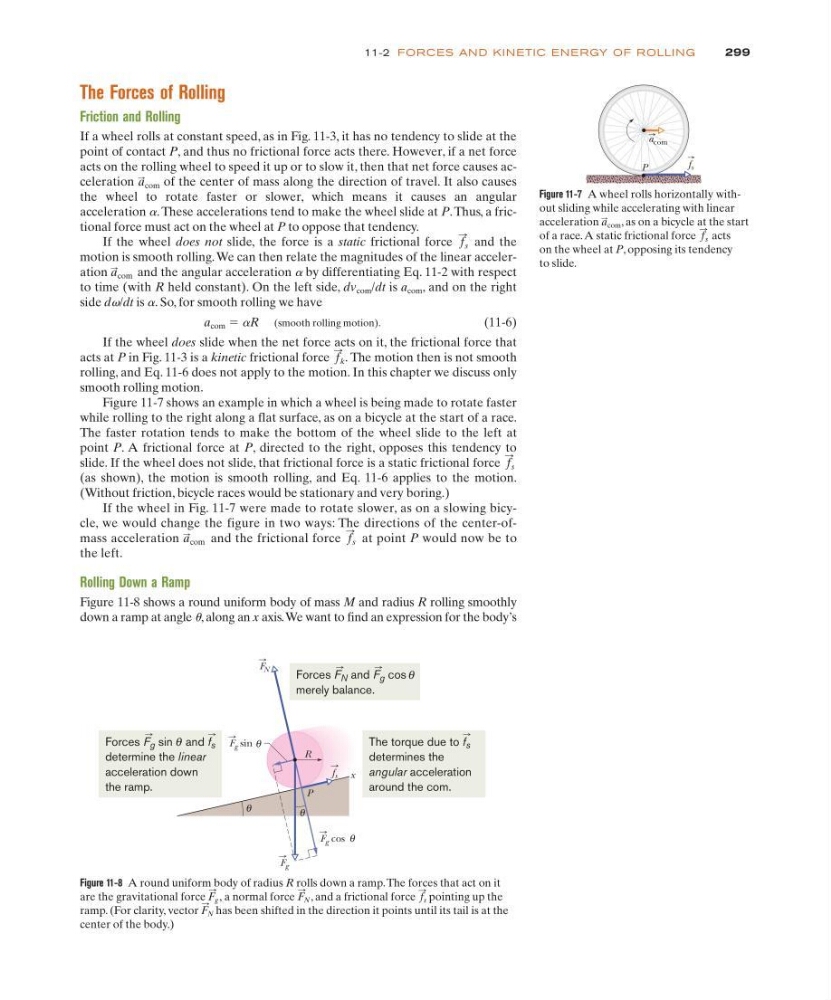
Figure 11-7 shows an example in which a wheel is being made to rotate faster
while rolling to the right along a flat surface, as on a bicycle at the start of a race.
The faster rotation tends to make the bottom of the wheel slide to the left at
point P. A frictional force at P, directed to the right, opposes this tendency to
slide. If the wheel does not slide, that frictional force is a static frictional force
(as shown), the motion is smooth rolling, and Eq. 11-6 applies to the motion.
(Without friction, bicycle races would be stationary and very boring.)
If the wheel in Fig. 11-7 were made to rotate slower, as on a slowing bicycle, we would change the figure in two ways: The directions of the center-ofmass acceleration
and the frictional force
at point P would now be to
the left.
Rolling Down a Ramp
Figure 11-8 shows a round uniform body of mass M and radius R rolling smoothly
down a ramp at angle u, along an x axis.We want to find an expression for the body’s
f
:
s
a
:
com
f
:
s
f
:
k .
a
:
com
f
:
s
a
:
com
299
11-2 FORCES AN D KI N ETIC E N E RGY OF ROLLI NG
Figure 11-7 A wheel rolls horizontally without sliding while accelerating with linear
acceleration
, as on a bicycle at the start
of a race. A static frictional force acts
on the wheel at P, opposing its tendency
to slide.
f
:
s
a
:
com
P
f s
a com
Figure 11-8 A round uniform body of radius R rolls down a ramp. The forces that act on it
are the gravitational force F
:
g , a normal force F
:
N , and a frictional force f
:
s pointing up the
ramp. (For clarity, vector F
:
N has been shifted in the direction it points until its tail is at the
center of the body.)
R
F g cos θ
F g
F g sin θ
θ
θ
P
x
f s
F N
Forces F N and F g cos
merely balance.
θ
Forces F g sin and f s
determine the linear
acceleration down
the ramp.
θ
The torque due to f s
determines the
angular acceleration
around the com.
Friction and Rolling
If a wheel rolls at constant speed, as in Fig. 11-3, it has no tendency to slide at the
point of contact P, and thus no frictional force acts there. However, if a net force
acts on the rolling wheel to speed it up or to slow it, then that net force causes acceleration
of the center of mass along the direction of travel. It also causes
the wheel to rotate faster or slower, which means it causes an angular
acceleration a. These accelerations tend to make the wheel slide at P. Thus, a frictional force must act on the wheel at P to oppose that tendency.
If the wheel does not slide, the force is a static frictional force
and the
motion is smooth rolling. We can then relate the magnitudes of the linear acceleration
and the angular acceleration a by differentiating Eq. 11-2 with respect
to time (with R held constant). On the left side, dv com /dt is a com , and on the right
side dv/dt is a. So, for smooth rolling we have
a com ϭ aR (smooth rolling motion).
(11-6)
If the wheel does slide when the net force acts on it, the frictional force that
acts at P in Fig. 11-3 is a kinetic frictional force
The motion then is not smooth
rolling, and Eq. 11-6 does not apply to the motion. In this chapter we discuss only
smooth rolling motion.
Figure 11-7 shows an example in which a wheel is being made to rotate faster
while rolling to the right along a flat surface, as on a bicycle at the start of a race.
The faster rotation tends to make the bottom of the wheel slide to the left at
point P. A frictional force at P, directed to the right, opposes this tendency to
slide. If the wheel does not slide, that frictional force is a static frictional force
(as shown), the motion is smooth rolling, and Eq. 11-6 applies to the motion.
(Without friction, bicycle races would be stationary and very boring.)
If the wheel in Fig. 11-7 were made to rotate slower, as on a slowing bicycle, we would change the figure in two ways: The directions of the center-ofmass acceleration
and the frictional force
at point P would now be to
the left.
Rolling Down a Ramp
Figure 11-8 shows a round uniform body of mass M and radius R rolling smoothly
down a ramp at angle u, along an x axis.We want to find an expression for the body’s
f
:
s
a
:
com
f
:
s
f
:
k .
a
:
com
f
:
s
a
:
com
299
11-2 FORCES AN D KI N ETIC E N E RGY OF ROLLI NG
Figure 11-7 A wheel rolls horizontally without sliding while accelerating with linear
acceleration
, as on a bicycle at the start
of a race. A static frictional force acts
on the wheel at P, opposing its tendency
to slide.
f
:
s
a
:
com
P
f s
a com
Figure 11-8 A round uniform body of radius R rolls down a ramp. The forces that act on it
are the gravitational force F
:
g , a normal force F
:
N , and a frictional force f
:
s pointing up the
ramp. (For clarity, vector F
:
N has been shifted in the direction it points until its tail is at the
center of the body.)
R
F g cos θ
F g
F g sin θ
θ
θ
P
x
f s
F N
Forces F N and F g cos
merely balance.
θ
Forces F g sin and f s
determine the linear
acceleration down
the ramp.
θ
The torque due to f s
determines the
angular acceleration
around the com.