

261
10-1 ROTATIONAL VAR IAB LES
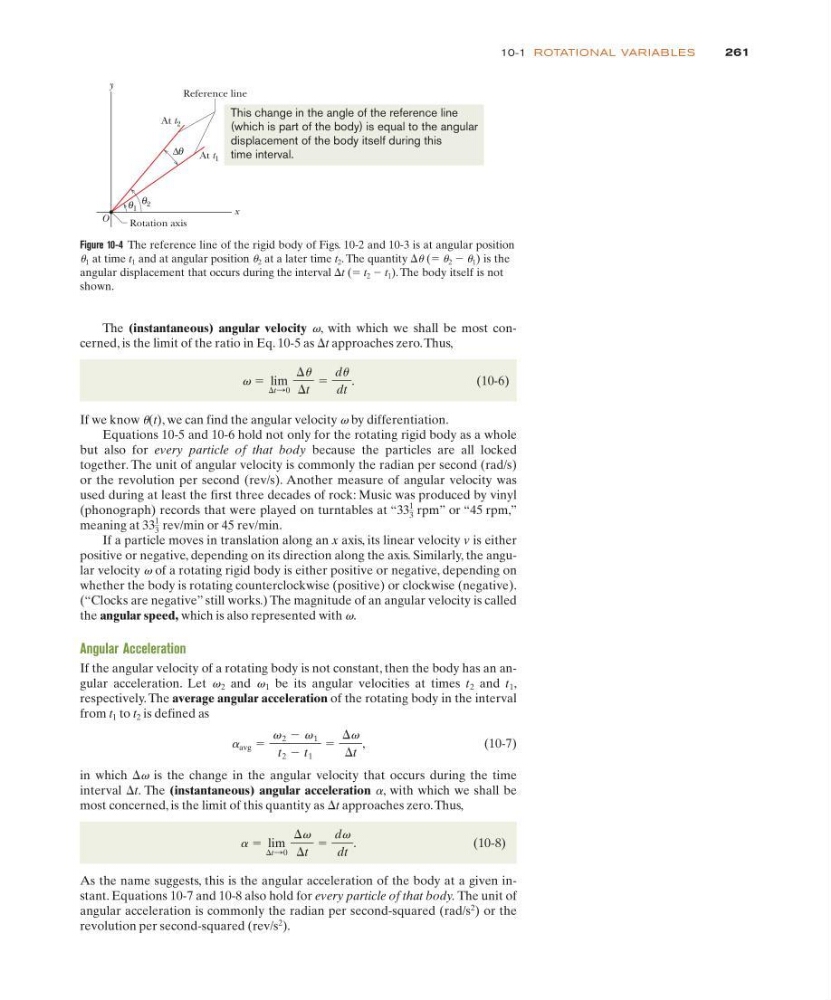
Figure 10-4 The reference line of the rigid body of Figs. 10-2 and 10-3 is at angular position
u 1 at time t 1 and at angular position u 2 at a later time t 2 . The quantity ⌬u (ϭ u 2 Ϫ u 1 ) is the
angular displacement that occurs during the interval ⌬t (ϭ t 2 Ϫ t 1 ). The body itself is not
shown.
x
y
Rotation axis
O
θ 1
θ 2
∆ θ
At t 2
At t 1
Reference line
This change in the angle of the reference line
(which is part of the body) is equal to the angular
displacement of the body itself during this
time interval.
The (instantaneous) angular velocity v, with which we shall be most concerned, is the limit of the ratio in Eq. 10-5 as ⌬t approaches zero. Thus,
(10-6)
If we know u(t), we can find the angular velocity v by differentiation.
Equations 10-5 and 10-6 hold not only for the rotating rigid body as a whole
but also for every particle of that body because the particles are all locked
together. The unit of angular velocity is commonly the radian per second (rad/s)
or the revolution per second (rev/s). Another measure of angular velocity was
used during at least the first three decades of rock: Music was produced by vinyl
(phonograph) records that were played on turntables at “
” or “45 rpm,”
meaning at
or 45 rev/min.
If a particle moves in translation along an x axis, its linear velocity v is either
positive or negative, depending on its direction along the axis. Similarly, the angular velocity v of a rotating rigid body is either positive or negative, depending on
whether the body is rotating counterclockwise (positive) or clockwise (negative).
(“Clocks are negative” still works.) The magnitude of an angular velocity is called
the angular speed, which is also represented with v.
Angular Acceleration
If the angular velocity of a rotating body is not constant, then the body has an angular acceleration. Let v 2 and v 1 be its angular velocities at times t 2 and t 1 ,
respectively. The average angular acceleration of the rotating body in the interval
from t 1 to t 2 is defined as
(10-7)
in which ⌬v is the change in the angular velocity that occurs during the time
interval ⌬t. The (instantaneous) angular acceleration a, with which we shall be
most concerned, is the limit of this quantity as ⌬t approaches zero. Thus,
(10-8)
As the name suggests, this is the angular acceleration of the body at a given instant. Equations 10-7 and 10-8 also hold for every particle of that body. The unit of
angular acceleration is commonly the radian per second-squared (rad/s
2
) or the
revolution per second-squared (rev/s
2
).
a ϭ lim
⌬t:0
⌬v
⌬t
ϭ
dv
dt
.
a avg ϭ
v 2 Ϫ v 1
t 2 Ϫ t 1
ϭ
⌬v
⌬t
,
33
1
3 rev/min
33
1
3 rpm
v ϭ lim
⌬t:0
⌬u
⌬t
ϭ
du
dt
.
10-1 ROTATIONAL VAR IAB LES
Figure 10-4 The reference line of the rigid body of Figs. 10-2 and 10-3 is at angular position
u 1 at time t 1 and at angular position u 2 at a later time t 2 . The quantity ⌬u (ϭ u 2 Ϫ u 1 ) is the
angular displacement that occurs during the interval ⌬t (ϭ t 2 Ϫ t 1 ). The body itself is not
shown.
x
y
Rotation axis
O
θ 1
θ 2
∆ θ
At t 2
At t 1
Reference line
This change in the angle of the reference line
(which is part of the body) is equal to the angular
displacement of the body itself during this
time interval.
The (instantaneous) angular velocity v, with which we shall be most concerned, is the limit of the ratio in Eq. 10-5 as ⌬t approaches zero. Thus,
(10-6)
If we know u(t), we can find the angular velocity v by differentiation.
Equations 10-5 and 10-6 hold not only for the rotating rigid body as a whole
but also for every particle of that body because the particles are all locked
together. The unit of angular velocity is commonly the radian per second (rad/s)
or the revolution per second (rev/s). Another measure of angular velocity was
used during at least the first three decades of rock: Music was produced by vinyl
(phonograph) records that were played on turntables at “
” or “45 rpm,”
meaning at
or 45 rev/min.
If a particle moves in translation along an x axis, its linear velocity v is either
positive or negative, depending on its direction along the axis. Similarly, the angular velocity v of a rotating rigid body is either positive or negative, depending on
whether the body is rotating counterclockwise (positive) or clockwise (negative).
(“Clocks are negative” still works.) The magnitude of an angular velocity is called
the angular speed, which is also represented with v.
Angular Acceleration
If the angular velocity of a rotating body is not constant, then the body has an angular acceleration. Let v 2 and v 1 be its angular velocities at times t 2 and t 1 ,
respectively. The average angular acceleration of the rotating body in the interval
from t 1 to t 2 is defined as
(10-7)
in which ⌬v is the change in the angular velocity that occurs during the time
interval ⌬t. The (instantaneous) angular acceleration a, with which we shall be
most concerned, is the limit of this quantity as ⌬t approaches zero. Thus,
(10-8)
As the name suggests, this is the angular acceleration of the body at a given instant. Equations 10-7 and 10-8 also hold for every particle of that body. The unit of
angular acceleration is commonly the radian per second-squared (rad/s
2
) or the
revolution per second-squared (rev/s
2
).
a ϭ lim
⌬t:0
⌬v
⌬t
ϭ
dv
dt
.
a avg ϭ
v 2 Ϫ v 1
t 2 Ϫ t 1
ϭ
⌬v
⌬t
,
33
1
3 rev/min
33
1
3 rpm
v ϭ lim
⌬t:0
⌬u
⌬t
ϭ
du
dt
.